Markets Rebound After Bloodbath — But Iran Strikes Cap Gains
Jaspal Singh
Author
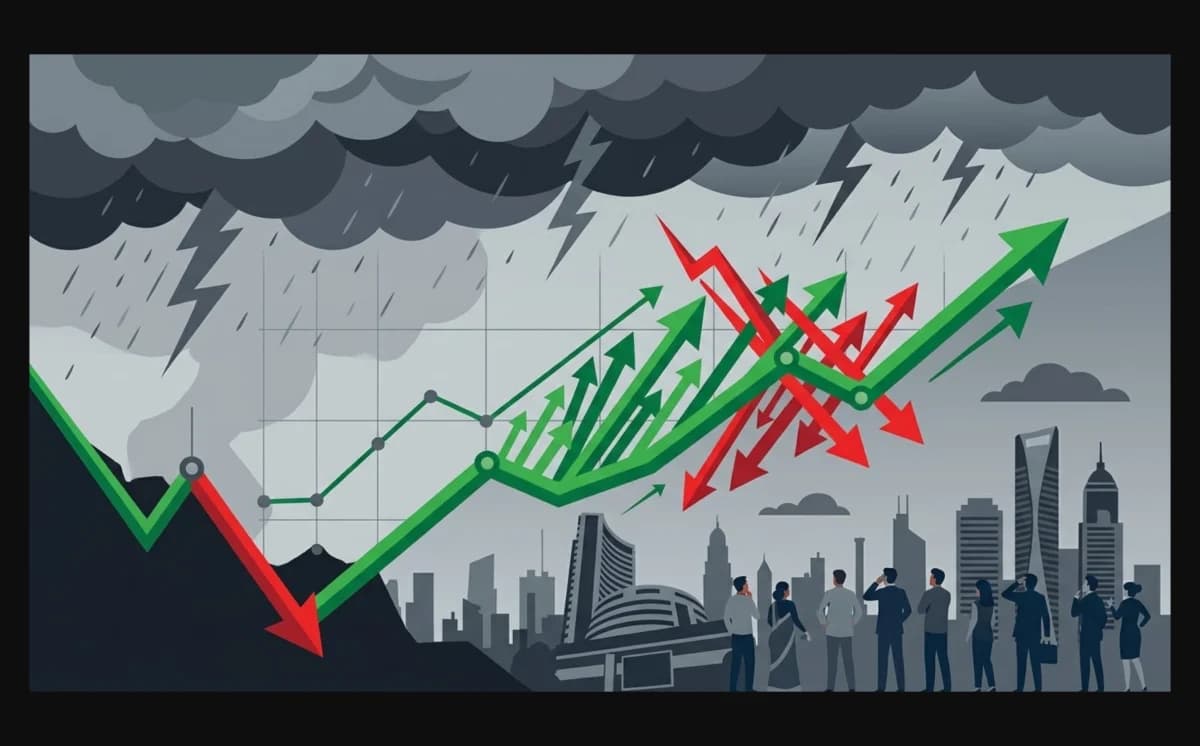
A Recovery That Almost Was
After yesterday's bloodbath that wiped out ₹18 lakh crore in market capitalisation, Indian markets staged a brave comeback today — only to have it snatched away in the final hour. The Sensex recovered a staggering 947 points during the day but eventually settled just 326 points higher (+0.44%) at 74,533. The Nifty 50 closed at 23,114, up 112 points (+0.49%).
What happened? Reports of fresh Iran-Israel strikes in the last hour of trading pulled the indices off their highs, reminding everyone that geopolitical risk is far from over.
What Happened Yesterday — The Crash Recap
If you were away from your phone yesterday, here is what you missed:
- The Sensex crashed 2,497 points to close at 74,207 — one of the worst single-day falls this year
- The selloff was triggered by escalating Iran-Israel military conflict and rising crude oil prices
- Brent crude surged past $111 per barrel, sparking fears of a prolonged energy crisis
- FIIs dumped over ₹8,500 crore worth of Indian equities in a single session
- Nearly every sector bled red, with financials and realty taking the worst hit
Today's Recovery: Who Led the Bounce?
IT Stocks Shine Bright
Information technology was the star sector of the day. These companies earn most of their revenue in US dollars, which means a weaker rupee and global uncertainty actually helps their bottom line:
| Stock | Today's Change | Why It Rose |
|---|---|---|
| Tech Mahindra | +3.1% | Strong deal pipeline, dollar earnings |
| HCL Technologies | +2.0% | Defensive pick, consistent margins |
| Infosys | +1.7% | Dollar revenue hedge, quality buy |
| TCS | +1.2% | Broad-based recovery in IT |
Pharma and PSU Banks Also Gained
Pharma stocks rose as the sector is seen as a safe haven during geopolitical uncertainty — people need medicines regardless of wars. PSU Bank stocks bounced back after heavy selling yesterday, with Bank of Baroda and Canara Bank gaining over 2%.
HDFC Bank — The Elephant in the Room
HDFC Bank fell another 5.1% today, making it the worst performer among large-caps for two straight sessions. The stock has been under pressure from concerns over its post-merger integration, slowing deposit growth, and FII selling. At this point, HDFC Bank alone has dragged the Sensex down by over 800 points this week.
Realty Continued to Slide
The Nifty Realty index dropped another 1%, extending its losing streak. Rising crude prices mean higher construction material costs, and the possibility of interest rate hikes makes home loans more expensive — both bad news for real estate.
Why Did the Recovery Fizzle Out?
Late-Hour Iran Strikes
Just when markets were in a comfortable recovery zone, reports emerged of fresh Iranian retaliatory strikes. The Sensex, which was up over 900 points around 2:30 PM, quickly gave up more than 600 points in the last 90 minutes of trading.
De-escalation Signals: Hope or Mirage?
There were some positive signs during the day that fuelled the recovery:
- Israeli PM Netanyahu said Israel would not strike Iranian oil and gas facilities again, and the war "could end sooner than expected"
- US Treasury Secretary Bessent hinted at lifting sanctions on Iranian crude tankers as a goodwill gesture
- Oil prices dipped slightly during Asian trading, dropping from $113 to $111 per barrel
But the fresh strikes late in the day showed that de-escalation talk is cheap until it translates into an actual ceasefire.
Sectoral Scorecard — March 20, 2026
| Sector | Performance | Key Driver |
|---|---|---|
| IT | +2.1% | Dollar earnings, defensive buying |
| Pharma | +1.8% | Safe haven demand |
| PSU Banks | +1.5% | Bounce after overselling |
| FMCG | +0.6% | Defensive sector rotation |
| Auto | -0.3% | Rising input costs |
| Metal | -0.7% | Global demand concerns |
| Realty | -1.0% | Rate hike fears, input costs |
| Private Banks | -1.4% | HDFC Bank drag |
What Should Investors Do Now?
1. Volatility Is the New Normal — Accept It
We are in a period of heightened global uncertainty. Markets can swing 1,000+ points in a day, and this is likely to continue until the Iran-Israel situation resolves. Do not panic, and do not try to time the market.
2. SIPs Are Your Best Friend Right Now
If you are investing through Systematic Investment Plans (SIPs), this volatility is actually working in your favour. When markets crash, your SIP buys more units at lower prices. When markets recover, those cheaper units generate higher returns. This is rupee cost averaging in action.
Use our SIP Calculator to see how staying invested through volatile periods leads to better long-term wealth creation.
3. Keep Cash on the Sidelines
If you have fresh money to invest, do not deploy everything at once. Markets could fall further if the geopolitical situation worsens. Stagger your investments over the next 2-3 months using a systematic approach.
4. Avoid Leveraged Bets
Now is not the time for F&O trading or leveraged positions. The intraday swings can wipe out margin accounts in minutes. Stick to cash equities and mutual funds.
5. Review, Don't React
Review your portfolio for over-concentration in any sector. Make sure you are diversified across large-cap, mid-cap, debt, and gold. But do not make knee-jerk changes based on a single day's movement.
What to Watch Tomorrow
- Iran-Israel developments overnight — any ceasefire or further escalation
- Brent crude price — if it drops below $108, markets will breathe easier
- FII flow data — are foreign investors still selling, or is the worst behind us?
- Rupee movement — the rupee at ₹92.94 is a concern; further weakness could spook markets
The bottom line: stay invested, stay diversified, and let your SIPs do the heavy lifting. Wars end, markets recover, but only those who stay disciplined benefit from the recovery.
Related Reading
- Stock Market Crash: Why Sensex Tanked 1,800 Points
- FPIs Pull Out ₹77,000 Crore — Should You Worry?
- US Fed Rate Decision — Impact on Indian Investors
- Gold at Record Highs — Should You Invest?
Disclaimer: This article is for informational purposes only and does not constitute financial advice. Stock market investments are subject to market risks. Please consult a SEBI-registered financial advisor before making any investment decisions.
Written by
Jaspal Singh
Founder & Editor
Personal finance writer helping Indians make smarter money decisions through clear, jargon-free guides on taxes, investments, and budgeting.
Continue Reading
Your Take-Home Salary Just Got Cut — Here’s Why
From April 2026, your basic pay must be at least 50% of your CTC. That means lower take-home pay but significantly higher EPF and gratuity. Here’s what changed and what it means for your wallet.
Silver Loans Are Now Legal in India — Here’s How to Get One
From April 1, the RBI allows banks and NBFCs to give loans against your silver jewelry and coins. Up to 85% LTV, 10kg silver limit, and strict borrower protections. Here’s everything you need to know.
RBI MPC Meets Monday: Why Your EMI and FD Returns Won’t Change Yet
The RBI’s Monetary Policy Committee meets April 6-8. With oil above $100, the rupee at record lows, and inflation creeping up, here’s why the central bank is expected to hit pause — and what it means for your wallet.