Your Take-Home Salary Just Got Cut — Here’s Why
Jaspal Singh
Author
Why Your April Salary Looks Different
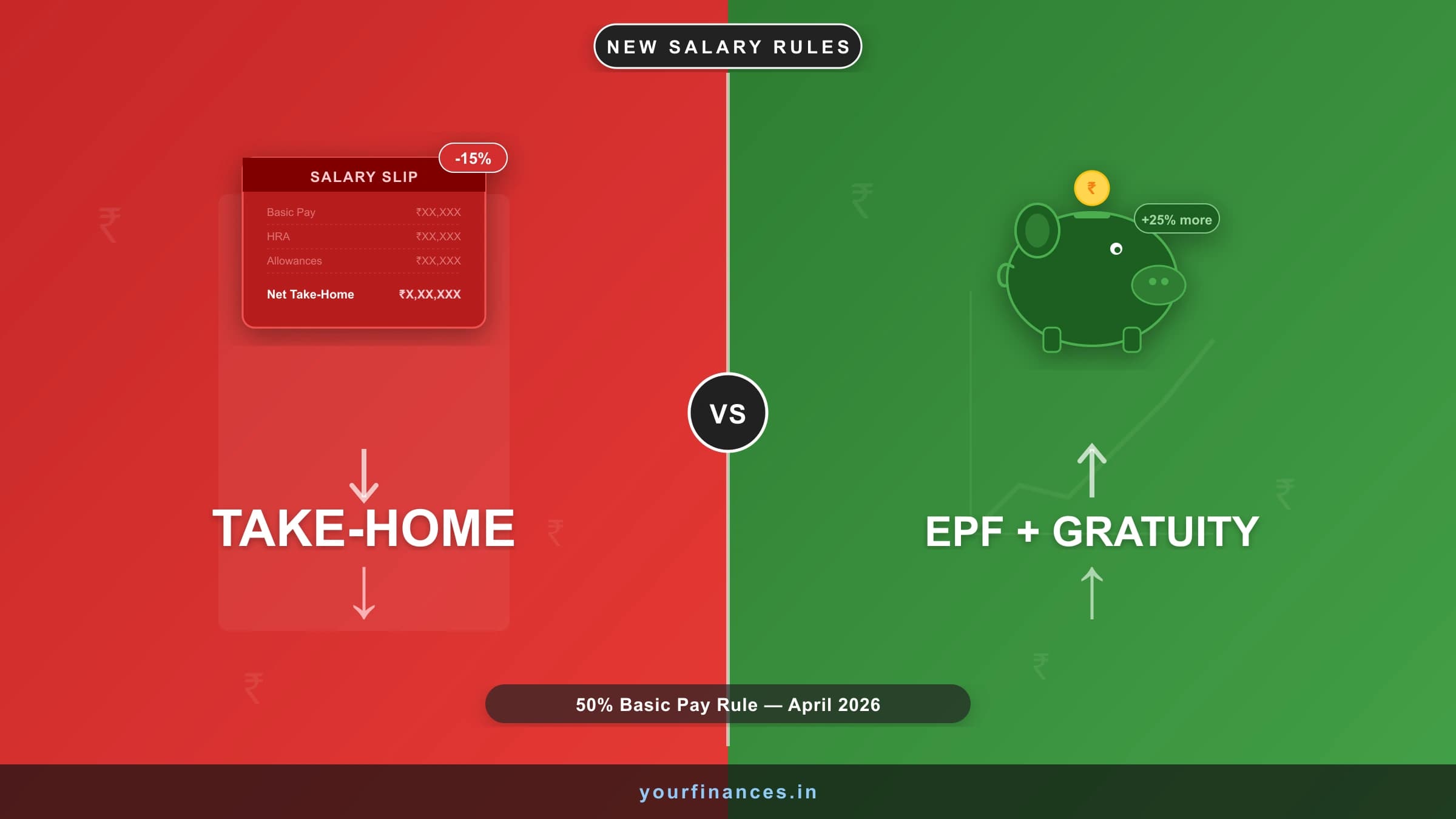
If you’re a salaried employee in India, your April 2026 payslip probably looks a little different from March. Your take-home pay has dropped, even though your CTC hasn’t changed. No, you didn’t get a pay cut. Your company restructured your salary to comply with a new law.
The Code on Wages, 2019 — one of India’s four new Labour Codes — is finally being enforced from April 1, 2026. The biggest change: your basic salary must now be at least 50% of your total CTC.
This single rule changes how much you take home, how much goes into EPF, how much gratuity you’ll get, and even how your taxes are calculated. Let’s break it all down.
What Changed: The 50% Basic Pay Rule
Under the new law, the combined value of your basic pay + dearness allowance (DA) + retaining allowance must be at least 50% of your total CTC. If allowances exceed 50%, the excess is automatically treated as “wages” for statutory calculations.
Why This Matters
Until now, most Indian companies kept basic pay artificially low — typically 25–40% of CTC — and stuffed the rest into allowances like HRA, special allowance, conveyance, etc. This was done to minimise EPF and gratuity contributions (which are calculated on basic pay).
The new rule stops this practice. Higher basic pay = higher EPF deductions = lower take-home pay.
Before vs After: A Real Example
Let’s see how this works for someone earning ₹10 lakh CTC (₹83,333/month):
| Component | Old Structure (35% Basic) | New Structure (50% Basic) | Change |
|---|---|---|---|
| Basic Pay | ₹29,167/month | ₹41,667/month | +₹12,500 |
| HRA | ₹14,583 | ₹12,500 | -₹2,083 |
| Special Allowance | ₹27,083 | ₹16,666 | -₹10,417 |
| EPF (Employee 12%) | ₹3,500 | ₹5,000 | +₹1,500 |
| EPF (Employer 12%) | ₹3,500 | ₹5,000 | +₹1,500 |
| Gross Salary | ₹83,333 | ₹83,333 | No change |
| Take-Home Pay | ~₹71,500 | ~₹68,000 | -₹3,500/month |
Key takeaway: Your CTC stays the same (₹10 lakh), but you take home about ₹3,500 less per month (₹42,000 less per year). That money isn’t lost — it’s going into your EPF retirement fund.
Watch: Salary Structure Change Explained
This video breaks down the exact same salary restructuring with visual examples. Worth watching if you want to see the math in action.
It’s Not a Pay Cut — It’s a Forced Savings Increase
Think of it this way: the government just made you save more for retirement, whether you wanted to or not. Here’s what you gain in the long run:
1. Higher EPF Corpus at Retirement
With ₹1,500 more going into EPF every month (from both you and your employer), your retirement corpus grows significantly. Over a 25-year career, the extra EPF contribution at 8.15% interest rate adds up to approximately ₹15–18 lakh more in your retirement fund.
Use our Compound Interest Calculator to see how the extra savings compound over your career.
2. Higher Gratuity Payout
Gratuity is calculated as: (Basic Pay × 15 × Years of Service) / 26
With basic pay jumping from ₹29,167 to ₹41,667, your gratuity for 10 years of service goes from ₹1,68,269 to ₹2,40,385 — that’s ₹72,000 more.
3. Higher Leave Encashment
Leave encashment is also calculated on basic pay. A higher basic means more money when you cash out unused leave at resignation or retirement.
The Downside: What You Lose Right Now
- Lower take-home pay. Expect a 3–7% reduction in monthly in-hand salary. For a ₹10L CTC employee, that’s about ₹3,500/month or ₹42,000/year.
- Lower HRA exemption. Since HRA typically decreases in the new structure, your HRA tax exemption may reduce, slightly increasing your taxable income.
- Reduced flexibility. Companies had more room to customise allowances before. Now the structure is more rigid.
Who Is Affected?
- All salaried employees in India — the Code on Wages applies to every establishment regardless of size, sector, or employee count.
- Private sector employees most impacted — government employees already had higher basic pay ratios.
- Higher CTC = bigger absolute impact. A ₹20L CTC employee could see ₹7,000/month less in take-home.
Impact at Different Salary Levels
| Annual CTC | Monthly Take-Home Drop | Extra EPF/Year (You + Employer) | Extra Gratuity (10 yrs) |
|---|---|---|---|
| ₹5 Lakh | ~₹1,750 | ~₹42,000 | ~₹36,000 |
| ₹10 Lakh | ~₹3,500 | ~₹84,000 | ~₹72,000 |
| ₹15 Lakh | ~₹5,250 | ~₹1,26,000 | ~₹1,08,000 |
| ₹25 Lakh | ~₹8,750 | ~₹2,10,000 | ~₹1,80,000 |
Note: These are approximate figures. Actual impact depends on your company’s specific salary structure and whether EPF is capped at ₹15,000 basic.
What About Taxes?
The tax impact is mixed:
- EPF contribution remains tax-exempt up to ₹2.5 lakh/year under the new tax regime. Since your EPF contribution increases, more of your salary gets sheltered from tax.
- But HRA exemption drops. With lower HRA, the tax-free portion under the old regime decreases. Under the new tax regime (which most people use now), HRA isn’t deductible anyway, so this doesn’t matter.
- Net tax impact is marginal for most employees — typically ₹2,000–5,000/year difference.
Use our Tax Calculator to compare your tax liability under both regimes with the new salary structure.
What Should You Do?
Don’t Panic
This is not a pay cut. Your total CTC is unchanged. The money is being redirected from your bank account to your PF account — it’s still yours, just locked until retirement (or job change).
Review Your Budget
If you were living paycheck-to-paycheck, the 3–7% drop matters. Revisit your monthly budget and adjust discretionary spending. Our SIP Calculator can help you see if you need to adjust your investment amounts.
Check Your Salary Slip
Verify that your company has correctly restructured the salary. Basic should now be ≥50% of CTC. If it’s not, your employer isn’t compliant with the new law.
Don’t Withdraw PF on Job Change
With more going into EPF now, resist the temptation to withdraw it when you switch jobs. Let it compound. The 8.15% tax-free return on EPF is one of the best guaranteed returns in India.
Consider the New Tax Regime
If you were on the old tax regime primarily for HRA benefits, the reduced HRA may make the new regime more attractive. Run the numbers on our Tax Calculator.
The Bottom Line
Yes, your April payslip looks smaller. But the new salary structure is actually good for you in the long run. Higher EPF contributions mean a larger retirement corpus. Higher basic pay means better gratuity and leave encashment. You’re trading a few thousand rupees of spending money today for lakhs more in retirement savings tomorrow.
The government essentially decided that Indian workers weren’t saving enough for retirement — and they’re probably right. Think of the 50% basic pay rule as a mandatory SIP into your future self.
Frequently Asked Questions
Does the 50% basic pay rule apply to contract workers and freelancers?
No. The Code on Wages applies to salaried employees on a company’s payroll. Contract workers, freelancers, and gig workers are covered under the Code on Social Security, which has different provisions. If you’re on a consultancy or freelance contract, your payment structure doesn’t change.
What happens if my company doesn’t restructure the salary?
Companies that don’t comply face penalties under the Code on Wages. The excess allowances (beyond 50% of CTC) will automatically be treated as “wages” for EPF and gratuity calculations anyway. If your April salary slip shows basic pay below 50%, raise it with your HR department.
Will my CTC change because of this rule?
No. Your total CTC remains the same. Only the internal distribution changes — more goes to basic pay, less to allowances. The “cost” to the company is unchanged.
Can I opt out of the higher EPF contribution?
No. EPF contribution is mandatory if your basic salary is below ₹15,000/month (for new employees). For those earning above ₹15,000 basic, the employer can choose to limit the EPF contribution to 12% of ₹15,000. However, most companies contribute on the full basic. Check with your HR.
Is this the same Code on Wages that was announced in 2019?
Yes. The Code on Wages, 2019 was passed by Parliament in 2019 but enforcement was delayed multiple times. The rules were finally notified in November 2025, and the 50% basic pay provision took effect from April 1, 2026.
Disclaimer: This article is for educational purposes only and does not constitute financial advice. Salary structures may vary by employer. Please consult your HR department or a chartered accountant for advice specific to your situation.
Written by
Jaspal Singh
Founder & Editor
Personal finance writer helping Indians make smarter money decisions through clear, jargon-free guides on taxes, investments, and budgeting.
Continue Reading

Gold, Silver Import Duty Raised to 15%: What It Means for Prices, Rupee, and India's Trade Balance
India has raised import duty on gold and silver to 15% from 6%. Here is what the move means for bullion demand, trade deficit, forex reserves, and everyday buyers.

Silver Loans Are Now Legal in India — Here’s How to Get One
From April 1, the RBI allows banks and NBFCs to give loans against your silver jewelry and coins. Up to 85% LTV, 10kg silver limit, and strict borrower protections. Here’s everything you need to know.
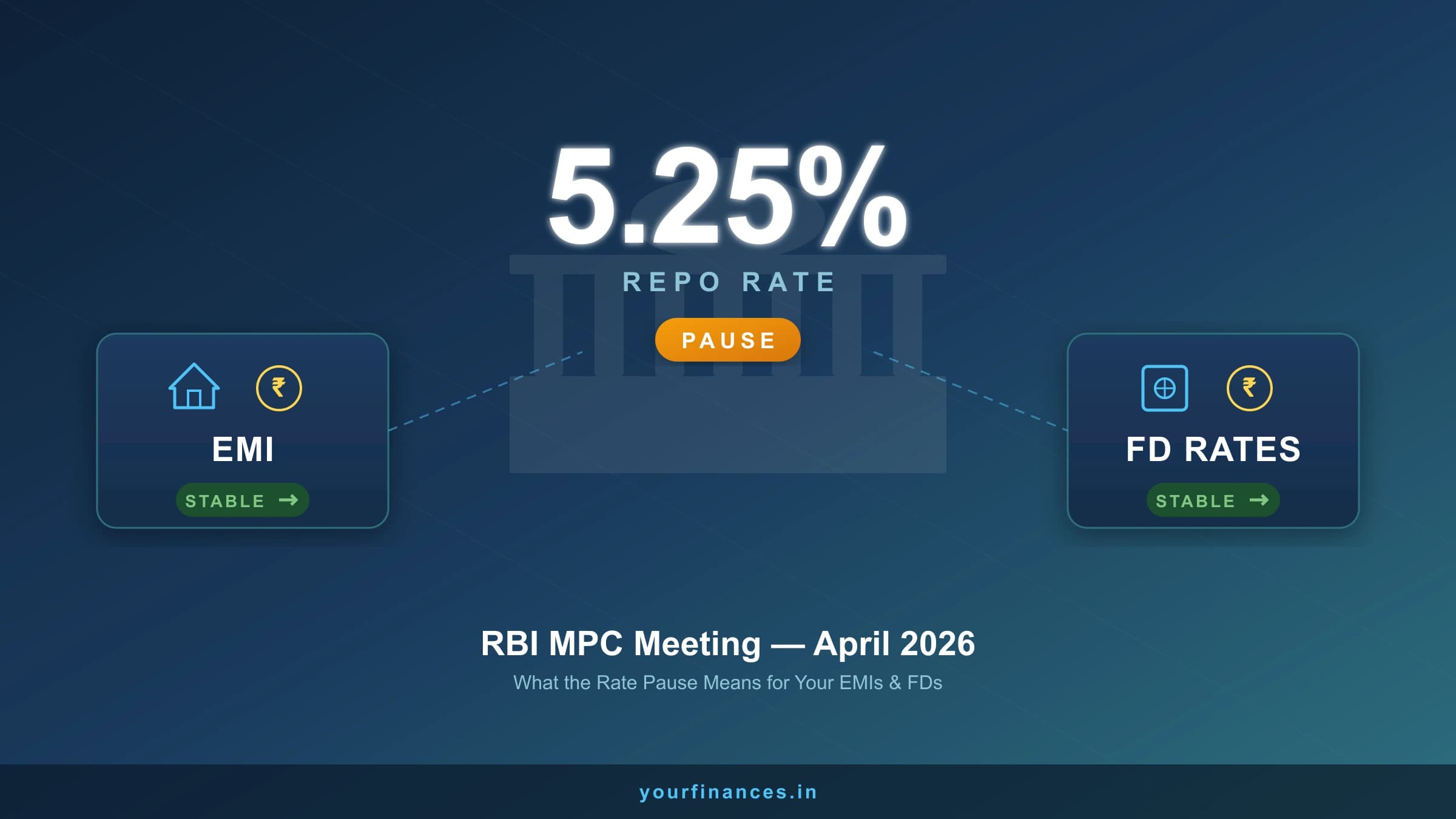
RBI MPC Meets Monday: Why Your EMI and FD Returns Won’t Change Yet
The RBI’s Monetary Policy Committee meets April 6-8. With oil above $100, the rupee at record lows, and inflation creeping up, here’s why the central bank is expected to hit pause — and what it means for your wallet.