Stock Market Crash — Sensex Tanks 1,800 Points, ₹7 Lakh Crore Wiped Out
Jaspal Singh
Author
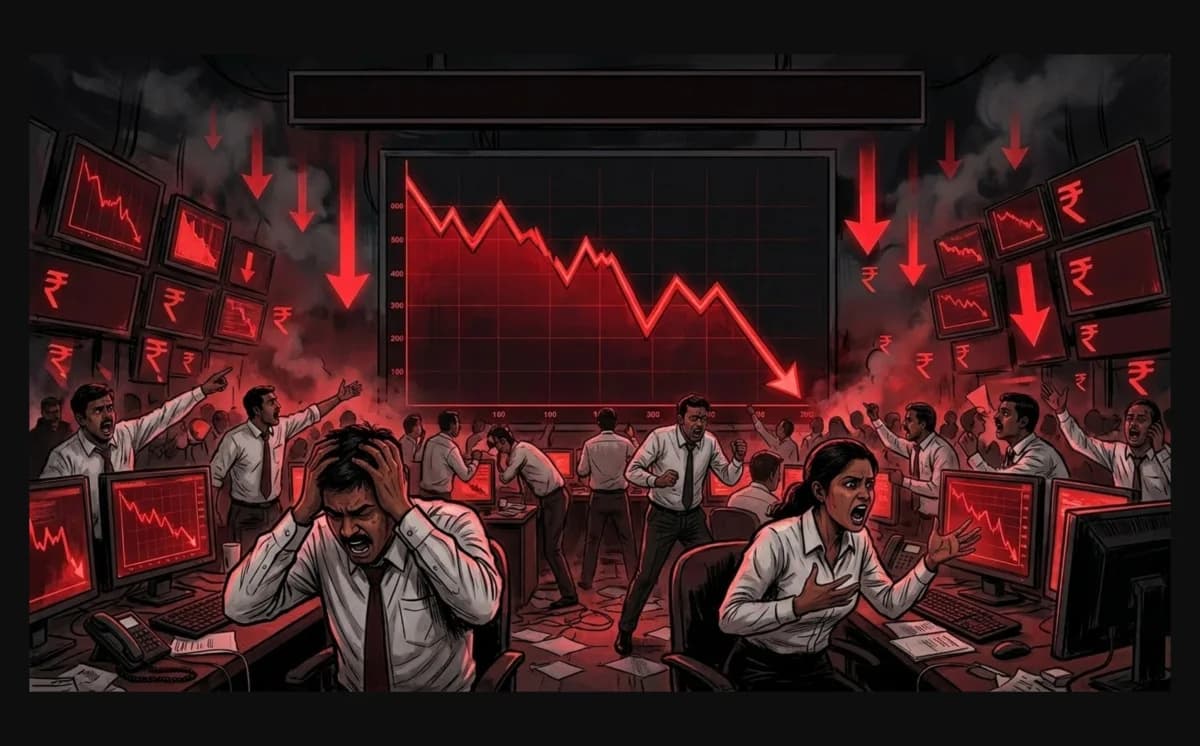
Black Wednesday: Markets in Free Fall
March 19, 2026 will go down as one of the most brutal days for Indian stock markets this year. The BSE Sensex crashed 1,953 points (-2.54%) to close at approximately 74,750, while the Nifty 50 plunged 580 points to end below 22,700. In a single session, over ₹7 lakh crore of investor wealth was erased from the market.
All 30 Sensex stocks closed in the red — not a single one was spared. The Nifty Bank index fell nearly 3%, dragged down by a stunning 8% collapse in HDFC Bank after its chairman resigned over ethics-related concerns. If you opened your portfolio app today and felt a pit in your stomach, you are not alone.
What Triggered Today's Market Crash?
1. Iran Strikes Gulf Energy Facilities — War Escalation
The biggest trigger was the dramatic escalation in the Iran-Israel conflict. After Israel and the US struck Iran's South Pars gas field — the world's largest natural gas reserve — Iran retaliated by launching strikes on energy facilities across Saudi Arabia, the UAE, and Qatar. Qatar's Ras Laffan LNG terminal, one of the world's largest, reportedly suffered extensive damage.
This is no longer a regional skirmish. It is a full-blown energy war, and markets panicked accordingly.
2. Brent Crude Surges Past $111
Brent crude oil shot up to $111.07 per barrel — a gain of over 3.4% in a single day. For India, which imports more than 80% of its crude oil, this is devastating. Higher oil means higher petrol and diesel prices, rising inflation, a widening current account deficit, and a weaker rupee.
Every $10 rise in crude oil adds roughly 0.4% to India's consumer inflation. With oil now above $110, the economic damage could be severe if prices stay elevated.
3. Fed Holds Rates, Signals Only 1 Cut in 2026
The US Federal Reserve kept interest rates unchanged at 3.5-3.75% and its updated dot plot showed that most members expect at most one rate cut this year — far fewer than the 3-4 cuts markets had been hoping for. Fed Chair Jerome Powell explicitly stated that rate cuts are "conditional, not assured."
Higher US rates for longer mean the dollar stays strong, making emerging markets like India less attractive for foreign investors.
4. FPIs Pull Out ₹77,214 Crore in March
Foreign Portfolio Investors (FPIs) have been on a relentless selling spree, pulling out ₹77,214 crore from Indian equities in just 12 trading sessions this month. That is an average of ₹6,434 crore per day — a pace not seen since January 2025.
5. HDFC Bank Chairman Resigns
HDFC Bank, the largest private sector bank in India, saw its stock crash 8% after its chairman resigned over ethics-related concerns. Given HDFC Bank's massive weight in both the Sensex and Nifty, this single stock dragged the broader indices down significantly.
Sector-Wise Carnage
| Sector | Fall (%) | Key Losers |
|---|---|---|
| Nifty Bank | ~3.0% | HDFC Bank (-8%), Axis Bank, IndusInd Bank |
| Nifty IT | ~2.5% | TCS, Infosys, Wipro |
| Nifty Auto | ~2.8% | Maruti, Tata Motors, M&M |
| Nifty Metal | ~2.2% | Tata Steel, JSW Steel, Hindalco |
| Nifty Oil & Gas | ~1.8% | BPCL, IOC (despite rising crude) |
| Nifty Realty | ~3.5% | DLF, Godrej Properties, Oberoi Realty |
Virtually no sector was spared. Even typically defensive sectors like FMCG and pharma saw selling pressure as panic gripped the market.
How Much Wealth Was Destroyed?
The total market capitalisation of BSE-listed companies fell by over ₹7 lakh crore in a single session. To put that in perspective:
- ₹7 lakh crore is roughly equal to India's entire defence budget
- It is more than the combined market cap of companies like Bajaj Finance, HCL Tech, and Adani Enterprises
- On a per-capita basis, every Indian effectively "lost" about ₹5,000 today (though of course, losses are only notional unless you sell)
Should You Panic and Sell?
Absolutely not. Here is why:
Markets Have Always Recovered
The Indian stock market has survived every crisis thrown at it — the 2008 financial collapse, the 2016 demonetisation shock, the 2020 COVID crash, and several geopolitical scares in between. Every single time, markets recovered and went on to make new highs.
Selling in a Crash Locks In Your Losses
If you sell today, your paper losses become real losses. The investors who lose the most money are the ones who panic sell at the bottom. History is brutally clear on this point.
SIPs Are Your Best Friend Right Now
If you are investing through Systematic Investment Plans (SIPs), today's crash is actually good news in disguise. Your next SIP instalment will buy more mutual fund units at lower prices. This is rupee-cost averaging at work — it is the entire reason SIPs exist.
Use our SIP Calculator to see how continuing your SIPs through market downturns leads to significantly better long-term returns.
What Should Investors Do Now?
Short-Term Investors
- Avoid fresh entry until oil prices and the geopolitical situation show signs of stabilising
- Do not bottom-fish in beaten-down stocks unless you are prepared for further downside
- Keep stop-losses on any trading positions
Long-Term Investors
- Keep your SIPs running. Do not stop or pause them — this is when they work best
- If you have spare cash, consider staggering fresh investments over the next 2-4 weeks rather than going all in today
- Avoid leveraged positions. Do not borrow to invest in a falling market
- Rebalance if needed. If your equity allocation has fallen below your target, this could be a good time to top up
Key Events to Watch This Week
- Iran-Israel situation: Any ceasefire or de-escalation could trigger a sharp market rally
- Oil prices: If Brent sustains above $110, expect more pain. If it drops below $100, markets could recover quickly
- FPI flow data: Watch whether the ₹6,000+ crore daily selling pace continues or slows
- RBI intervention: The central bank may intervene in forex markets to support the rupee
The Bottom Line
Today's crash was painful, but it was driven by external geopolitical shocks — not by any fundamental weakness in India's economy or corporate earnings. India's domestic consumption story remains intact. DIIs (domestic institutional investors) have been buying on dips, providing some support.
The most important thing you can do right now is stay calm, stay invested, and stay disciplined. Crashes like today are the price we pay for long-term equity returns that beat every other asset class.
Use our SIP Calculator and Lumpsum Calculator to plan your investment strategy for the months ahead.
Disclaimer: This article is for informational and educational purposes only. It does not constitute financial advice, stock recommendations, or an offer to buy or sell securities. Market investments are subject to risk. Please consult a SEBI-registered financial advisor before making investment decisions.
Written by
Jaspal Singh
Founder & Editor
Personal finance writer helping Indians make smarter money decisions through clear, jargon-free guides on taxes, investments, and budgeting.
Continue Reading

Gold, Silver Import Duty Raised to 15%: What It Means for Prices, Rupee, and India's Trade Balance
India has raised import duty on gold and silver to 15% from 6%. Here is what the move means for bullion demand, trade deficit, forex reserves, and everyday buyers.
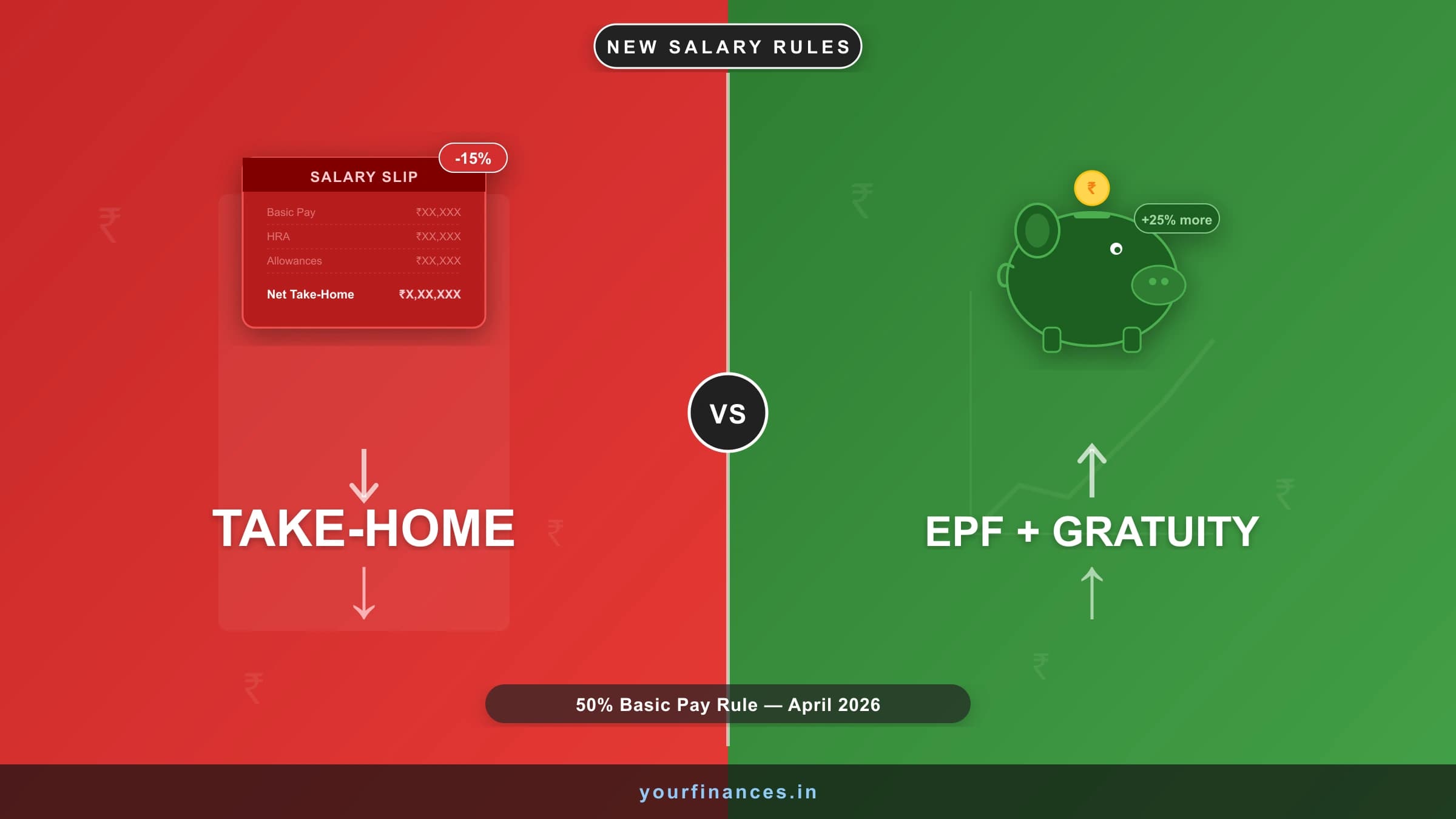
Your Take-Home Salary Just Got Cut — Here’s Why
From April 2026, your basic pay must be at least 50% of your CTC. That means lower take-home pay but significantly higher EPF and gratuity. Here’s what changed and what it means for your wallet.

Silver Loans Are Now Legal in India — Here’s How to Get One
From April 1, the RBI allows banks and NBFCs to give loans against your silver jewelry and coins. Up to 85% LTV, 10kg silver limit, and strict borrower protections. Here’s everything you need to know.