Sensex Surges 640 Points as Oil Crashes from $120 to $88
Jaspal Singh
Author
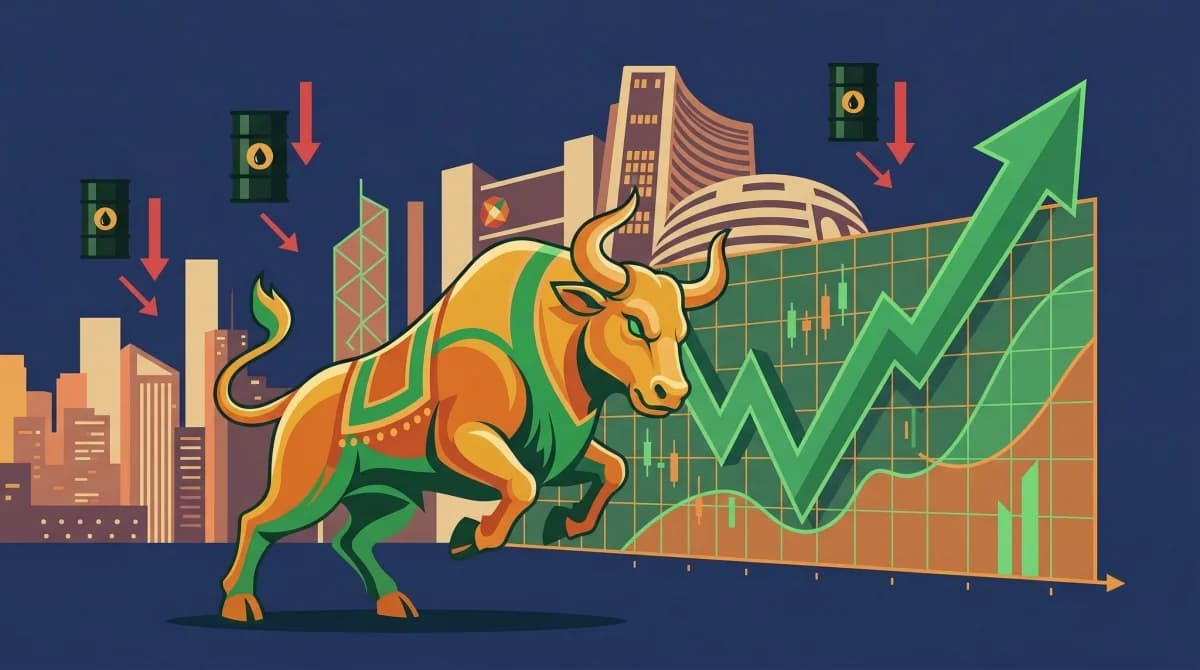
After one of the scariest weeks in recent memory, Indian stock markets delivered a massive relief rally on Monday, March 10, 2026. The Sensex surged 640 points to close at 78,206, while the Nifty 50 jumped 234 points to end at 24,262. Aviation, paint, cement, and automobile stocks — the very sectors that were hammered last week — led the recovery.
So what changed overnight? One word: oil.
What Triggered the Rally?
On Sunday, March 9, Brent crude oil had briefly touched a terrifying $120 per barrel — its biggest spike since 1988 — as the US-Israel military operation against Iran escalated. The Strait of Hormuz, through which 31% of the world's seaborne oil flows, was effectively shut down.
But overnight, something shifted. Reports emerged that diplomatic channels between the US and Iran had reopened. While no ceasefire was announced, the mere possibility of de-escalation was enough to trigger a massive selloff in oil futures. Brent crude plunged over 10%, crashing from $120 to the $88-90 range by Monday morning.
For India — which imports 85% of its crude oil — this was the best news in a week. Markets opened with a gap-up and never looked back.
How Markets Performed on March 10
| Index | Close | Change | % Change |
|---|---|---|---|
| Sensex | 78,206 | +640 points | +0.82% |
| Nifty 50 | 24,262 | +234 points | +0.97% |
| Nifty Bank | 52,850 | +380 points | +0.72% |
| Nifty Midcap 100 | 56,420 | +520 points | +0.93% |
Which Sectors Led the Recovery?
The sectors that suffered the most during the oil spike bounced back the hardest. Think of it like a rubber band — the more you stretch it, the harder it snaps back.
Aviation Stocks Soared
InterGlobe Aviation (IndiGo) was among the top Sensex gainers. Airlines are highly sensitive to fuel costs — jet fuel (ATF) makes up 35-40% of an airline's operating costs. When oil crashes from $120 to $88, that is a massive cost reduction. SpiceJet and other aviation stocks also rallied sharply.
Paint and Chemical Stocks Recovered
Asian Paints surged as crude oil derivatives are key raw materials for paint companies. Lower oil means lower input costs and better profit margins. Berger Paints and Kansai Nerolac also saw strong buying.
Banking Stocks Rallied
ICICI Bank, HDFC Bank, and Karnataka Bank led the banking sector higher. Banks benefit when oil falls because lower oil reduces inflation pressure, which increases the chances of further RBI rate cuts. Rate cuts boost loan demand and bank profits.
Auto Stocks Gained
Maruti Suzuki and Mahindra & Mahindra gained ground. Lower fuel prices improve consumer sentiment for vehicle purchases, and reduced input costs boost margins for auto manufacturers.
But Is the Crisis Really Over?
Here is the honest answer: probably not.
The India VIX (Volatility Index) — often called the "fear gauge" — is still hovering around 23. For context, a VIX below 15 indicates a calm market. A VIX above 20 means traders expect more turbulence. At 23, the market is saying: "I'm relieved, but I'm not relaxed."
Several risks remain:
- The Iran conflict is not over. Diplomatic signals can reverse quickly. If the Strait of Hormuz remains disrupted, oil could spike again.
- FII selling continues. Foreign Institutional Investors pulled out over ₹21,000 crore from Indian markets in recent sessions. They have not reversed course yet.
- 24,500 is a key resistance level. Analysts say Nifty needs to close above 24,500 convincingly to confirm a sustained recovery. Until then, this could just be a "dead cat bounce."
- Global uncertainty. US markets are volatile too, and any negative news from the Middle East could trigger fresh selling.
What Should Retail Investors Do?
1. Do Not Chase the Rally
Buying after a 640-point jump feels good, but it is risky. If oil rebounds to $100+ (which is very possible), markets could give back all these gains. Wait for clarity before deploying fresh capital.
2. Continue Your SIPs
If you have running SIPs in mutual funds, do not stop them. Market volatility is exactly when SIPs work best — you buy more units when prices are low. Over time, this rupee cost averaging builds significant wealth. Use our SIP Calculator to see how consistent investing pays off.
3. Build Cash Reserves
This is a good time to keep some dry powder ready. If markets fall again due to another oil shock, you will have cash to invest at even lower levels. A fixed deposit is a safe place to park this cash while you wait.
4. Focus on Quality Stocks
In volatile markets, quality wins. Stick to companies with low debt, strong cash flows, and dominant market positions. Avoid speculative bets and penny stocks — they get hit the hardest during sudden drops.
5. Watch Oil Prices, Not Headlines
For the next few weeks, the single most important number for Indian markets is the price of Brent crude. If it stays below $90, markets will stabilise. If it goes back above $100, expect more turbulence. Everything else — earnings, IPOs, policy announcements — is secondary to oil right now.
A Bit of Perspective
It is worth remembering that Indian markets have survived far worse. The 2020 COVID crash saw the Nifty fall 38% in just one month. The 2008 financial crisis wiped out 60% of market value. In both cases, investors who stayed the course and continued investing recovered their losses — and much more — within 18-24 months.
Today's volatility is scary in real time. But zoom out, and it is just another bump on the long road of wealth creation.
The Bottom Line
The Sensex rally of 640 points on March 10 is welcome relief after a brutal week. Oil crashing from $120 to $88 triggered the bounce, with aviation, paints, banking, and auto stocks leading the charge. But the crisis is not over — the India VIX remains elevated, the Iran conflict continues, and FIIs are still selling.
For retail investors, the playbook is simple: continue SIPs, do not panic, do not chase rallies, and keep cash ready for opportunities. Markets reward patience. They always have.
Disclaimer: This article is for informational purposes only and does not constitute investment advice. Stock markets are subject to market risks. Please consult a SEBI-registered financial advisor before making investment decisions. Data is based on market closing prices and publicly available information as of March 10, 2026.
Latest: Sensex Crashes 1,635 Points on FY26 Last Day | RBI Caps Bank Forex Positions — Why Banks Crashed
Written by
Jaspal Singh
Founder & Editor
Personal finance writer helping Indians make smarter money decisions through clear, jargon-free guides on taxes, investments, and budgeting.
Continue Reading

Gold, Silver Import Duty Raised to 15%: What It Means for Prices, Rupee, and India's Trade Balance
India has raised import duty on gold and silver to 15% from 6%. Here is what the move means for bullion demand, trade deficit, forex reserves, and everyday buyers.

Your Take-Home Salary Just Got Cut — Here’s Why
From April 2026, your basic pay must be at least 50% of your CTC. That means lower take-home pay but significantly higher EPF and gratuity. Here’s what changed and what it means for your wallet.

Silver Loans Are Now Legal in India — Here’s How to Get One
From April 1, the RBI allows banks and NBFCs to give loans against your silver jewelry and coins. Up to 85% LTV, 10kg silver limit, and strict borrower protections. Here’s everything you need to know.