No Prepayment Penalty: The New RBI Rule Every Borrower Must Know
Jaspal Singh
Author

The RBI Just Gave You the Right to Prepay Without Penalty
Here's a rule that could save you lakhs of rupees — and most borrowers don't even know about it yet.
From January 1, 2026, the Reserve Bank of India has banned all prepayment charges on floating-rate loans given to individuals. This means if you have a home loan, personal loan, or car loan on a floating rate, you can now prepay any amount, at any time, from any source — completely free of charge.
No penalty. No "processing fee on prepayment." No sneaky charges buried in the fine print. Zero.
What Exactly Changed?
Before this rule, many banks and NBFCs charged 2-4% of the prepaid amount as a foreclosure or prepayment penalty. On a ₹50 lakh home loan, a 2% prepayment charge meant paying ₹1 lakh just for the privilege of returning your own money early.
The RBI found during supervisory reviews that:
- Inconsistent practices across lenders led to customer grievances
- Restrictive clauses in loan agreements discouraged borrowers from switching to better rates
- Some lenders were profiting from trapping borrowers in high-rate loans
The new directive — formally called the RBI Pre-payment Charges on Loans Directions, 2025 — fixes all of this.
Who Does This Apply To?
| Covered | Not Covered |
|---|---|
| Home loans (floating rate) | Fixed-rate loans |
| Personal loans (floating rate) | Business/commercial loans |
| Car loans (floating rate) | Loans from cooperative banks (some exemptions) |
| Education loans (floating rate) | Loans sanctioned before Jan 1, 2026* |
| Loans from banks and NBFCs | Small Finance Banks (for loans above ₹50 lakh) |
*For loans sanctioned before January 1, 2026, the old terms apply. But if you refinance or renew your loan after this date, the new rule kicks in.
How Much Can You Actually Save?
Let's do the math. Say you have a ₹40 lakh home loan at 8.5% for 20 years:
| Scenario | Total Interest Paid | Savings |
|---|---|---|
| No prepayment (full 20 years) | ₹37.28 lakh | — |
| ₹1 lakh prepayment every year | ₹25.41 lakh | ₹11.87 lakh saved |
| ₹2 lakh prepayment every year | ₹19.76 lakh | ₹17.52 lakh saved |
That's right — prepaying just ₹1 lakh per year on a ₹40 lakh loan saves you nearly ₹12 lakh in interest. And now there's zero penalty for doing it. Use our EMI Calculator to run these numbers for your specific loan.
5 Smart Ways to Use This Rule
1. Route Your Annual Bonus to Your Loan
Instead of spending your entire bonus on gadgets or vacations, put at least 50% toward your home loan. Even ₹50,000-₹1,00,000 per year makes a massive difference over 15-20 years.
2. Switch Lenders for a Better Rate
The no-penalty rule makes it easier to do a balance transfer. If your current bank charges 9% and another offers 8.25%, you can prepay your existing loan penalty-free and switch. Even a 0.5% rate difference on a ₹50 lakh loan saves ₹3-5 lakh over the tenure. Read our complete balance transfer guide.
3. Use Tax Refunds Wisely
Got a tax refund of ₹30,000-₹50,000? Don't let it sit in your savings account at 3.5%. Prepay your loan — the effective return is 8-9% (your loan rate) tax-free.
4. Choose Tenure Reduction Over EMI Reduction
When you prepay, your bank will ask: reduce EMI or reduce tenure? Always choose tenure reduction. Reducing tenure saves significantly more interest. Reducing EMI gives you slightly more cash flow each month but costs you lakhs more in the long run.
5. Start Early in the Loan
Prepayments have the biggest impact in the first 5-7 years of a loan, when the interest component of your EMI is highest. A ₹1 lakh prepayment in Year 2 saves far more interest than the same amount in Year 15.
What If Your Bank Still Charges a Penalty?
If your floating-rate loan was sanctioned or renewed on or after January 1, 2026, and your bank charges a prepayment fee, they are violating RBI directions. Here's what to do:
- Write to your bank's grievance cell citing the RBI Pre-payment Charges on Loans Directions, 2025
- If unresolved within 30 days, file a complaint on the RBI Complaint Management System (CMS)
- The RBI Ombudsman can order the bank to reverse the charges
The Bottom Line
The RBI's no-penalty rule is one of the most borrower-friendly reforms in years. If you have a floating-rate loan, start prepaying today. Even small amounts add up to lakhs in savings over time. And if your current lender's rate is too high, you're now free to switch without any exit cost.
Use our EMI Calculator to see exactly how prepayments reduce your total interest burden.
Disclaimer: This article is for educational purposes only and does not constitute financial advice. Loan terms vary by lender. Please read your loan agreement carefully and consult a qualified financial advisor before making prepayment decisions.
Written by
Jaspal Singh
Founder & Editor
Personal finance writer helping Indians make smarter money decisions through clear, jargon-free guides on taxes, investments, and budgeting.
Continue Reading
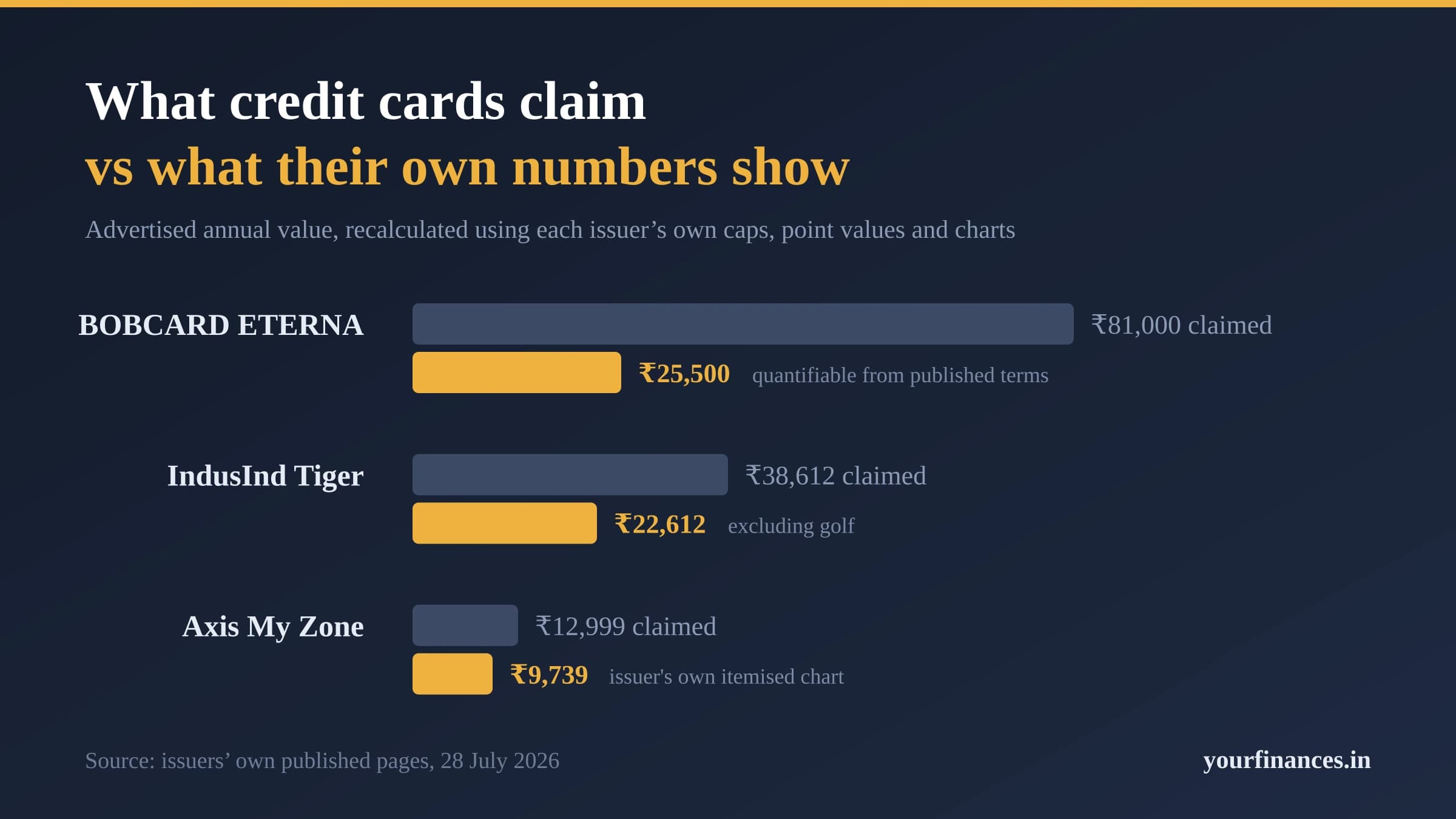
What Indian Credit Cards Claim vs What Their Own Numbers Show
An original study of eight Indian credit cards from seven issuers, using only figures each bank publishes itself. The illustrations consistently sit just inside caps the headlines never mention.
Personal Loan vs Credit Card Debt: Which Is Worse for Your Money?
Credit cards charge 36-42% interest. Personal loans charge 10-18%. The math is clear — but the real story is more nuanced. Here's the complete comparison.
The BNPL Trap: How "Buy Now Pay Later" Is Creating India's Hidden Debt Crisis
60% of BNPL users spend more than they can afford. Late fees can hit 30-40% interest. Here's how Buy Now Pay Later apps are trapping young Indians in invisible debt.