Home Loan Balance Transfer: How to Switch and Save Lakhs
Jaspal Singh
Author
Are You Paying Too Much for Your Home Loan?
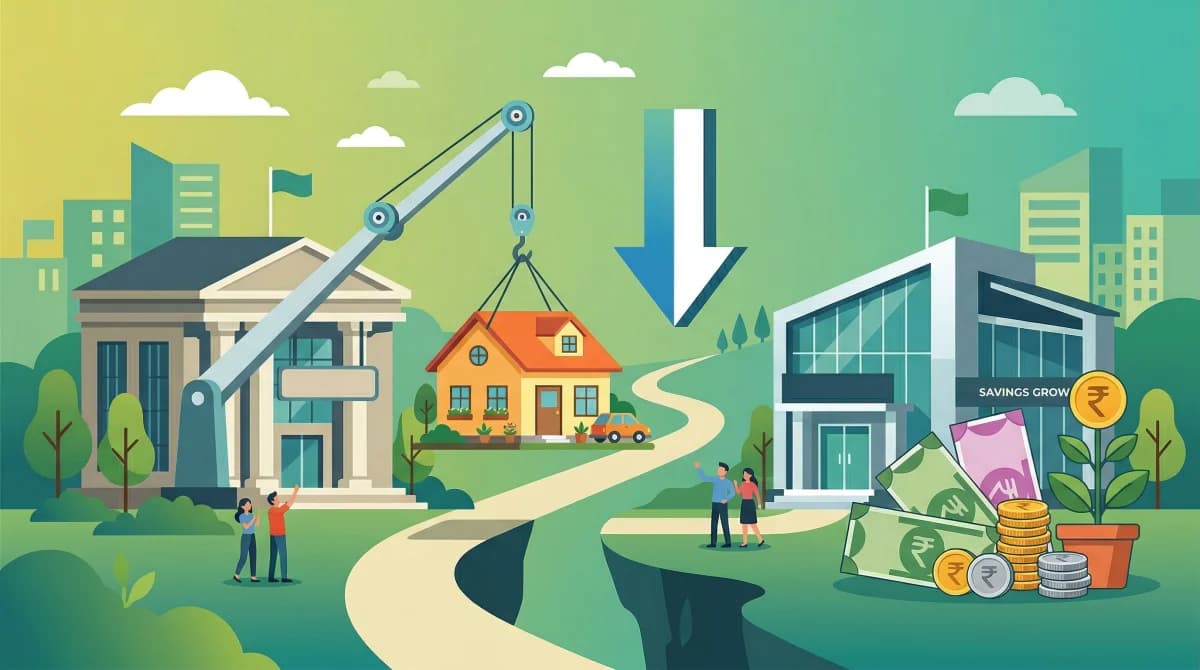
If you took a home loan 3-5 years ago, there's a good chance you're paying 0.5-1.5% more interest than what's available today. On a ₹50 lakh loan, that difference can cost you ₹5-15 lakh over the remaining tenure.
A home loan balance transfer lets you move your outstanding loan from your current bank to a new one offering a lower interest rate. The new bank pays off your old loan, and you start paying the new (cheaper) EMI.
With the new RBI no-penalty rule, prepaying your existing loan to switch is now completely free for floating-rate loans sanctioned from January 2026.
When Is a Balance Transfer Worth It?
The simple rule: if you can get a rate at least 0.50% lower, and you have more than 10 years remaining, it's almost always worth it.
| Current Rate | New Rate | Outstanding (₹50L, 15 yrs left) | Interest Saved |
|---|---|---|---|
| 9.50% | 8.50% | ₹50 lakh | ₹8.2 lakh |
| 9.00% | 8.50% | ₹50 lakh | ₹4.3 lakh |
| 9.50% | 8.75% | ₹30 lakh | ₹3.8 lakh |
| 9.00% | 8.50% | ₹30 lakh | ₹2.6 lakh |
Use our EMI Calculator to run the exact numbers for your situation.
Step-by-Step: How to Do a Balance Transfer
Step 1: Check Your Current Loan Details
Get your outstanding principal, current interest rate, remaining tenure, and foreclosure charges from your existing bank. You can usually find this on your loan account statement or net banking portal.
Step 2: Compare New Lender Offers
Check balance transfer rates from at least 3-4 banks. Key comparison points:
- Interest rate (the obvious one)
- Processing fee (typically 0.5-1% of loan amount)
- Legal and valuation charges (₹5,000-₹15,000)
- Any hidden charges in the fine print
Step 3: Apply to the New Lender
Submit your application along with identity proof, address proof, income documents, property documents, and existing loan statements. The new bank will do a property valuation and legal check.
Step 4: Get NOC From Your Existing Bank
Once approved, request a No Objection Certificate (NOC) or consent letter from your current bank. They are legally required to provide it — though some banks will try to delay or offer you a counter-rate to retain you.
Step 5: New Bank Pays Off Old Loan
The new bank directly pays your old bank the outstanding amount. Property documents are transferred. You start paying EMIs to the new bank.
Total time: 2-4 weeks from application to completion.
Balance Transfer Costs
| Cost | Typical Amount |
|---|---|
| Processing fee | 0.25-1% of loan (₹12,500-₹50,000 on ₹50L) |
| Valuation charges | ₹2,000-₹5,000 |
| Legal charges | ₹3,000-₹10,000 |
| Stamp duty (some states) | Varies |
| Foreclosure charge (old bank) | ₹0 for floating rate loans (new RBI rule) |
| Total typical cost | ₹20,000-₹65,000 |
Break-even: If a transfer saves ₹4-8 lakh in interest and costs ₹30,000-₹50,000, it pays for itself in 2-3 months.
When NOT to Transfer
- Less than 5 years remaining: Most interest has already been paid in the early years. The savings in the last few years are minimal.
- Rate difference under 0.25%: The processing fees will eat up any savings.
- You plan to prepay/close soon: If you'll pay off the loan in 1-2 years anyway, the transfer costs aren't worth it.
- Your credit score has dropped: You might not qualify for a better rate than what you currently have.
Pro Tips
- Negotiate with your current bank first: Tell them you're considering a transfer. Many banks have retention offers — they'd rather reduce your rate by 0.25-0.50% than lose you entirely.
- Ask for a top-up: When transferring, you can often get additional funds (a "top-up loan") at the same low rate. Useful if you need money for renovations.
- Keep the same or shorter tenure: Don't extend the tenure just because the new EMI is lower. That defeats the purpose.
- Time it right: Transfer early in your loan (first 7-10 years) when the interest component of EMI is highest. That's where the savings are maximized.
Disclaimer: This article is for educational purposes only. Balance transfer terms, charges, and rates vary by lender and individual profile. Please compare specific offers before making a decision.
Written by
Jaspal Singh
Founder & Editor
Personal finance writer helping Indians make smarter money decisions through clear, jargon-free guides on taxes, investments, and budgeting.
Continue Reading
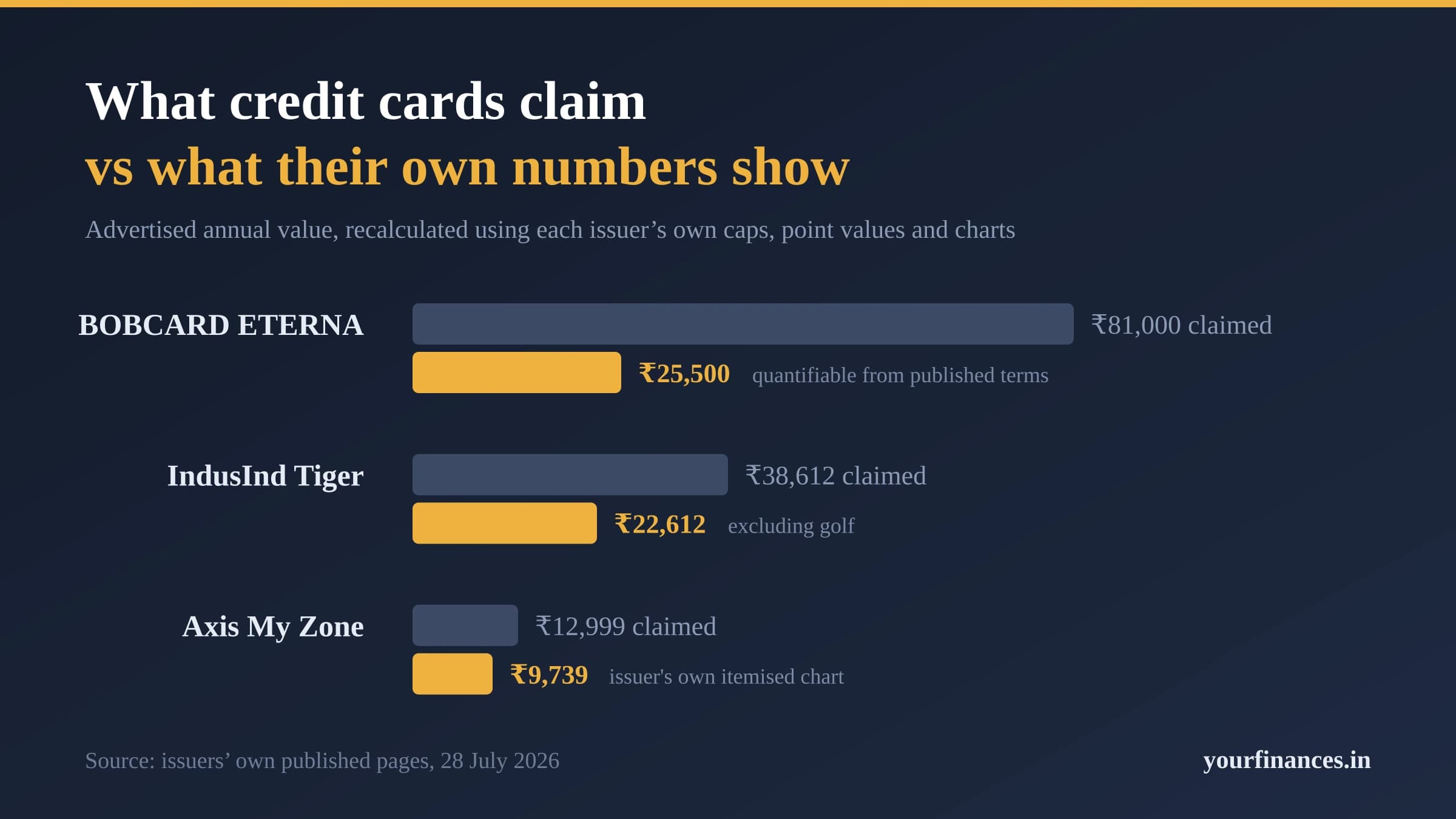
What Indian Credit Cards Claim vs What Their Own Numbers Show
An original study of eight Indian credit cards from seven issuers, using only figures each bank publishes itself. The illustrations consistently sit just inside caps the headlines never mention.
Personal Loan vs Credit Card Debt: Which Is Worse for Your Money?
Credit cards charge 36-42% interest. Personal loans charge 10-18%. The math is clear — but the real story is more nuanced. Here's the complete comparison.
The BNPL Trap: How "Buy Now Pay Later" Is Creating India's Hidden Debt Crisis
60% of BNPL users spend more than they can afford. Late fees can hit 30-40% interest. Here's how Buy Now Pay Later apps are trapping young Indians in invisible debt.