Gold, Silver Import Duty Raised to 15%: What It Means for Prices, Rupee, and India's Trade Balance
Jaspal Singh
Author

India has raised import duty on gold and silver to 15% from 6%, a major policy shift aimed at reducing non-essential imports and supporting the rupee during a period of external pressure.
Key Details
The Indian government has hiked the import duty on gold and silver to 15% from the previous 6%. This applies to precious metals including gold bars and bullion.
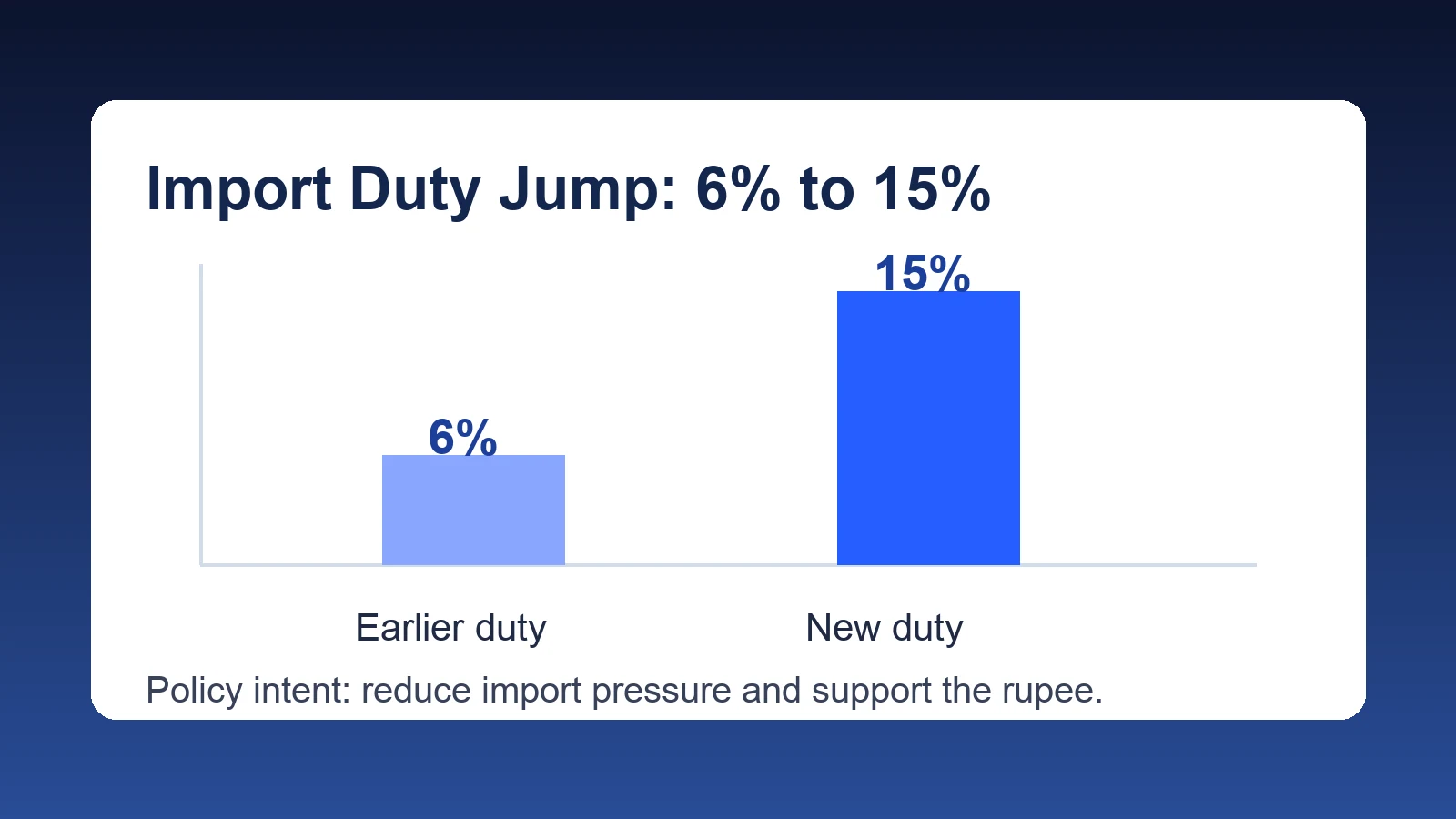
Duty hike snapshot: import duty increased from 6% to 15%.
Main reasons:
Curb rising precious metal imports to ease pressure on India’s foreign exchange reserves.
Narrow the trade deficit.
Support the rupee, which has been one of Asia’s weakest-performing currencies in recent months.
Context on imports: India’s gold bar imports jumped sharply from $36.5 billion in 2022 to $58.9 billion in 2025, with a growing share coming from the UAE.
This move follows Prime Minister Narendra Modi’s appeal earlier this week asking Indians to avoid non-essential gold purchases (including wedding-related buying) for one year to help save foreign exchange.
Supporting comments:
The Global Trade Research Initiative (GTRI) backed Modi’s appeal, noting that rising bullion imports are hurting forex reserves and the trade balance.
Union minister Ashwini Vaishnaw highlighted the urgency due to ongoing instability in the Middle East and its impact on global energy flows through the Strait of Hormuz.
GTRI has urged the government to review tariff concessions under the India-UAE free trade agreement, which it says contributed to the surge in gold imports.
Expected Impact (per the article)
Economists believe the higher tariffs will help narrow India’s trade deficit and support the rupee.
It is expected to dampen demand in India, the world’s second-largest consumer of precious metals.
Quick Stats Table
Metric | Earlier | Now / Latest | Signal |
|---|---|---|---|
Import duty (gold, silver) | 6% | 15% | +9 percentage points |
Gold bar imports | $36.5B (2022) | $58.9B (2025) | ~61% increase |
CEPA concession (UAE TRQ) | MFN - 1% | MFN - 1% (if unchanged) | Preference continues under quota |
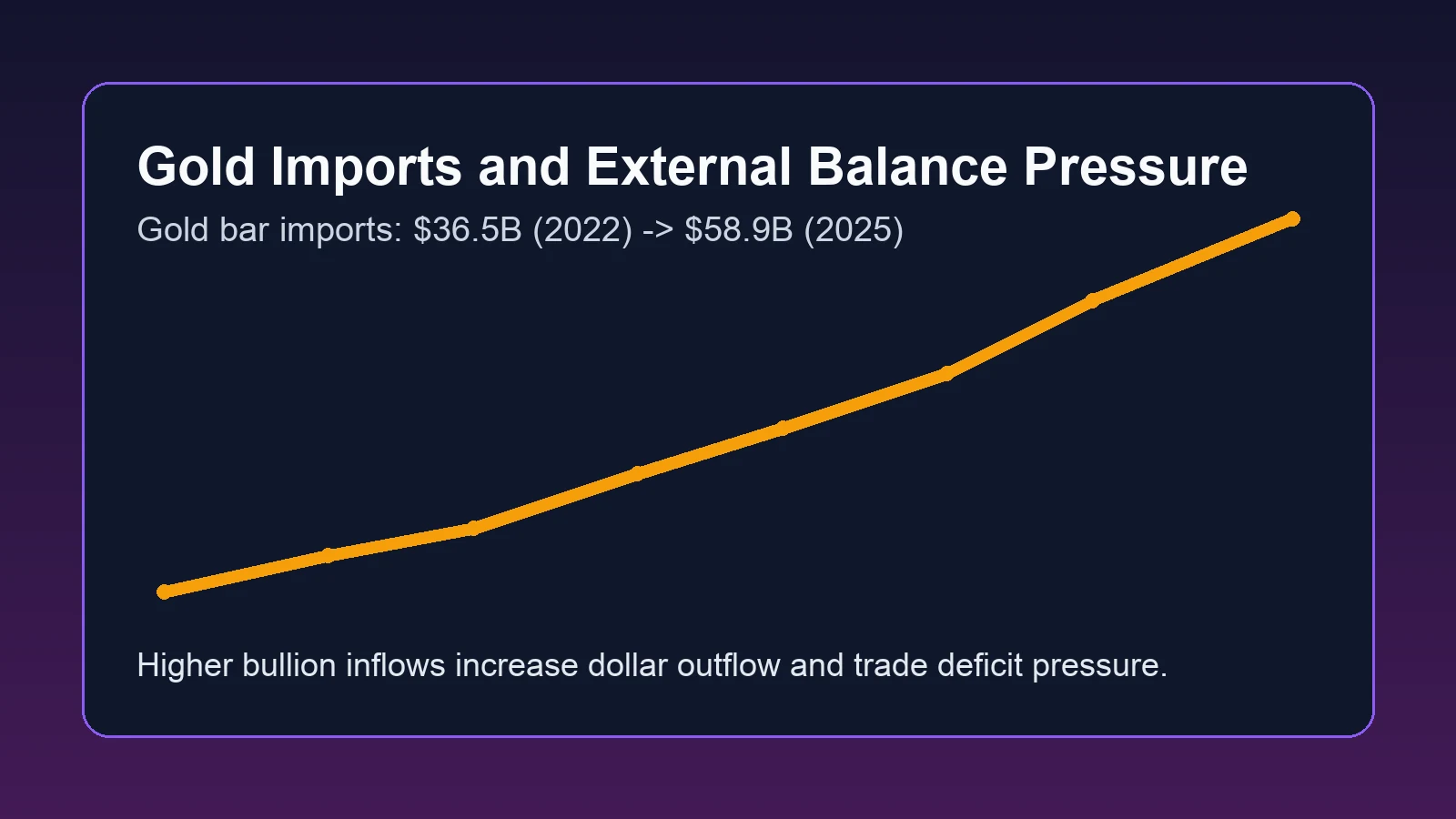
Import trend pressure: bullion inflows and external balance risk.
Analysis of India-UAE CEPA Gold Rules (as of May 13, 2026)
The India-UAE Comprehensive Economic Partnership Agreement (CEPA) — India’s FTA with the UAE — entered into force on May 1, 2022. It is one of India’s most ambitious trade pacts, covering goods, services, investment, and more. Gold (and silver/precious metals) received special, limited treatment rather than full duty elimination. Here’s a clear breakdown of the gold-specific rules, how they work, their impact, and the current controversy.
1. Core Gold Concession: 1% Tariff Reduction via Tariff Rate Quota (TRQ)
India offers UAE-origin gold a 1 percentage point absolute duty reduction compared to the standard Most Favoured Nation (MFN) import duty.
This applies only within an annual quota (TRQ) — not unlimited.
Initial quota: 120 tonnes per year.
Scheduled increase: Rises to 200 tonnes annually from 2027.
Covered products: Primarily unwrought and semi-manufactured gold (HS codes 7108.12.00 and 7108.13.00 — gold bars, bullion, etc.).
Mechanism: Importers (mainly jewellery manufacturers and authorised entities) must obtain a DGFT TRQ authorisation + a valid Certificate of Origin (COO) issued in the UAE.
Example of duty savings (historical and current):
When MFN duty was cut to 6% in the 2024 Budget → UAE gold entered at 5%.
Today (after the May 13, 2026 hike to 15% MFN duty) → UAE gold under TRQ would enter at 14% if the concession remains unchanged.
2. Rules of Origin (RoO) for Gold
From the official CEPA text (Annex 3B Product-Specific Rules for HS Chapter 71):
Gold qualifies as “originating” if it meets:
CTSH + 3% Value Addition (Change in Tariff Subheading + at least 3% value added in the UAE on FOB basis).
Or specific “good delivery gold bars” certified under UAE/India standards (still CTSH + 3% VA).
Certificate of Origin is mandatory; Indian customs can verify costs, materials, and processing.
Cumulation between India and UAE is allowed in limited cases.
General de minimis rule: Non-originating materials ≤10% of FOB value.
Criticism: The UAE is a major trading/refining hub but produces almost no gold itself. GTRI and analysts argue that some shipments are simply third-country gold (from Switzerland, Africa, etc.) lightly processed or repackaged in Dubai to claim the preference — a classic “rerouting” or “hub arbitrage” issue. Enforcement of the 3% VA rule has been questioned.
3. Observed Impact Since 2022
Metric | Pre-FTA (2022) | 2025 | Change |
|---|---|---|---|
India’s total gold bar imports | $36.5 billion | $58.9 billion | +61% |
Imports from UAE | $2.9 billion | $16.5 billion | +469% |
UAE share of India’s gold imports | 7.9% | 28% | +20.1 percentage points |
The quota now covers roughly 25% of India’s annual gold demand once it reaches 200 tonnes.
Private jewellers can also import directly via the India International Bullion Exchange (GIFT City) under the same concessional route.
4. Why It Matters Now — GTRI Recommendations & Government Context
The Global Trade Research Initiative (GTRI) has strongly urged an immediate review (as of May 12–13, 2026):
The CEPA concession is one of the main drivers of the import surge, putting pressure on forex reserves and the trade deficit.
Recommendation:
Tighten Rules of Origin enforcement.
Review (or suspend) precious-metal concessions under this and future FTAs.
Lesson learnt: Keep gold, silver, platinum, and diamonds out of future FTAs to prevent rerouting.
This aligns with PM Modi’s appeal (earlier this week) for one-year restraint on non-essential gold buying and today’s across-the-board duty hike to 15%.
The government has previously tightened the Dubai route (May 2025 notification) and repeatedly extended TRQ licence validity (most recently to June 30, 2026, citing Middle East disruptions).
Bottom Line
The India-UAE CEPA gold rules were designed as a controlled, reciprocal benefit — cheaper input for Indian jewellers in exchange for market access for UAE exports. However, the combination of a low 1% concession, a growing TRQ, Dubai’s role as a global gold hub, and relatively light RoO has turned it into a major arbitrage channel. This has boosted imports dramatically but is now seen as counterproductive amid rupee weakness, forex concerns, and the Iran-related oil shock.
Whether the government will actually revise the TRQ or RoO remains to be seen — but the political and economic momentum (Modi’s appeal + today’s 15% duty hike + GTRI report) points toward tighter scrutiny or partial rollback in the near term.
Would you like me to pull the exact DGFT notification text, compare it with other FTAs, or check how this affects jewellery exporters?
Why the government raised duty
According to the report, the policy intent is clear: curb heavy precious-metal imports, protect India's foreign exchange reserves, and ease pressure on the rupee. A sharp increase in bullion imports can widen the trade deficit because India imports most of its gold and silver demand.
What this means for Indian buyers
Higher landed cost: Imported gold and silver become more expensive after duty.
Possible retail impact: Jewellery and bullion prices may stay elevated if global prices remain firm.
Demand moderation: Consumers may defer discretionary purchases, especially big-ticket wedding buying.
Macro impact to watch
Trade deficit: Lower import volumes can help narrow the deficit over time.
Forex reserves: Reduced import bill can ease pressure on reserves.
Rupee stability: Lower demand for dollars for bullion imports may offer support to the currency.
Policy context
The duty revision comes in the backdrop of broader calls to cut avoidable imports and conserve foreign exchange as global uncertainties remain high. Analysts will now watch import trends over the next few months to see how strongly the higher duty changes consumption behavior.
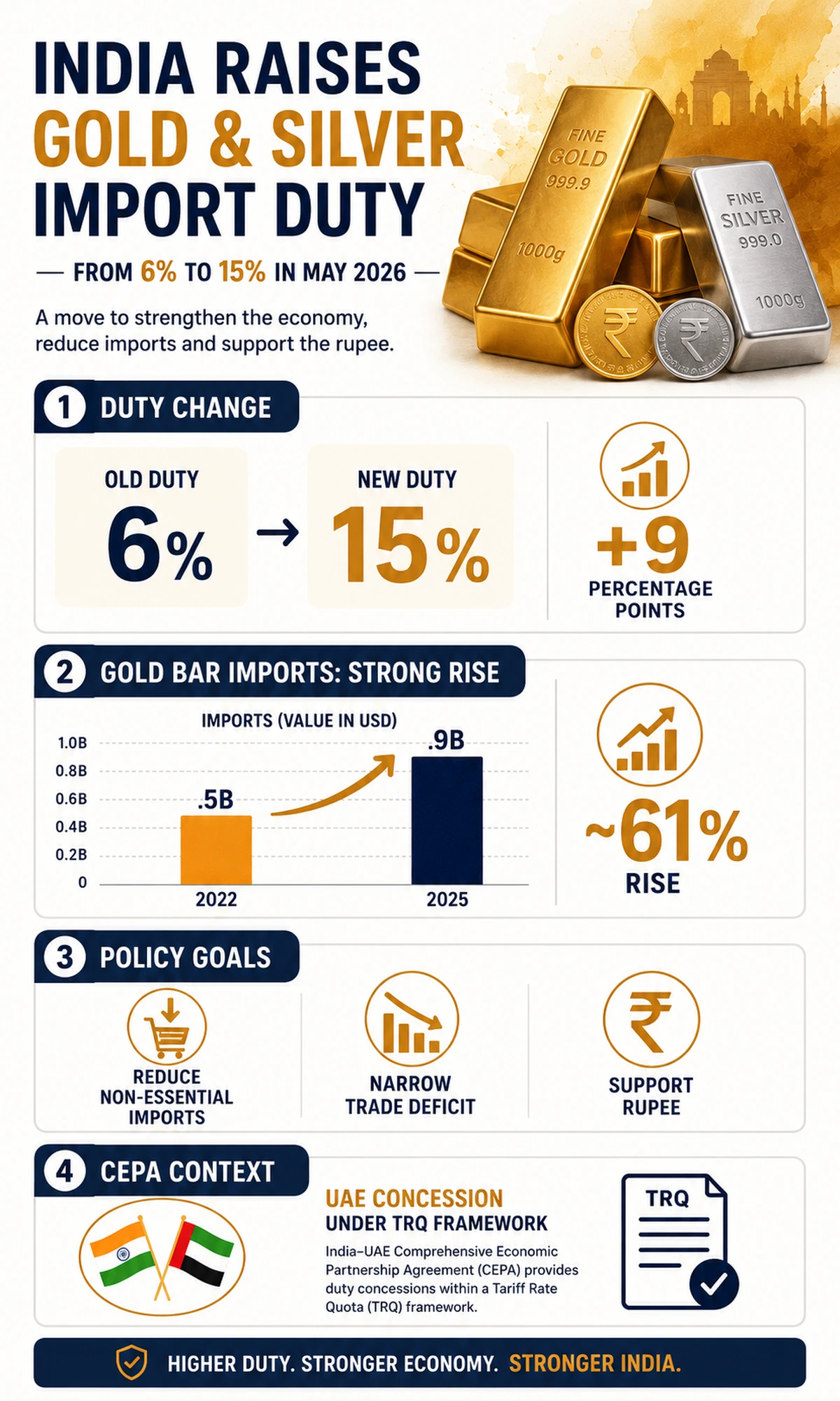
Infographic: key numbers and implications of the duty revision.
Bottom line
The move is a short-term demand-cooling and currency-support measure. For households, the practical takeaway is straightforward: imported precious metals are now costlier, so purchase timing and allocation discipline matter more than ever.
Source: Times of India report dated May 13, 2026. This article is for informational purposes and should not be treated as investment advice.
Written by
Jaspal Singh
Founder & Editor
Personal finance writer helping Indians make smarter money decisions through clear, jargon-free guides on taxes, investments, and budgeting.
Continue Reading

Your Take-Home Salary Just Got Cut — Here’s Why
From April 2026, your basic pay must be at least 50% of your CTC. That means lower take-home pay but significantly higher EPF and gratuity. Here’s what changed and what it means for your wallet.

Silver Loans Are Now Legal in India — Here’s How to Get One
From April 1, the RBI allows banks and NBFCs to give loans against your silver jewelry and coins. Up to 85% LTV, 10kg silver limit, and strict borrower protections. Here’s everything you need to know.
RBI MPC Meets Monday: Why Your EMI and FD Returns Won’t Change Yet
The RBI’s Monetary Policy Committee meets April 6-8. With oil above $100, the rupee at record lows, and inflation creeping up, here’s why the central bank is expected to hit pause — and what it means for your wallet.