Rupee Hits Record Low at 92.35 — What It Means for Your Money
Jaspal Singh
Author
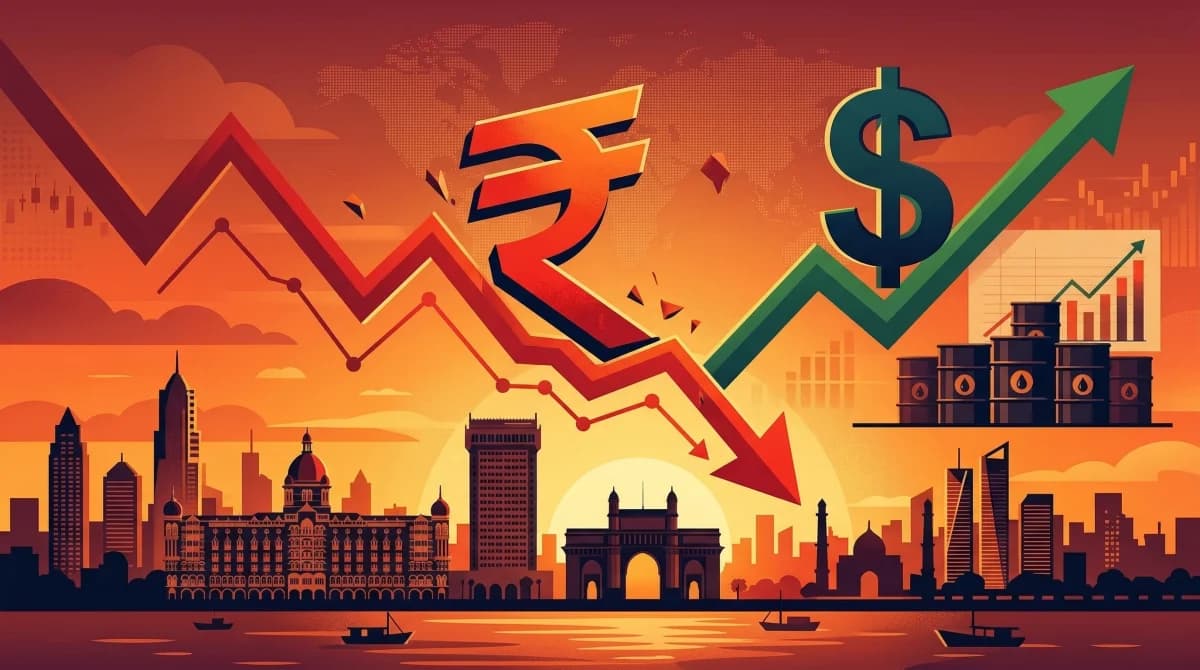
On Monday, March 9, 2026, the Indian rupee fell to its lowest-ever level — 92.35 against the US dollar. In just one trading session, the rupee lost 53 paise. That might sound like a small number, but when you multiply it across billions of dollars in trade, it's a huge deal.
Let's break this down in simple language. Think of the rupee as the price tag on Indian money. When the rupee "falls," it means you need more rupees to buy one US dollar. A year ago, you needed about 85 rupees to buy one dollar. Now you need over 92. That means the dollar has become more expensive for Indians — and everything priced in dollars has too.
Why Did the Rupee Fall So Sharply?
Several things went wrong at the same time, creating a perfect storm for the rupee:
1. Oil Prices Shot Through the Roof
The biggest reason is crude oil. Brent crude — the global benchmark — surged past $106 per barrel, with some futures contracts touching $116-$119. Why? Because the US-Israel war with Iran intensified in early March 2026, raising fears that oil supply from the Middle East could be disrupted.
India imports about 80% of its crude oil. When oil gets expensive, India has to spend more dollars to buy it. More demand for dollars means the rupee weakens. According to former NITI Aayog chief estimates, every $10 spike in crude oil prices costs India about $14 billion extra on its import bill.
2. Foreign Investors Pulled Money Out
Foreign Institutional Investors (FIIs) became net sellers in Indian stock markets. In the first week of March 2026, they sold Indian equities worth billions of rupees and moved their money into safe-haven assets like the US dollar and gold. When FIIs sell Indian stocks and convert the rupees back to dollars, the rupee faces even more downward pressure.
3. The US Dollar Got Stronger
As global tensions rose, investors worldwide rushed to the US dollar — considered the safest currency in the world. A stronger dollar automatically makes the rupee (and most other currencies) look weaker.
4. Stock Market Crashed Too
The Sensex nosedived 2,460 points (3.1%) to 76,449, and the Nifty 50 crashed 727 points (3%) to 23,715. When markets crash, foreign investors sell even faster, creating a vicious cycle of outflows and rupee weakness.
How Did We Get Here? The Rupee's Journey
The rupee's slide didn't happen overnight. Here's a quick timeline:
| Period | Exchange Rate (INR per USD) | Key Event |
|---|---|---|
| January 2025 | ~85.64 | Start of 2025 |
| April 2025 | ~88-89 | US tariff rollout; rupee lost 6%+ in weeks |
| December 2025 | ~90-91 | Worst-performing Asian currency of 2025 (5.5% fall) |
| January 2026 | ~91 | Crossed 91-mark within 15 trading sessions |
| February 2026 | ~92.02 | Touched new record low |
| March 4, 2026 | 92.18 | Iran-Israel-US war worries escalated |
| March 9, 2026 | 92.35 | All-time closing low; crude oil above $106 |
In just 14 months, the rupee has lost nearly 8% of its value against the dollar. For comparison, the rupee took several years to move from 75 to 85. The recent slide has been unusually fast.
How Does This Affect You?
Imports Get More Expensive
India imports a lot — from crude oil and cooking oil to electronics and machinery. When the rupee weakens, all of these cost more in rupee terms. Think of it this way: if a phone component costs $10, it used to cost you ₹856. Now it costs ₹923. That difference gets passed on to consumers.
Items likely to get costlier include:
- Petrol and diesel — oil is imported and priced in dollars
- Electronics — smartphones, laptops, and components
- Cooking oils — India imports a large share of edible oils
- Gold — priced internationally in dollars
Inflation Could Creep Up
When imports get expensive, businesses pass those costs to you. SBI Research has warned that the oil spike could raise inflation and slow GDP growth. However, experts note that a 5% rupee depreciation typically adds only 15-25 basis points to inflation — so the impact on daily essentials may be gradual rather than sudden.
Foreign Education Becomes Costlier
If you or your child is studying abroad, this hurts directly. Suppose the annual tuition at a US university is $30,000. A year ago, that would have cost about ₹25.7 lakh. Today, at 92.35, it costs ₹27.7 lakh — that's ₹2 lakh more for the same education.
Overseas Travel Burns a Bigger Hole
Planning a trip to the US, Europe, or Southeast Asia? Your travel budget just got squeezed. Hotel rooms, meals, shopping — everything priced in foreign currency costs you more rupees now. A family vacation that would have cost ₹5 lakh a year ago might now cost ₹5.4 lakh or more.
NRI Remittances: A Silver Lining (With a Caveat)
For Non-Resident Indians (NRIs) sending money home, a weaker rupee is actually good news — every dollar they send converts to more rupees. However, the Middle East conflict threatens this flow. About 38% of India's remittances come from the Gulf countries, where 9 million Indians work. A prolonged conflict could disrupt jobs in oil services, construction, and hospitality — reducing the $100 billion+ annual remittance inflow that supports the rupee.
Who Benefits From a Weak Rupee?
IT Companies and Exporters
India's IT giants — TCS, Infosys, Wipro — earn most of their revenue in US dollars. When they convert those dollars back to rupees, they get more. A weaker rupee acts as a "currency tailwind" for their earnings. Analysts expect large-cap IT firms to show better rupee-denominated results in their Q4 FY26 numbers.
Similarly, exporters of gems, textiles, pharmaceuticals, and auto components benefit because their products become relatively cheaper for foreign buyers.
However, experts caution that the benefits for exporters are outweighed by the risks of imported inflation for the broader economy.
What Is the RBI Doing?
The Reserve Bank of India isn't sitting idle. Reports indicate the RBI has been selling US dollars from its foreign exchange reserves to prevent the rupee from falling even faster. Without RBI intervention, the rupee could have dropped well below 93.
The RBI has also restructured the maturity profile of its short dollar forward positions — essentially buying itself more flexibility to intervene in the future. India's forex reserves, while depleted from recent interventions, still provide a substantial buffer.
However, some analysts question whether the RBI is merely "deferring the inevitable" by burning reserves to slow a depreciation driven by fundamental forces like oil prices and capital outflows.
What Should Investors Do?
Don't Panic — Continue Your SIPs
If you're investing through a Systematic Investment Plan (SIP), this is precisely the time NOT to stop. Market downturns are when SIPs work their magic through rupee cost averaging — your fixed monthly amount buys more mutual fund units when prices are low. When markets recover, those extra units generate higher returns.
Use our SIP Calculator to see how consistent investing through volatile periods can build significant wealth over 10-15 years.
Consider Fixed Deposits for Safety
If the volatility makes you nervous, parking some money in fixed deposits can provide stability. With interest rates still attractive, FDs offer guaranteed returns regardless of what happens to the rupee or the stock market. Check our FD Calculator to compare returns across different tenures.
Diversification Is Key
This crisis is a reminder of why diversification matters. Don't put all your eggs in one basket. A mix of equity mutual funds, fixed deposits, PPF, and gold can help you weather storms like this.
For NRIs: Good Time to Send Money Home
If you're an NRI, every dollar you remit to India now buys more rupees than ever before. This could be a good time to send money for family expenses, invest in Indian mutual funds, or even make real estate payments.
The Bigger Picture
India's economy isn't in a crisis — but it's under stress. The current account deficit stands at 0.8% of GDP in the first half of FY26, which is manageable. However, if crude oil stays above $110-115 per barrel for an extended period, the import bill could balloon by $56-64 billion annually, pushing the current account deficit beyond 3% of GDP.
The good news? India has substantial forex reserves, relatively low inflation, and a growing economy. These buffers can absorb short-term shocks. The key risk is if the Middle East conflict drags on for months, keeping oil prices elevated and disrupting remittance flows from the Gulf.
For now, the best thing you can do is stay informed, stay invested, and avoid panic decisions. Currency movements are cyclical — the rupee has fallen before and recovered. What matters for long-term wealth building is discipline, not timing.
Disclaimer: This article is for informational purposes only and does not constitute financial advice. Currency markets are volatile, and past trends may not predict future movements. Please consult a qualified financial advisor before making investment decisions. The exchange rates and oil prices mentioned are as reported on March 9, 2026, and may have changed since publication.
Written by
Jaspal Singh
Founder & Editor
Personal finance writer helping Indians make smarter money decisions through clear, jargon-free guides on taxes, investments, and budgeting.
Continue Reading

Petrol and Diesel Prices Stable in India — But for How Long?
Despite Brent crude hovering near $120/barrel and West Asia tensions escalating, India has kept petrol and diesel prices unchanged. Meanwhile, Pakistan hiked fuel prices by PKR 55/litre. How long can India hold?

LPG Crisis Deepens — 90% of India's Gas Passes Through Hormuz Strait
India imports 60% of its LPG, and 90% of that passes through the Strait of Hormuz. With West Asia tensions rising, induction cooktop sales have jumped 20X on Amazon. Here's what the LPG crisis means for your household budget.
Sensex Crashes 1,342 Points — Nifty Hits 11-Month Low as Markets Bleed
Indian stock markets saw their worst single-day fall in months. Sensex plunged 1,342 points while Nifty dropped below 22,900 — its lowest in 11 months. Here's what happened and what it means for your investments.