Rupee Crashes Past ₹93 — How It Affects Your Wallet, Loans, and Investments
Jaspal Singh
Author
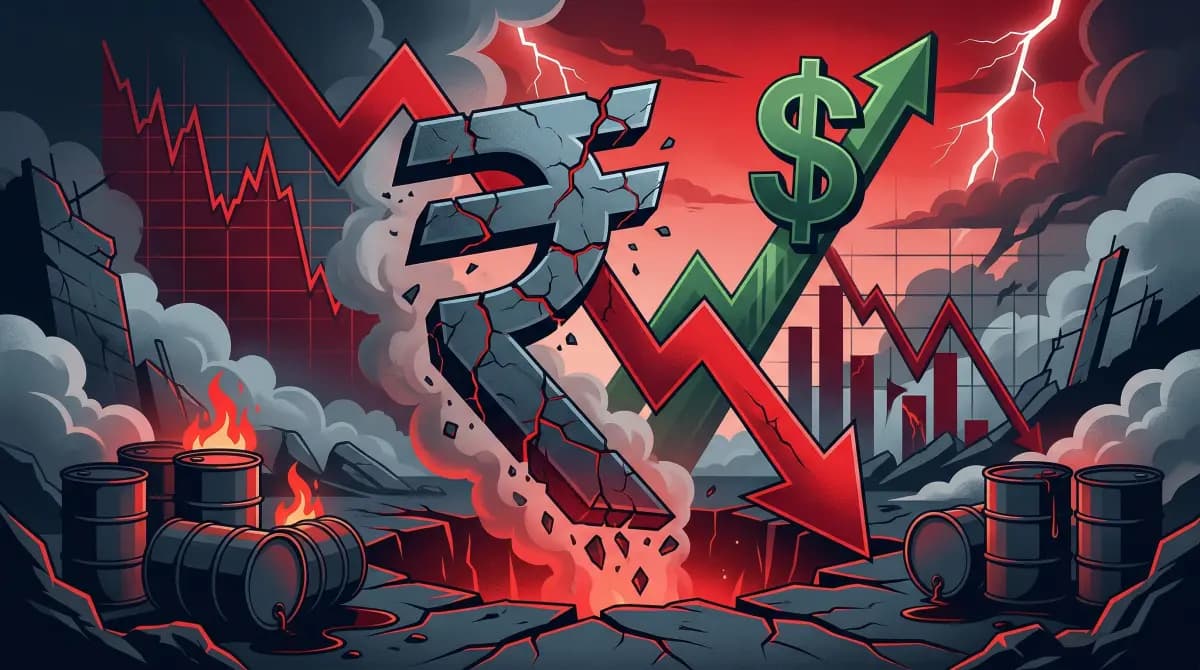
On March 23, 2026, the Indian rupee crashed to ₹93.89 against the US dollar — a new all-time low, breaking the record of ₹93.71 set just three days earlier on March 20. For context, the rupee was trading at around ₹83 just a year ago. That is a depreciation of over 12% in twelve months, and the pace of the fall has accelerated sharply in the last few weeks.
If you are wondering what a weaker rupee means for your daily life, your EMIs, your investments, and your travel plans — here is a plain-English breakdown.
Why Is the Rupee Falling?
The rupee's slide is not happening in isolation. There are three big forces pushing it down:
1. The Iran-West Asia Crisis and Oil Prices: With ongoing tensions in West Asia, Brent crude oil is trading near per barrel. The Strait of Hormuz — through which 20% of the world's oil supply passes — remains a flashpoint. India imports 85% of its crude oil, so every dollar increase in oil price directly weakens the rupee because India needs more dollars to pay for oil imports.
2. Foreign Investors Are Leaving: Foreign Institutional Investors (FIIs) have pulled out nearly $9.6 billion from Indian markets in March alone. When FIIs sell Indian stocks and convert the rupees back to dollars, it creates massive selling pressure on the rupee.
3. Strong US Dollar: The US Federal Reserve has kept interest rates high, making the dollar attractive globally. Money is flowing out of emerging markets like India and into US Treasury bonds, further weakening the rupee.
What Gets More Expensive?
A weaker rupee makes everything priced in dollars costlier for Indians. Here is what you will feel in your wallet:
Fuel prices: India imports 85% of its crude oil. A weaker rupee means oil companies pay more in rupee terms, and that cost eventually gets passed on to you at the pump. Petrol and diesel prices are likely to see another round of hikes if the rupee stays above ₹93.
Imported electronics: That iPhone, Samsung Galaxy, or Sony TV you have been eyeing? All priced in dollars at the import stage. Expect price hikes of 5-10% on imported gadgets and electronics in the coming weeks.
Foreign education: If you or your children are studying abroad, tuition fees, hostel charges, and living expenses — all denominated in dollars, pounds, or euros — just became significantly more expensive. A student paying $30,000 per year in tuition now needs ₹28.1 lakh instead of ₹24.9 lakh a year ago.
International travel: Your foreign holiday just got pricier. Hotel bookings, flights on international carriers, and spending money abroad — all cost more when the rupee is weak. A trip budgeted at $3,000 now costs ₹2.81 lakh versus ₹2.49 lakh last year.
Gold: Gold is priced in dollars globally. A weaker rupee pushes domestic gold prices higher, even if international gold prices stay flat. This is one reason gold has been hitting record highs in India.
What Gets Cheaper? (Yes, There Is a Silver Lining)
Not everything is bad news. A weaker rupee actually helps some sectors:
IT and software exports: Indian IT companies like TCS, Infosys, and Wipro earn most of their revenue in dollars. When those dollars are converted to rupees, they get more. This is why IT stocks often rally when the rupee falls.
Export-oriented businesses: Textile exporters, pharmaceutical companies that sell abroad, and other export businesses benefit from a weaker rupee. Their products become cheaper and more competitive in global markets.
NRI remittances: If you are an NRI sending money home, your dollars now buy more rupees. A ,000 remittance gives ₹93,710 today versus ₹83,000 a year ago — that is ₹10,710 more for the same amount.
Impact on Your Investments
Here is how different asset classes are affected:
Stocks: A falling rupee creates short-term panic, especially in sectors that depend on imports (like oil, airlines, and auto). But export-oriented sectors (IT, pharma) tend to benefit. The broader market volatility can create buying opportunities for long-term investors. Use our Lumpsum Calculator to see how a one-time investment today could grow over 5-10 years.
Mutual fund SIPs: This is where disciplined investing pays off. If you have running SIPs, do not stop them. SIPs automatically buy more units when markets fall (rupee depreciation often triggers market corrections). This is called rupee cost averaging, and it works in your favour during volatile times. Use our SIP Calculator to see the power of consistent investing.
Fixed deposits: FD rates are not directly affected by the rupee's movement, but if the RBI raises interest rates to defend the rupee, FD rates could go up — which is good for new deposits.
Gold: Gold has historically been a hedge against currency depreciation. When the rupee falls, gold prices in India tend to rise. If you already hold gold, your investment is protecting your wealth. If you don't, this is worth considering as a diversification strategy.
Home loans and EMIs: If the RBI raises the repo rate to support the rupee, your floating-rate home loan EMIs could increase. Use our EMI Calculator to see how a 0.25% or 0.50% rate hike would affect your monthly payment.
What Should You Do?
1. Do not panic. Currency fluctuations are a normal part of the economic cycle. The rupee has depreciated consistently over decades — from ₹7 in 1991 to ₹93 today — and the Indian economy has grown massively in that same period. Short-term volatility does not mean long-term doom.
2. Continue your SIPs. The worst thing you can do during volatility is to stop investing. SIPs are designed to work through ups and downs. If anything, market corrections give you more units for the same monthly amount. Use our Compound Interest Calculator to see how staying invested compounds your wealth.
3. Consider gold as a hedge. If your portfolio is heavily tilted towards equities and fixed income, adding 5-10% allocation to gold (via Sovereign Gold Bonds or Gold ETFs) can provide a cushion during currency weakness.
4. If you have foreign expenses, plan ahead. If you are paying for foreign education, planning a trip abroad, or have any dollar-denominated expenses, consider buying dollars in tranches rather than waiting for the rupee to recover. It may not recover quickly.
5. Watch the RBI. The Reserve Bank of India has been actively intervening in the forex market to slow the rupee's fall, but Goldman Sachs has now officially predicted the rupee could hit ₹95 per dollar within the next year. Other analysts agree — with Brent at $113, FPI outflows crossing ₹1 trillion for 2026, and the Strait of Hormuz crisis showing no signs of resolution, ₹95 is no longer a worst-case scenario but a base case.
The Bigger Picture
India's fundamentals remain strong — GDP growth is above 6%, domestic consumption is resilient, and the services sector continues to expand. The rupee's fall is driven more by global factors (oil, geopolitics, US interest rates) than by domestic weakness. This is important to remember when making financial decisions.
Markets reward patience. They always have.
Disclaimer: This article is for informational purposes only and does not constitute investment or financial advice. Currency markets are volatile and past trends may not predict future movements. Please consult a SEBI-registered financial advisor before making investment decisions. Data is based on publicly available information as of March 23, 2026.
Written by
Jaspal Singh
Founder & Editor
Personal finance writer helping Indians make smarter money decisions through clear, jargon-free guides on taxes, investments, and budgeting.
Continue Reading

Gold, Silver Import Duty Raised to 15%: What It Means for Prices, Rupee, and India's Trade Balance
India has raised import duty on gold and silver to 15% from 6%. Here is what the move means for bullion demand, trade deficit, forex reserves, and everyday buyers.
Your Take-Home Salary Just Got Cut — Here’s Why
From April 2026, your basic pay must be at least 50% of your CTC. That means lower take-home pay but significantly higher EPF and gratuity. Here’s what changed and what it means for your wallet.

Silver Loans Are Now Legal in India — Here’s How to Get One
From April 1, the RBI allows banks and NBFCs to give loans against your silver jewelry and coins. Up to 85% LTV, 10kg silver limit, and strict borrower protections. Here’s everything you need to know.