RBI Holds Repo Rate at 6.25%: What It Means for Your EMI and FD
Jaspal Singh
Author
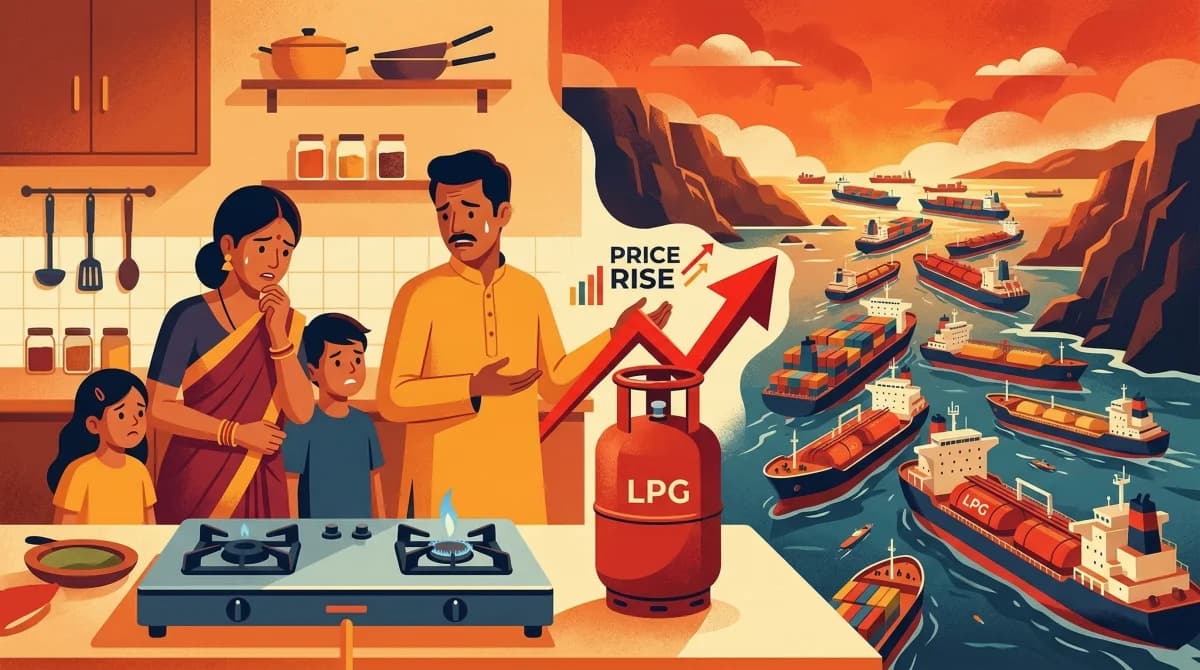
The Reserve Bank of India's Monetary Policy Committee (MPC) met this week against the backdrop of one of the most volatile periods in recent Indian economic history — oil at $120, the rupee at record lows, Sensex crashing 1,353 points, and a full-blown geopolitical crisis in the Middle East. And after three days of deliberation, RBI kept the repo rate unchanged at 6.25%.
If you have a home loan, car loan, or fixed deposit, this decision directly affects your wallet. Let us break down what it means.
What Is the Repo Rate and Why Does It Matter?
The repo rate is the interest rate at which the RBI lends money to commercial banks. Think of it as the "wholesale price" of money. When RBI changes this rate, it ripples through the entire economy:
- Repo rate goes up → Banks borrow at higher cost → They charge you more on loans → EMIs increase → People borrow less → Spending slows → Inflation cools down
- Repo rate goes down → Banks borrow cheaper → Your loan rates fall → EMIs decrease → People borrow more → Spending increases → Economy gets a boost
At 6.25%, the repo rate is at the same level it was set in February 2026, when RBI delivered a surprise 25 basis point cut — the first cut in nearly two years. Many analysts expected another cut this time. It did not happen.
Why Did RBI Hit Pause?
1. Oil Price Uncertainty
Brent crude touched $120 per barrel on March 9 before crashing back to $88. This kind of wild swinging makes it impossible for RBI to predict where inflation is headed. If oil settles at $90, inflation stays manageable. If it goes back to $100+, inflation could spike above RBI's 6% upper tolerance band.
RBI Governor noted that "the conflict in West Asia has introduced extraordinary uncertainty into the inflation outlook" and that cutting rates now would be premature.
2. Rupee Under Pressure
The rupee hit a record low of ₹92 against the US dollar this week. Cutting the repo rate would make the rupee even weaker because:
- Lower Indian interest rates → Less attractive for foreign investors to park money in India
- Foreign money leaves India → More demand for dollars → Rupee falls further
- Weaker rupee → Imports become more expensive → More inflation
RBI is walking a tightrope between supporting economic growth (which needs lower rates) and defending the rupee (which needs rates to stay high or go higher).
3. Food Inflation Remains Sticky
While overall CPI inflation is around 5.2%, food inflation is running at 7.8% — driven by vegetable prices, pulses, and cooking oil. The Iran conflict could push fertiliser costs higher (Iran supplies key raw materials for Indian fertiliser production), which would eventually feed into food prices.
Impact on Your Home Loan EMI
Since RBI held the rate steady, your existing home loan EMI will not change this month. But let us look at where things stand after the February cut:
| Loan Amount | Tenure | Rate Before Feb Cut | Rate After Feb Cut | Monthly EMI Saved |
|---|---|---|---|---|
| ₹30 lakh | 20 years | 8.75% | 8.50% | ₹465 |
| ₹50 lakh | 20 years | 8.75% | 8.50% | ₹775 |
| ₹75 lakh | 20 years | 8.75% | 8.50% | ₹1,163 |
| ₹1 crore | 20 years | 8.75% | 8.50% | ₹1,550 |
If you took a home loan after the February rate cut, you are already benefiting from the 25 bps reduction. Use our EMI Calculator to see your exact monthly payment at current rates.
Will Rates Be Cut Again?
Market consensus is split. If oil stays below $95 and the Iran conflict de-escalates, RBI could cut rates by another 25 bps in the April 2026 policy meeting. That would bring the repo rate to 6.00% — a level last seen in 2022.
But if oil climbs back above $100, RBI may not only skip the cut but could even reverse course and hike rates. For now, it is a wait-and-watch game.
Impact on Your Fixed Deposits
FD rates move in the opposite direction to repo rate cuts. When RBI cuts rates, banks eventually reduce FD rates too (because they can borrow cheaper from RBI instead of from depositors).
After the February rate cut, some banks have already started trimming FD rates:
| Bank | 1-Year FD Rate (Dec 2025) | 1-Year FD Rate (March 2026) |
|---|---|---|
| SBI | 6.80% | 6.70% |
| HDFC Bank | 7.00% | 6.90% |
| ICICI Bank | 7.00% | 6.85% |
| PNB | 7.05% | 6.95% |
| Small Finance Banks | 8.00-8.50% | 7.80-8.30% |
What should FD investors do? If you have maturing FDs, consider locking in current rates for 2-3 year tenures before they drop further. If another rate cut comes in April, FD rates will decline again. Use our FD Calculator to compare returns across different banks and tenures.
Impact on the Stock Market
Markets reacted neutrally to the rate hold decision. The Sensex was already focused on oil prices and the Iran situation — the RBI announcement was secondary.
However, the rate trajectory matters for stocks:
- Banking stocks — Rate cuts squeeze bank margins (they earn less on loans). The pause is mildly positive for bank profitability.
- Real estate stocks — Lower rates boost home buying. The pause delays this benefit slightly.
- IT stocks — Largely unaffected by Indian interest rates. They are more sensitive to US Fed policy and the dollar-rupee exchange rate.
- Auto stocks — Lower rates boost car and two-wheeler loan demand. The pause is neutral.
What Should You Do?
1. If You Have a Home Loan
No immediate action needed. Your EMI stays the same. But watch the April MPC meeting — if a cut happens, your floating rate loan will automatically get cheaper. Consider making prepayments now while you wait, as every extra rupee you pay reduces your outstanding principal. Use our EMI Calculator to see how prepayments can save you lakhs in interest.
2. If You Are Planning to Take a Loan
Current rates are already lower than they were six months ago (thanks to the February cut). If you are buying a home or car, the rates are favourable. Do not wait indefinitely for the "perfect" rate — the difference between 8.50% and 8.25% on a ₹50 lakh loan is about ₹775/month. If you find the right property, go for it.
3. If You Have Fixed Deposits
Lock in longer tenures (2-3 years) at current rates before they decline further. Senior citizens should especially look at special FD schemes from SBI, HDFC Bank, and small finance banks that offer 0.25-0.50% extra for senior citizens.
4. If You Invest in Mutual Funds
Debt fund investors may see modest gains as bond prices typically rise in a rate-cutting cycle. Keep your SIPs running in equity funds — rate cycles are temporary, but the compounding benefit of regular investing lasts decades.
The Bigger Picture
RBI's decision to hold rates is pragmatic, not pessimistic. With oil prices wildly volatile, the rupee under pressure, and food inflation elevated, cutting rates now would risk losing control of inflation — which hurts the poorest Indians the most.
The RBI will likely wait for clarity on three fronts before cutting again: where oil prices settle after the Iran conflict, whether the rupee stabilises, and whether food inflation eases as the rabi crop harvest arrives in April-May.
The Bottom Line
RBI's repo rate holds steady at 6.25% amid oil crisis and rupee pressure. Your EMIs stay the same for now, FD rates may dip slightly, and the next rate cut depends entirely on how the Iran conflict and oil prices play out. For borrowers, current rates are already favourable. For savers, lock in FD rates now before they fall further.
The smartest financial strategy in uncertain times remains the simplest: keep investing through SIPs, maintain emergency funds, and do not make emotional decisions based on daily headlines.
Disclaimer: This article is for informational purposes only and does not constitute financial advice. Interest rates and monetary policy are subject to change. Please consult your bank or a SEBI-registered financial advisor for personalised advice. Data is based on publicly available information as of March 10, 2026.
Latest: RBI Caps Bank Forex Positions at $100 Million | Goldman Expects 50 bps Rate Hike
Written by
Jaspal Singh
Founder & Editor
Personal finance writer helping Indians make smarter money decisions through clear, jargon-free guides on taxes, investments, and budgeting.
Continue Reading

Gold, Silver Import Duty Raised to 15%: What It Means for Prices, Rupee, and India's Trade Balance
India has raised import duty on gold and silver to 15% from 6%. Here is what the move means for bullion demand, trade deficit, forex reserves, and everyday buyers.
Your Take-Home Salary Just Got Cut — Here’s Why
From April 2026, your basic pay must be at least 50% of your CTC. That means lower take-home pay but significantly higher EPF and gratuity. Here’s what changed and what it means for your wallet.
Silver Loans Are Now Legal in India — Here’s How to Get One
From April 1, the RBI allows banks and NBFCs to give loans against your silver jewelry and coins. Up to 85% LTV, 10kg silver limit, and strict borrower protections. Here’s everything you need to know.