5 New Financial Rules That Took Effect in March 2026
Jaspal Singh
Author
New Month, New Rules
Every few months, Indian regulators introduce changes that affect how your money is managed, protected, and taxed. March 2026 brought several important changes from SEBI, TRAI, and the RBI. Some protect you from fraud. Others could affect your investments.
Here's what changed and why you should care.
1. SEBI's New Incentive for Mutual Fund Distributors
Effective: March 1, 2026
SEBI has introduced a new incentive structure for mutual fund distributors who bring in new investors from smaller cities (B-30 cities) and women investors.
Here's how it works:
- Distributors get an additional 1% commission on the first eligible lump sum investment or first-year SIP amount
- This is capped at ₹2,000 per investor
- The investor must stay invested for at least 1 year
- Funded from the 2 basis points (0.02%) that AMCs set aside for investor education
What this means for you: If you live in a smaller city or are a first-time woman investor, your mutual fund distributor now has an extra reason to help you start investing. This could mean better service and guidance for new investors outside metros.
ETFs, domestic fund-of-funds with 80%+ local exposure, and schemes under 1 year are excluded.
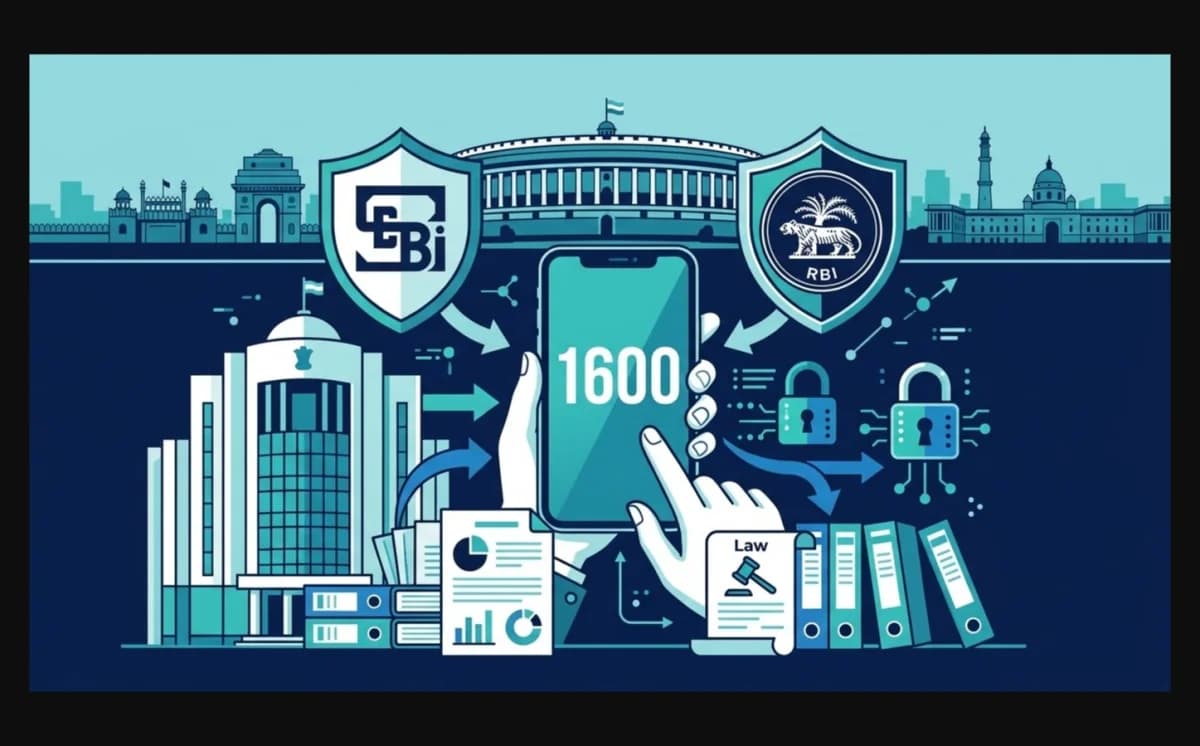
2. TRAI's 1600 Calling Series — Spot Real Bank Calls
Effective: March 1, 2026 (stockbrokers by March 15)
Tired of getting fake bank calls asking for your OTP? TRAI has a solution. All banks, NBFCs, insurance companies, and financial institutions must now make their service and transactional calls from numbers starting with 1600.
Here's the deal:
- 140 series → Promotional/marketing calls (you can ignore these)
- 1600 series → Genuine service calls from banks and financial institutions
Every entity must register on a Distributed Ledger Technology (DLT) platform before getting 1600 numbers. After migration, they're banned from using any other number for transactional calls.
What this means for you: If someone claims to be calling from your bank but the number doesn't start with 1600, it's likely a scam. This is a powerful tool to fight digital arrest scams and banking fraud. Whenever you get a call about your bank account, loan, or insurance — check the number first.
3. RBI's Strict New Rules for Broker Funding
Effective: April 1, 2026
The RBI has tightened how banks can lend money to stockbrokers. This one is big for the market:
- 100% collateral mandatory — Banks can only lend to brokers against full collateral (previously more flexible)
- No funding for proprietary trading — Banks cannot lend money to brokers for trading on their own account. Brokers can only use bank loans for client-related activities.
- 40% haircut on equity collateral — If a broker pledges ₹100 crore of shares, banks will treat it as only ₹60 crore. This is much stricter than the earlier 12–25% haircut.
What this means for you: This could reduce market liquidity in the short term, as brokers will have less borrowed money to deploy. Some smaller brokerages may face tighter margins. But it also makes the financial system safer — less leveraged trading means less systemic risk.
If you trade actively through a broker, you may notice slightly tighter margin funding terms from April onwards.
4. New Income Tax Act Takes Effect April 1
Effective: April 1, 2026
The Income Tax Act 2025 replaces the six-decade-old Income Tax Act 1961. While tax rates haven't changed, the structure has been overhauled:
- Fewer sections: 536 sections vs. 819 in the old Act — simpler to navigate
- Single "Tax Year" concept: The confusing "Financial Year" vs "Assessment Year" distinction is gone. Now there's just one "Tax Year"
- Buyback taxation: Share buyback proceeds will now be taxed as capital gains in the hands of shareholders
- No interest deduction on dividends: You can no longer claim interest expenses against dividend or mutual fund income
What this means for you: For most salaried individuals, your actual tax liability won't change much. But the way you file returns and calculate taxes will use new section numbers and terminology. Use our tax calculator to plan for the new year.
5. RBI Injects ₹50,000 Crore Into Banking System
Date: Mid-March 2026
The RBI conducted Open Market Operations (OMO) — buying ₹50,000 crore worth of government securities from banks. This pumps cash into the banking system.
Why does this matter?
- India's forex reserves dropped by $11.7 billion in one week (to $716.8 billion) — likely due to RBI defending the rupee
- The banking system was facing a liquidity crunch
- More liquidity means banks have more money to lend, which could eventually lead to lower loan rates
What this means for you: If you're looking to take a home loan or personal loan, lending rates may ease slightly in the coming months. Check current EMI calculations before you lock in a rate.
Quick Summary
| Rule | Effective | Impact |
|---|---|---|
| SEBI MF distributor incentive | March 1 | More MF access in small cities |
| TRAI 1600 calling series | March 1–15 | Spot real vs. fake bank calls |
| RBI broker funding curbs | April 1 | Less leverage, safer markets |
| New Income Tax Act | April 1 | Simpler tax filing, new terms |
| RBI ₹50K crore OMO | March | More bank liquidity, possible rate easing |
Stay updated on these changes — they quietly affect your loans, investments, and protection against fraud. Bookmark this page and check back as we cover each rule in more detail.
Disclaimer: This article is for educational purposes only and does not constitute financial advice. Regulatory rules may be updated — always check the official SEBI, RBI, and TRAI websites for the latest information.
Written by
Jaspal Singh
Founder & Editor
Personal finance writer helping Indians make smarter money decisions through clear, jargon-free guides on taxes, investments, and budgeting.
Continue Reading

Gold, Silver Import Duty Raised to 15%: What It Means for Prices, Rupee, and India's Trade Balance
India has raised import duty on gold and silver to 15% from 6%. Here is what the move means for bullion demand, trade deficit, forex reserves, and everyday buyers.
Your Take-Home Salary Just Got Cut — Here’s Why
From April 2026, your basic pay must be at least 50% of your CTC. That means lower take-home pay but significantly higher EPF and gratuity. Here’s what changed and what it means for your wallet.

Silver Loans Are Now Legal in India — Here’s How to Get One
From April 1, the RBI allows banks and NBFCs to give loans against your silver jewelry and coins. Up to 85% LTV, 10kg silver limit, and strict borrower protections. Here’s everything you need to know.