Iran Strikes Gulf Energy Facilities — What It Means for India's Oil Bill
Jaspal Singh
Author
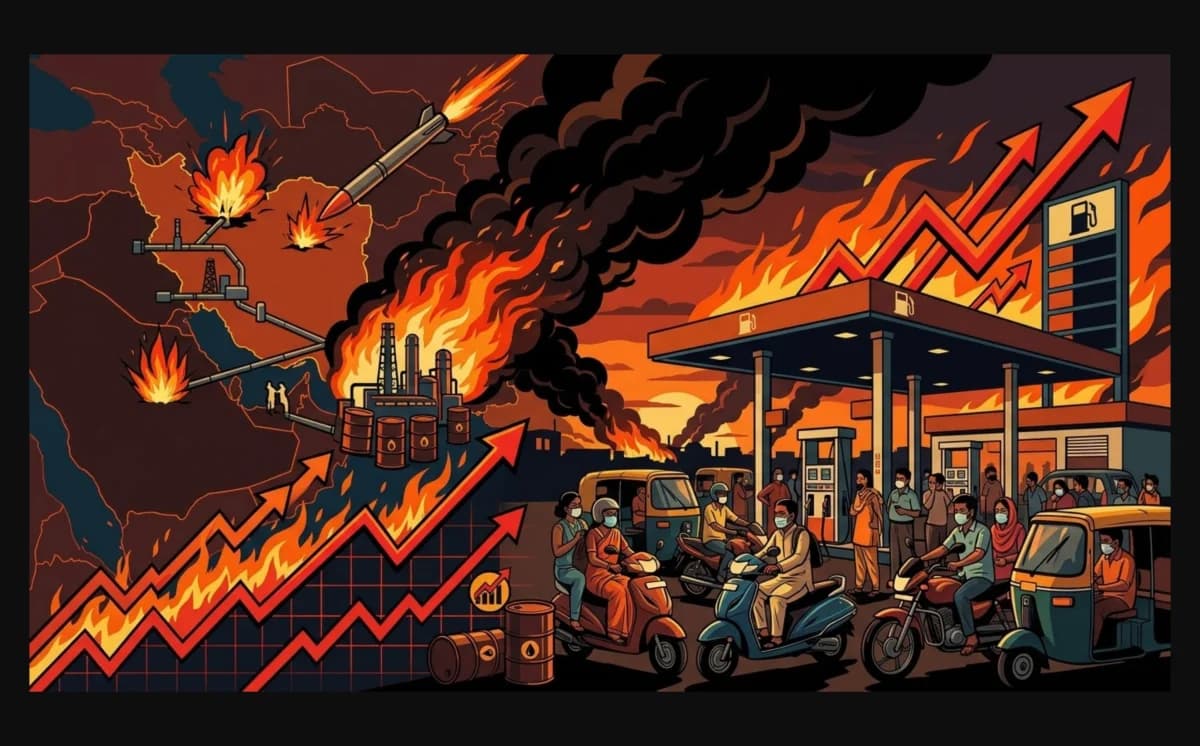
The Middle East Energy War Has Arrived
What many analysts feared has finally happened. The simmering conflict between Iran and the Israel-US alliance has spilled into the heart of the global energy supply chain. On March 18-19, 2026, a series of military strikes hit some of the most critical energy infrastructure in the Persian Gulf — and the consequences for India could be enormous.
Let us break down what happened, why it matters, and what it means for your wallet.
What Happened: A Timeline
The Israeli-US Strike on South Pars
Israeli and American forces struck Iran's South Pars gas field — the world's largest natural gas reserve, shared between Iran and Qatar. The strike targeted Iran's extraction and processing infrastructure, aiming to cripple a major source of Iranian revenue.
Iran's Retaliation
Iran responded by launching coordinated strikes on five energy facilities across three Gulf states:
- Saudi Arabia: Two oil processing facilities hit, including one near the Ras Tanura terminal — one of the world's largest oil export points
- UAE: A petroleum storage facility near Fujairah port was struck
- Qatar: The Ras Laffan LNG terminal — one of the world's largest liquefied natural gas hubs — suffered what reports describe as "extensive damage"
Iran's message was clear: if its energy infrastructure is targeted, it will hit back at the infrastructure of countries it views as aligned with Israel and the US.
Oil Prices: The Immediate Impact
Brent crude surged to $111.07 per barrel, up 3.44% in a single session. WTI crude also jumped above $107. This is the highest oil has been since the 2022 Russia-Ukraine crisis.
| Crude Oil Benchmark | Before Strikes | After Strikes | Change |
|---|---|---|---|
| Brent Crude | $107.38 | $111.07 | +3.44% |
| WTI Crude | $103.50 | $107.20 | +3.57% |
| Natural Gas (Henry Hub) | $3.85 | $4.62 | +20.0% |
Natural gas prices saw an even bigger spike — up 20% — because the Ras Laffan LNG damage threatens Qatar's ability to export liquefied natural gas, a fuel India has been increasingly relying on.
Why This Is a Nightmare for India
India's Oil Dependency: The Numbers
India is the world's third-largest oil consumer and imports over 80% of its crude oil. A large chunk of these imports come directly from the Persian Gulf region.
| India's Top Crude Oil Suppliers | Share of Imports | At Risk? |
|---|---|---|
| Russia | ~35% | Low (different route) |
| Saudi Arabia | ~16% | High — facilities struck |
| Iraq | ~20% | Medium — Gulf shipping risk |
| UAE | ~7% | High — facility struck |
| Kuwait | ~5% | Medium — Gulf proximity |
Roughly 50% of India's oil imports pass through or originate from the Persian Gulf. Any sustained disruption could create a supply crisis.
The Inflation Domino Effect
Every $10 per barrel increase in crude oil has the following cascading effect on India's economy:
- Consumer inflation rises by ~0.4% — diesel is the backbone of India's logistics network, and every truck, train, and delivery vehicle runs on it
- Petrol and diesel prices could rise by ₹5-8 per litre if oil sustains above $110
- LPG cylinder prices may increase by ₹50-100, hitting household budgets directly
- Food prices rise as transportation costs increase — fruits, vegetables, and grains all move on diesel-powered trucks
- Current account deficit widens by 0.3-0.5% of GDP, putting pressure on the rupee
Impact on Your Household Budget
Let us get specific about how $111 oil hits the average Indian family:
| Item | Current Price | If Oil Stays at $111 |
|---|---|---|
| Petrol (Delhi) | ~₹98/litre | ₹108-115/litre |
| Diesel (Delhi) | ~₹90/litre | ₹98-105/litre |
| LPG Cylinder (14.2 kg) | ~₹850 | ₹900-950 |
| CNG (Delhi) | ~₹78/kg | ₹85-90/kg |
| Monthly Grocery Bill (typical family) | ~₹8,000 | ₹8,500-9,000 |
For a middle-class family with a car and an LPG connection, the additional monthly cost could be ₹2,000-3,000 if oil prices sustain at these levels.
Impact on the Rupee and Stock Market
The Indian rupee weakened to ₹92.48 against the dollar — a record low. A weaker rupee makes oil imports even more expensive (since oil is priced in dollars), creating a vicious cycle.
The stock market took a massive hit, with the Sensex crashing nearly 2,000 points. Sectors most affected include airlines, paints, logistics, and auto — all of which are heavily dependent on oil-derived inputs.
What Can India Do?
Government Options
- Release strategic petroleum reserves: India has roughly 39 days of emergency oil supply — these could be tapped to cool prices
- Cut excise duty: The government collects over ₹3 lakh crore annually in excise on fuel. Cutting duties would reduce pump prices but hurt fiscal math
- Increase Russian oil imports: India has been buying discounted Russian crude. This channel becomes even more important now
- Diplomatic engagement: India has good relations with both Iran and the Gulf states. Diplomatic efforts to de-escalate could help
RBI Options
- Intervene in forex market to prevent a disorderly rupee fall
- Pause rate cuts if inflation surges above the RBI's comfort zone
What Should You Do?
Budget for Higher Fuel Costs
If you have not already, start planning for potentially higher fuel and grocery bills over the next few months. Review your monthly budget and identify areas where you can cut discretionary spending.
Consider Fuel-Efficient Alternatives
- If you are in the market for a new vehicle, CNG and electric vehicles make more sense than ever
- Public transport and carpooling can significantly reduce your fuel bill
- If you use LPG primarily for cooking, an induction cooktop can cut your gas cylinder usage by 50-70%
Diversify Your Investments
- Gold typically rises during geopolitical crises and oil shocks — consider increasing your gold allocation
- Oil-hedged assets like ONGC, Oil India, and energy ETFs could benefit from higher crude prices
- Keep your SIPs running in diversified equity funds — do not let short-term shocks derail long-term plans
Use our SIP Calculator to model how your investments grow over 10-20 years regardless of short-term oil shocks, and our EMI Calculator to check how potential interest rate changes could affect your home loan.
The Bottom Line
The Iran strikes on Gulf energy facilities represent the most serious threat to India's energy security in years. With oil above $110, every Indian household will feel the impact through higher fuel prices, more expensive groceries, and potentially higher interest rates.
The situation is fluid. If diplomacy prevails and the conflict de-escalates, oil prices could retreat quickly. But if the strikes intensify, India needs to brace for a sustained period of high energy costs. Stay informed, budget conservatively, and do not make panic-driven financial decisions.
Disclaimer: This article is for informational and educational purposes only. It does not constitute financial advice. Geopolitical situations are highly unpredictable. Please consult a SEBI-registered financial advisor before making investment decisions.
Written by
Jaspal Singh
Founder & Editor
Personal finance writer helping Indians make smarter money decisions through clear, jargon-free guides on taxes, investments, and budgeting.
Continue Reading

Gold, Silver Import Duty Raised to 15%: What It Means for Prices, Rupee, and India's Trade Balance
India has raised import duty on gold and silver to 15% from 6%. Here is what the move means for bullion demand, trade deficit, forex reserves, and everyday buyers.

Your Take-Home Salary Just Got Cut — Here’s Why
From April 2026, your basic pay must be at least 50% of your CTC. That means lower take-home pay but significantly higher EPF and gratuity. Here’s what changed and what it means for your wallet.

Silver Loans Are Now Legal in India — Here’s How to Get One
From April 1, the RBI allows banks and NBFCs to give loans against your silver jewelry and coins. Up to 85% LTV, 10kg silver limit, and strict borrower protections. Here’s everything you need to know.