India LPG Crisis — Why Cooking Gas Prices Could Spiral Out of Control
Jaspal Singh
Author
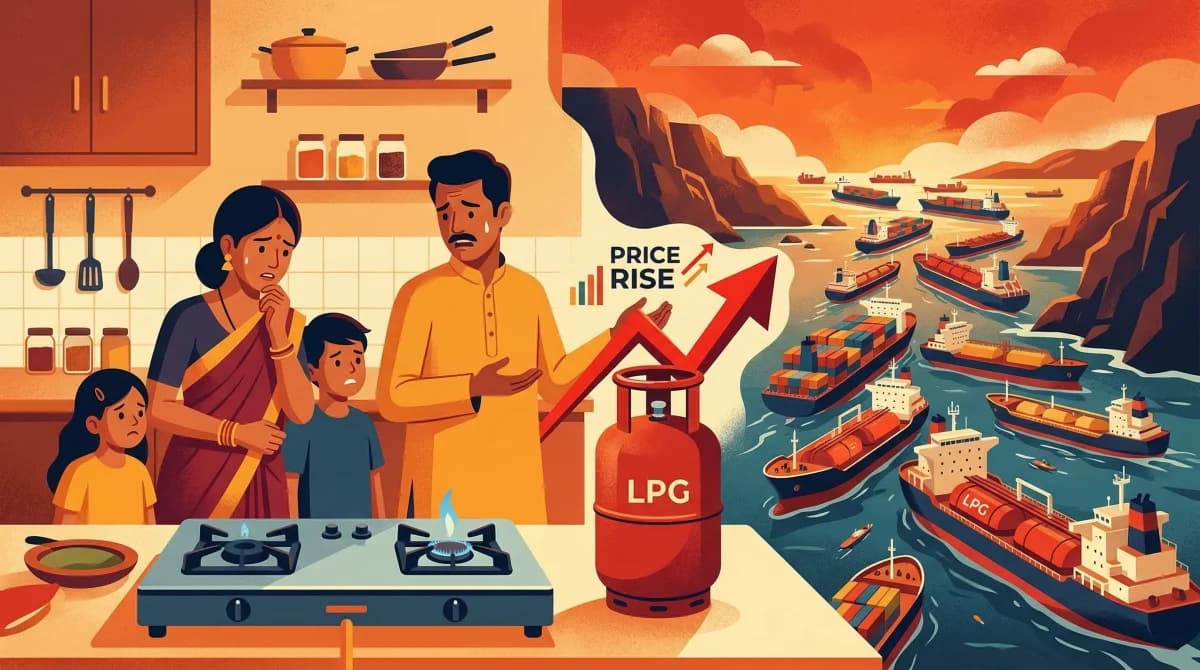
If you've tried booking a gas cylinder recently and noticed it's taking longer than usual — or if your parents are talking about saving gas while cooking — you're not alone. India is going through one of its worst cooking gas shortages in recent memory. And the reason? A war happening thousands of kilometres away.
Let's break it down in simple terms so everyone — even a 10-year-old — can understand what's going on, why it matters, and what your family can do about it.
What's Actually Happening?
India is facing a serious shortage of LPG (Liquefied Petroleum Gas) — the gas that fills the cylinders we use every day to cook food at home. The situation has gotten so bad that:
- Domestic LPG cylinder prices were hiked by ₹60 on March 7, 2026
- Commercial cylinder prices jumped by ₹115
- You now have to wait 25 days after your last delivery before you can book a new refill (it was 21 days earlier)
- Commercial cylinder supply has been completely halted in Mumbai, Pune, Punjab, and several other regions
- Pune shut down 22 gas-powered crematorium furnaces to save gas for households
- Black market dealers are reportedly selling cylinders for ₹1,500 — nearly double the official price
Why Is This Happening? The Iran War Connection
Think of it like this: imagine there's one main road that carries almost all the trucks bringing food to your city. Now, if someone blocks that road, your city runs out of food. That's basically what's happening with India's gas supply.
India buys more than 80-85% of its energy from other countries, mostly from the Middle East. A huge chunk of this gas and oil travels by ship through a narrow water passage called the Strait of Hormuz — a tiny gap between Iran and Oman in the Persian Gulf.
Here's what went wrong:
- The US and Israel went to war with Iran in early 2026
- Iran responded by effectively blocking the Strait of Hormuz for Western-allied shipping
- Tanker traffic through the strait dropped by 88%, and LPG shipments fell by a staggering 94%
- Qatar, one of the world's biggest gas suppliers, had to halt production after Iranian drones hit its gas facilities
- Even the Suez Canal route is risky because of Houthi rebel attacks, forcing ships to go around Africa via the Cape of Good Hope — a detour that adds 45-50 extra days to each trip
The result? India, the world's second-largest LPG buyer, suddenly has far less gas coming in than it needs.
Current LPG Cylinder Prices (March 2026)
Here's what a 14.2 kg domestic cylinder costs right now in major cities:
| City | Domestic (14.2 kg) | Commercial (19 kg) |
|---|---|---|
| Delhi | ₹913.00 | ₹1,883.00 |
| Mumbai | ₹912.50 | ₹1,835.00 |
| Kolkata | ₹939.00 | ₹1,990.00 |
| Chennai | ₹928.50 | ₹2,043.50 |
| Bangalore | ₹915.50 | — |
| Pune | ₹916.00 | — |
These prices went up by ₹60 for domestic and ₹115 for commercial cylinders on March 7. And if you're buying from the black market, people are reportedly paying ₹1,500 or more for a single domestic cylinder.
Who's Being Hit the Hardest?
Restaurants and Street Food Vendors
This is a disaster for India's food businesses. Commercial LPG supply has been completely stopped in Punjab, Mumbai, and Pune. Hotels, restaurants, cloud kitchens, and your neighbourhood chaat wala all depend on commercial gas cylinders. With supply halted, many are being forced to:
- Buy domestic cylinders from the black market at inflated prices
- Raise food prices for customers
- Temporarily shut down their businesses
During Ramadan, Hyderabad's restaurants are particularly struggling, as the holy month sees increased demand for cooked meals.
Households
Families that used to book a new cylinder every 50-55 days were suddenly booking every 15 days out of fear. This panic buying made the shortage worse. The government responded by increasing the minimum gap between bookings to 25 days.
Crematoriums
In one of the most striking impacts, the Pune Municipal Corporation shut down 22 gas-powered crematorium furnaces. The government directed that propane and butane must be prioritised for household cooking, so crematoriums had to switch to electric furnaces instead.
What Is the Government Doing?
The government has taken several emergency steps:
- Invoked emergency powers and ordered all oil refineries to increase LPG production
- Raised the refill booking gap to 25 days to prevent hoarding
- Prioritised domestic supply over commercial connections — your home cylinder comes first
- Banned manual/offline bookings — all bookings must be digital to ensure transparency
- Made OTP verification mandatory at the time of delivery to stop diversion
- Ordered biometric/digital KYC of all active LPG consumers
- Directed that propane and butane from refineries go to LPG first, restricting petrochemical industry use
- Started talks with Algeria, Australia, Canada, and Norway for alternative LPG supply
Petroleum Minister Hardeep Singh Puri has assured the public that there is "no shortage" and supplies remain stable. However, the ground reality in many cities tells a different story.
Is There Really a Shortage, or Is It Panic?
Experts say it's a mix of both. India does have some buffer stock, but it's only enough for a few weeks. The real problem is that new shipments are barely trickling in. At the same time, panic buying has made things worse — when people hear "shortage," they rush to book extra cylinders, which creates the very shortage they feared.
It's a bit like what happens when everyone in a theatre rushes for the exit at the same time — even if there's enough space, the stampede creates a jam.
10 Tips to Manage Your LPG During the Crisis
Here are practical things your family can do right now:
In the Kitchen
- Soak dals and beans overnight — they cook much faster and use less gas
- Use a pressure cooker — it cooks food in half the time compared to open pots
- Keep lids on pots while cooking — trapped steam cooks food faster
- Turn off the gas before removing the pot — the burner stays hot for a few seconds anyway
- Match pot size to burner size — a small pot on a big burner wastes gas around the sides
- Plan your meals — cook multiple items in one session instead of lighting the stove repeatedly
Explore Alternatives
- Buy an induction cooktop — a decent one costs ₹2,000-4,000 and is 90% energy efficient (gas stoves are only 40% efficient). It can save ₹180-1,100 per month on fuel costs
- Consider an infrared cooktop — works with all types of cookware (unlike induction, which needs flat-bottomed steel/iron vessels) and is 65-70% energy efficient
- Use an electric kettle for boiling water instead of the gas stove
- Solar cookers are a great option if you have a sunny balcony or terrace — free fuel, zero cost
Avoid These Mistakes
- Don't hoard cylinders — it makes the crisis worse for everyone and is now harder with the 25-day rule
- Don't buy from the black market — you'll pay ₹1,500+ and encourage illegal diversion
- Don't keep the stove on "sim" for long periods — it wastes gas; cook on medium-high and finish quickly
How Long Will This Crisis Last?
That depends on the war. As long as the Strait of Hormuz remains disrupted and Qatar's gas facilities are offline, India will feel the pinch. The government is actively seeking alternative suppliers, but building new supply chains takes time.
The good news is that India is not completely dependent on one source. Talks with Algeria, Australia, Canada, and Norway for alternative LPG supplies are underway. Oil refineries within India are also ramping up domestic LPG production.
Most experts estimate the acute shortage phase could last 4-8 weeks, after which alternative supply routes and increased domestic production should ease the pressure — unless the conflict escalates further.
The Bigger Picture
This crisis is a wake-up call for India. We import over 80% of our energy, and a single conflict in a faraway region can disrupt kitchens across the country. It highlights the need for:
- Diversifying energy sources — not relying so heavily on Middle Eastern gas
- Investing in electric cooking — induction and solar cookers can reduce LPG dependence
- Building strategic reserves — like we have for crude oil, we need bigger LPG buffer stocks
- Expanding domestic production — India's own refineries can produce more LPG if prioritised
For now, the best thing you can do is use gas wisely, don't panic buy, and explore electric cooking options as a backup. This crisis will pass, but the habits you build now will save you money for years to come.
Stay informed. Stay prepared.
Disclaimer: This article is for informational purposes only and is based on publicly available news reports as of March 9, 2026. LPG prices and government policies may change. Always refer to official government announcements and your local LPG distributor for the most current information. The tips provided are general suggestions and may not be suitable for all households. YourFinances.in is not responsible for any decisions made based on this article.
Written by
Jaspal Singh
Founder & Editor
Personal finance writer helping Indians make smarter money decisions through clear, jargon-free guides on taxes, investments, and budgeting.
Continue Reading

Gold, Silver Import Duty Raised to 15%: What It Means for Prices, Rupee, and India's Trade Balance
India has raised import duty on gold and silver to 15% from 6%. Here is what the move means for bullion demand, trade deficit, forex reserves, and everyday buyers.
Your Take-Home Salary Just Got Cut — Here’s Why
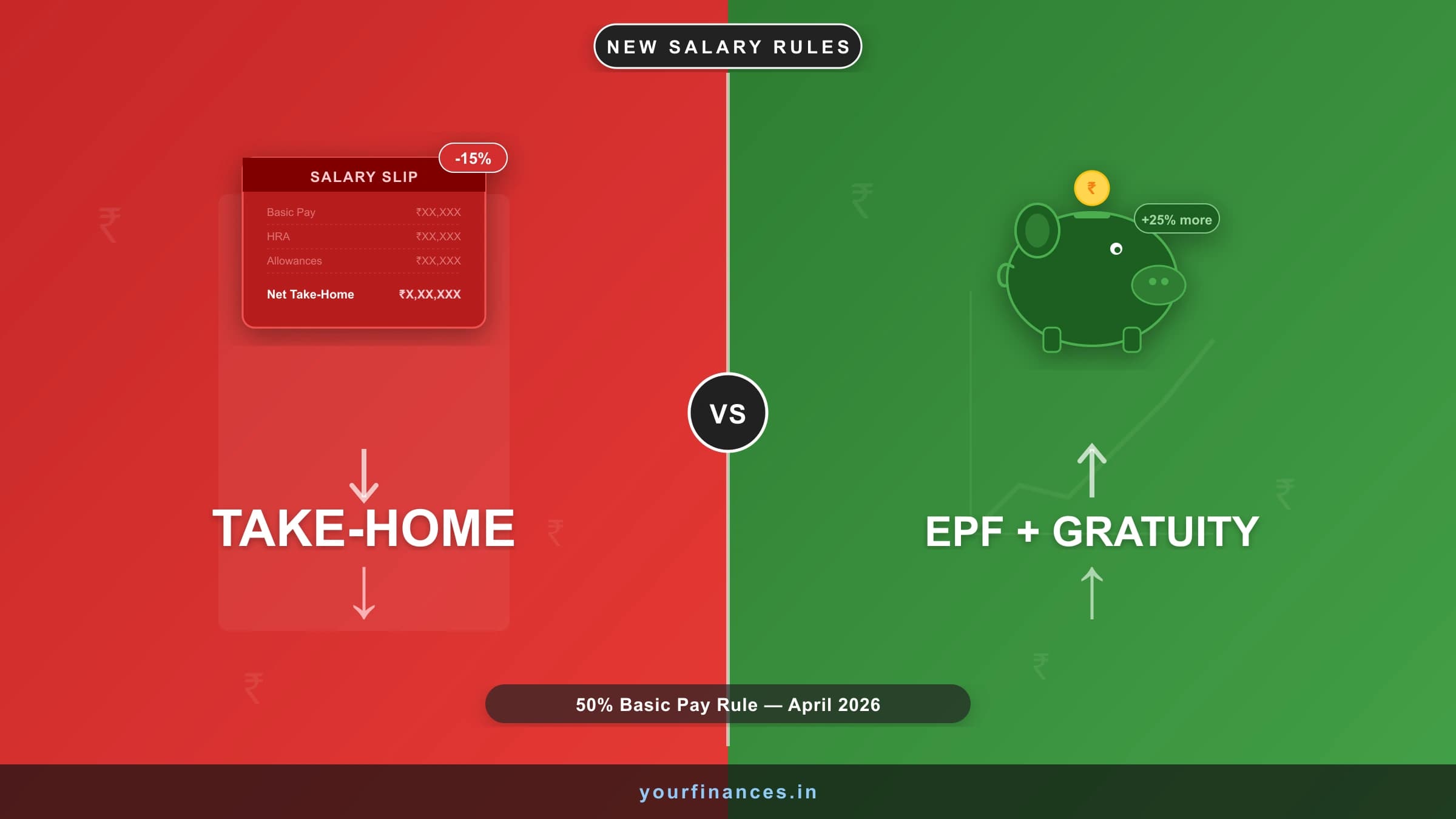
From April 2026, your basic pay must be at least 50% of your CTC. That means lower take-home pay but significantly higher EPF and gratuity. Here’s what changed and what it means for your wallet.
Silver Loans Are Now Legal in India — Here’s How to Get One
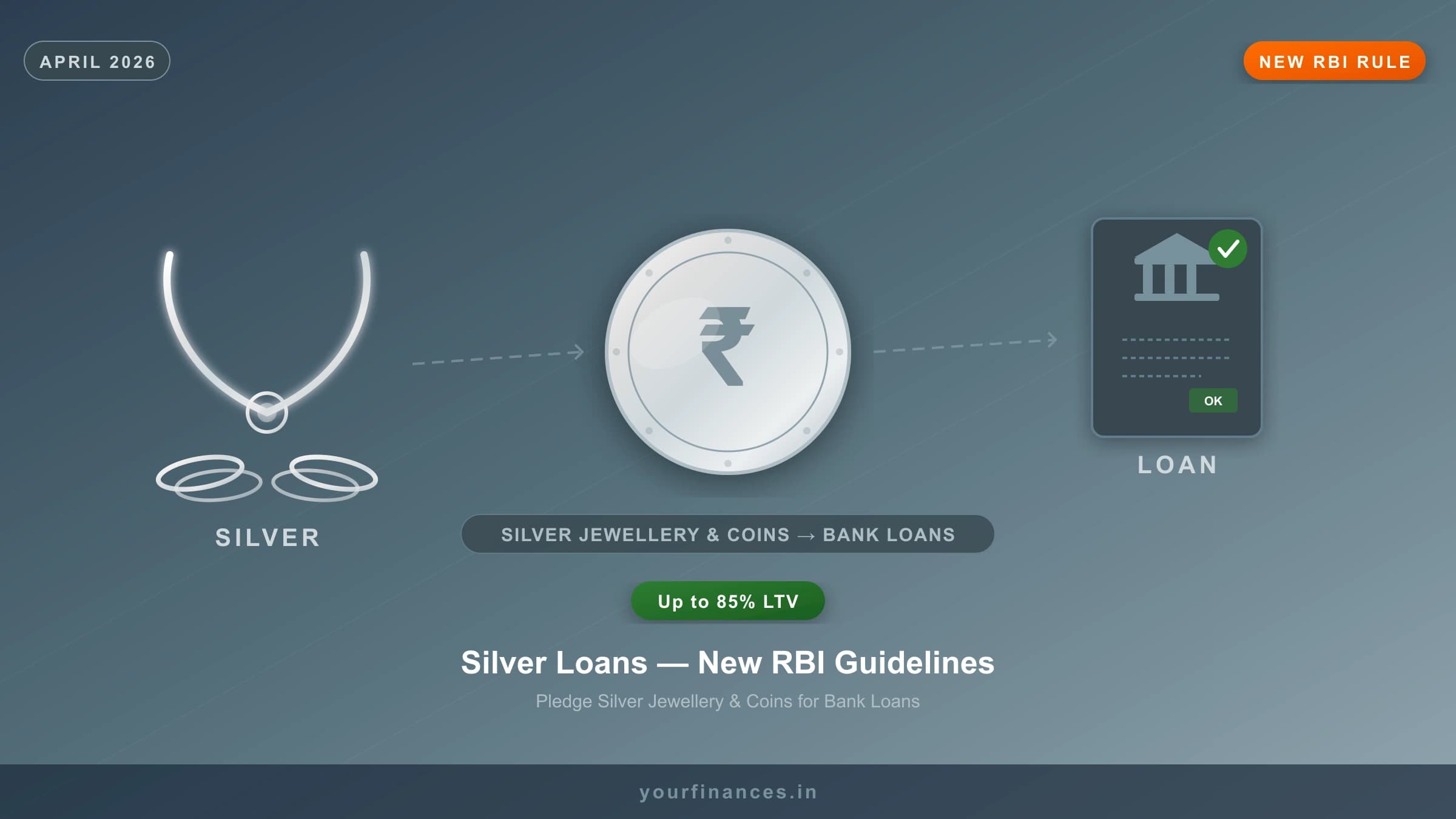
From April 1, the RBI allows banks and NBFCs to give loans against your silver jewelry and coins. Up to 85% LTV, 10kg silver limit, and strict borrower protections. Here’s everything you need to know.