India Eases FDI Rules for Chinese Investments: 60-Day Approval Timeline
Jaspal Singh
Author
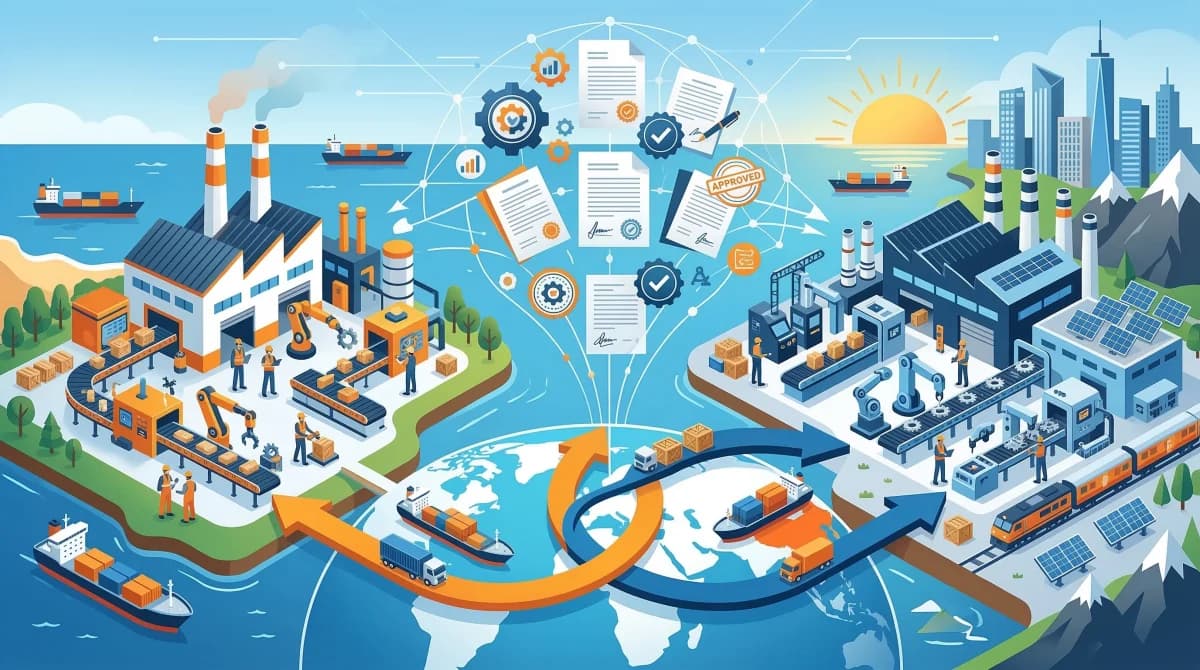
In a significant policy shift, the Indian government has eased Press Note 3 (PN3) rules — the regulation that required investments from countries sharing a land border with India (read: China) to go through mandatory government approval. The Cabinet has set a 60-day timeline for processing such investment proposals, signalling a gradual thaw in India-China economic relations.
If you invest in Indian stocks or are tracking the broader economy, this matters more than you might think.
What Is Press Note 3?
Press Note 3 was introduced in April 2020, during the peak of COVID-19 and rising India-China border tensions. It mandated that any investment from a country sharing a land border with India — China, Pakistan, Bangladesh, Nepal, Myanmar, Bhutan, and Afghanistan — required prior government approval.
The rule was widely seen as targeted at China. Before PN3, Chinese investors could invest in Indian companies through the automatic route (no government approval needed). After PN3, every Chinese investment — whether a ₹1 crore startup investment or a ₹5,000 crore acquisition — needed bureaucratic clearance that could take months or even years.
What Has Changed?
| Aspect | Old PN3 Rules | New Rules (March 2026) |
|---|---|---|
| Approval timeline | No fixed timeline (took 6-18 months) | 60-day mandatory timeline |
| Scope | All investments from border countries | Under review — may exempt certain sectors |
| Sectors affected | All sectors | Priority processing for manufacturing and electronics |
| Portfolio investment (FPI) | Restricted | Still restricted — no change for stock market investments |
The key change is the 60-day timeline. Previously, Chinese investment proposals would languish in government files for months with no clear deadline. Companies like BYD, Great Wall Motors, and several Chinese tech investors had proposals stuck for over two years. The 60-day rule brings predictability.
Why Is India Doing This Now?
1. Manufacturing Needs Chinese Investment
India's "Make in India" and PLI (Production-Linked Incentive) schemes need foreign investment to set up factories. Many global supply chains run through Chinese companies — banning them means losing manufacturing opportunities to Vietnam, Bangladesh, and Indonesia.
2. Electronics and EV Supply Chains
India wants to become a global electronics manufacturing hub (think iPhone assembly, semiconductor packaging). But key components come from Chinese suppliers. Similarly, the EV battery supply chain is dominated by Chinese companies like CATL and BYD. Easing PN3 helps India attract these supply chains.
3. Diplomatic Normalisation
India-China relations have gradually improved since the 2024 border disengagement. Easing FDI rules is a natural economic extension of diplomatic warming.
What Does This Mean for Indian Stock Markets?
The impact is mixed and sector-dependent:
Positive for:
- Auto and EV stocks — Chinese EV makers and battery companies investing in India boosts the ecosystem. Companies like Tata Motors and M&M benefit from a more competitive EV supply chain.
- Electronics and manufacturing — More Chinese component makers setting up in India helps companies like Dixon Technologies, Amber Enterprises, and Foxconn's India operations.
- Infrastructure and real estate — More factories mean more demand for industrial land, construction, and logistics.
Concerns for:
- Domestic companies in competitive sectors — Chinese companies often operate at lower margins and higher scale, which can challenge Indian competitors.
- Data and tech security — apps like TikTok remain banned; the tension between economic openness and security concerns persists.
What Should Investors Do?
1. Watch Manufacturing Stocks
Companies in electronics manufacturing services (EMS), auto ancillaries, and industrial real estate could benefit from increased Chinese investment flows. These are worth adding to your watchlist.
2. Do Not Overreact
PN3 easing is a gradual process, not a floodgate opening. Portfolio investment (buying Indian stocks) by Chinese entities remains restricted. The impact on Sensex and Nifty will be minimal in the short term.
3. Focus on Long-Term Manufacturing Theme
India's manufacturing story — driven by PLI schemes, China+1 strategy, and domestic demand — is a multi-year investment theme. Continue your SIPs in diversified equity funds that have exposure to manufacturing and industrial stocks.
The Bottom Line
India has eased FDI rules for Chinese investments by introducing a 60-day approval timeline and potentially exempting key sectors. This is a pragmatic move to attract manufacturing investment without fully dropping security safeguards. For investors, it strengthens India's long-term manufacturing story — but the impact on markets will be gradual, not dramatic.
Disclaimer: This article is for informational purposes only and does not constitute investment advice. FDI policies are subject to change. Please consult a qualified financial advisor before making investment decisions. Information is based on publicly available government announcements as of March 2026.
Written by
Jaspal Singh
Founder & Editor
Personal finance writer helping Indians make smarter money decisions through clear, jargon-free guides on taxes, investments, and budgeting.
Continue Reading

Gold, Silver Import Duty Raised to 15%: What It Means for Prices, Rupee, and India's Trade Balance
India has raised import duty on gold and silver to 15% from 6%. Here is what the move means for bullion demand, trade deficit, forex reserves, and everyday buyers.
Your Take-Home Salary Just Got Cut — Here’s Why
From April 2026, your basic pay must be at least 50% of your CTC. That means lower take-home pay but significantly higher EPF and gratuity. Here’s what changed and what it means for your wallet.

Silver Loans Are Now Legal in India — Here’s How to Get One
From April 1, the RBI allows banks and NBFCs to give loans against your silver jewelry and coins. Up to 85% LTV, 10kg silver limit, and strict borrower protections. Here’s everything you need to know.