IDBI Bank Privatisation Timeline: Stake Sale Delayed to FY27
Jaspal Singh
Author
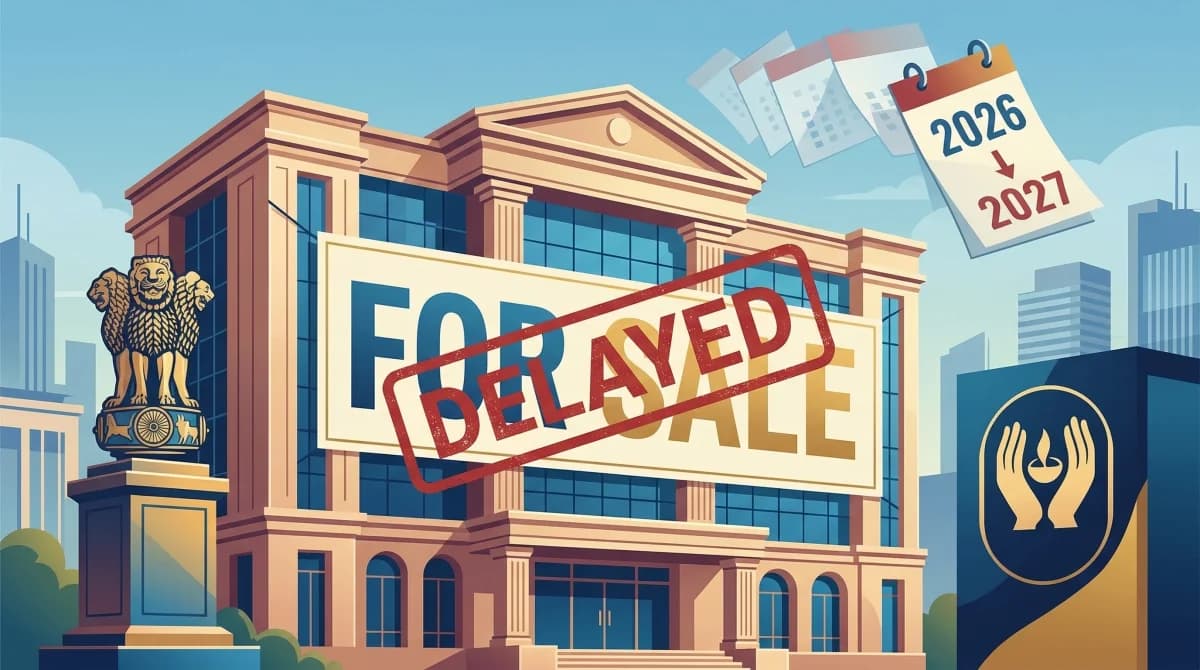
Imagine you're trying to sell your old bicycle. You've found a few buyers, you've agreed on a price range, and you're about to shake hands. But then a big storm hits your neighbourhood, and everyone says, "Let's wait until the weather clears up." That's pretty much what's happening with IDBI Bank's privatisation right now.
The Indian government has been trying to sell its stake in IDBI Bank for years. And just when everyone thought the deal would finally close by March 2026, it got pushed to FY27 (April 2026 onwards). The stock crashed over 8% on the news. Let's break down everything you need to know — in plain, simple language.
Last updated: 3 May 2026
What Is IDBI Bank Privatisation?
IDBI Bank is one of India's oldest banks, set up way back in 1964 to help Indian industries grow. Today, the Government of India owns 45.48% and LIC (Life Insurance Corporation) owns 49.24% of the bank. Together, that's a whopping 94.72% held by the government side.
Privatisation means the government and LIC want to sell a big chunk — 60.72% — of the bank to a private buyer. After the sale, the government would keep only 15% and LIC would hold about 19%. The new buyer would get full control of the bank.
Think of it like this: your parents own a shop, and they want to sell most of it to someone who can run it better. They'll still own a small piece, but the new owner will be the boss.
Why Has the Privatisation Been Delayed?
There isn't just one reason — it's a combination of problems:
1. Geopolitical Tensions (The Iran-West Asia Conflict)
The ongoing conflict in West Asia has made global markets nervous. When there's a war or serious tension in oil-producing regions, stock markets become volatile. Investors get scared, and big deals like selling a bank become harder to close. The government decided it's better to wait for calmer times rather than sell at a discount.
2. RBI's "Fit and Proper" Check Is Taking Forever
The Reserve Bank of India needs to approve whoever buys the bank. This involves a deep background check called the "fit and proper" assessment. Usually, this takes 12–18 months. But because some bidders have complex international business structures, the RBI is taking even longer than expected.
3. Security Clearances
Since banking is a sensitive sector (your money, your data, national security), the bidders also need clearances from the Ministry of Home Affairs. This is yet another layer of checks that's slowing things down.
4. Fewer Bidders Than Expected
Originally, there were multiple interested buyers. But Emirates NBD (a big bank from Dubai) shifted its focus to acquiring a stake in RBL Bank instead, with a $3 billion investment. That effectively took them out of the IDBI race, leaving fewer serious contenders.
Who Are the Remaining Bidders?
As of March 2026, the serious bidders are:
| Bidder | Type | Details |
|---|---|---|
| Fairfax Financial | Canadian investment group | Led by billionaire Prem Watsa (often called "Canada's Warren Buffett"). Considered the frontrunner. Already has investments in India through Fairfax India Holdings. |
| Kotak Mahindra Bank | Indian private bank | One of India's top private banks. A merger with IDBI Bank would make it a banking giant. However, regulatory approvals for a bank-buying-a-bank deal are complex. |
Financial bids were submitted by early February 2026, and evaluation is underway. But with the FY27 extension, the winner announcement will likely come 4–6 months from now.
How Much Is IDBI Bank Worth?
Let's look at the numbers that matter:
| Metric | Value |
|---|---|
| Market Cap | ~₹1.17 lakh crore (as of March 2026) |
| Share Price | ₹102.35 (9 March 2026) |
| 52-Week High | ₹118.38 |
| 52-Week Low | ₹70.89 |
| P/E Ratio | 12.60 |
| P/B Ratio | 1.98 |
| Q3 FY26 Net Profit | ₹1,935 crore |
| Gross NPA | 2.57% (down from 3.57% YoY) |
| Net NPA | 0.18% |
| Capital Adequacy Ratio | 18.64% |
| Total Business | ₹5.47 lakh crore |
The expected sale value of the 60.72% stake is around ₹33,000 crore — money that would go to the government and LIC.
What Happened to IDBI Bank's Share Price?
When news broke that the privatisation was being delayed, the market reacted sharply:
- IDBI Bank shares crashed over 8% in early March 2026, hitting an intraday low of ₹114.20
- The stock has continued to slide and was trading at ₹102.35 on 9 March 2026
- From its 52-week high of ₹118.38, the stock is down about 13.5%
The market doesn't like uncertainty. When you tell investors "the deal will happen, but we don't know exactly when," they tend to sell first and ask questions later.
IDBI Bank Privatisation Timeline (2019–2026): Every Key Milestone
Below is the complete IDBI Bank privatisation timeline — from LIC's 2019 takeover and the 2022 strategic-sale launch to the 2026 valuation gap and the FY27 push.
| Date | Milestone | What it meant |
|---|---|---|
| 21 January 2019 | LIC acquires majority stake | RBI re-classifies IDBI Bank as a "private sector bank"; government and LIC jointly hold ~94%. |
| May 2021 | Cabinet approves strategic sale | Centre clears in-principle plan to divest 30.48% government + 30.24% LIC — a combined 60.72% stake. |
| September 2021 | Exits RBI's PCA framework | Improved capital and asset quality — a green light for the eventual sale process. |
| October 2022 | DIPAM invites Expressions of Interest | Formal launch of the strategic disinvestment; multiple consortia begin due diligence. |
| January 2023 | Multiple EOIs received | Fairfax-led consortium, Emirates NBD and Kotak Mahindra Bank shortlisted (later trimmed). |
| 2023–24 | Due diligence and "fit and proper" review | RBI scrutiny of bidders' source of funds, ownership and governance — process took longer than markets expected. |
| February 2026 | Financial bids submitted | Fairfax and Kotak Mahindra Bank in the final round; Emirates NBD exits to chase a stake in RBL Bank. |
| March 2026 | FY27 timeline announced | Bids reportedly below reserve price; valuation gap forces a strategic reset and a push to FY27. |
| FY27 (target) | Expected completion | Revised bids and RBI nod could finally conclude India's longest-running PSU bank sale. |
Sources: DIPAM disclosures, RBI press releases, Department of Financial Services updates, exchange filings.
That's over 5 years since the formal announcement — earning IDBI Bank the title of India's longest-running bank privatisation.
What Does This Mean for IDBI Bank Shareholders?
If you own IDBI Bank shares, here's how to think about the situation:
The Good News
- Fundamentals are strong: ₹1,935 crore quarterly profit, Gross NPA down to 2.57%, Net NPA at a tiny 0.18%, and a rock-solid Capital Adequacy Ratio of 18.64%.
- Deposits and loans growing: 9% growth in deposits and 15% growth in advances year-on-year.
- Provision coverage at 99.33%: This means the bank has set aside money for almost all its bad loans — very healthy.
- Valuation is attractive: A P/B ratio under 2.0 is considered reasonable for a bank with these fundamentals.
The Not-So-Good News
- Headline risk: Every news article about the delay or geopolitics can move the stock price sharply.
- Uncertainty premium: Until a buyer is finalised, the stock may trade at a discount to its true value.
- 4–6 more months of waiting: Market analysts expect the winner to be announced only by mid-to-late 2026.
The Silver Lining
Once privatisation goes through, the new owner (likely Fairfax or Kotak) will bring in fresh management, new strategies, and potentially better governance. Historically, privatised banks in India have performed well over the long term. If you're a long-term investor, this dip could be an opportunity.
If you're considering investing in IDBI Bank or the broader market during this volatile period, a Systematic Investment Plan (SIP) is a smart way to average out your costs. Use our SIP Calculator to see how small monthly investments can grow over time.
The Bottom Line
IDBI Bank's privatisation delay to FY27 is disappointing but not surprising. Selling a bank worth over ₹1 lakh crore in the middle of geopolitical uncertainty is not something you rush. The government is being cautious, the RBI is being thorough, and the bidders are being patient.
For shareholders, the key takeaway is: the fundamentals haven't changed — only the timeline has. IDBI Bank is profitable, its bad loans are shrinking, and serious buyers are still at the table. The deal will happen. It's just a matter of when, not if.
Stay patient. Stay informed. And if you're investing, think long term.
Frequently Asked Questions
When did the IDBI Bank privatisation process start?
The formal process began in May 2021 when the Union Cabinet approved the strategic sale. DIPAM invited Expressions of Interest in October 2022, and shortlisting was completed in early 2023.
What is the latest IDBI Bank privatisation timeline?
As of March 2026, the sale has been pushed to FY27 (April 2026 onwards) after financial bids came in below the government's reserve price. Revised bids are expected, with completion likely by mid-to-late FY27.
Who are the current bidders for IDBI Bank?
Fairfax Financial (led by Prem Watsa) and Kotak Mahindra Bank are the two remaining serious bidders. Emirates NBD exited the race after refocusing on a stake in RBL Bank.
Why has IDBI Bank's privatisation taken so long?
A combination of factors: RBI's "fit and proper" review of bidders is intensive, additional security clearances from the Ministry of Home Affairs, geopolitical tensions in West Asia, and a valuation gap between bids and the government's reserve price.
What stake is being sold in IDBI Bank?
A combined 60.72% stake — 30.48% from the Government of India and 30.24% from LIC. After the sale, the government will retain 15% and LIC will hold roughly 19%, with the new buyer taking control.
Disclaimer: This article is for informational purposes only and should not be considered as investment advice. Stock markets are subject to risks. Please consult a SEBI-registered financial advisor before making any investment decisions. The author and YourFinances.in do not hold any position in IDBI Bank shares.
Written by
Jaspal Singh
Founder & Editor
Personal finance writer helping Indians make smarter money decisions through clear, jargon-free guides on taxes, investments, and budgeting.
Continue Reading

Gold, Silver Import Duty Raised to 15%: What It Means for Prices, Rupee, and India's Trade Balance
India has raised import duty on gold and silver to 15% from 6%. Here is what the move means for bullion demand, trade deficit, forex reserves, and everyday buyers.
Your Take-Home Salary Just Got Cut — Here’s Why
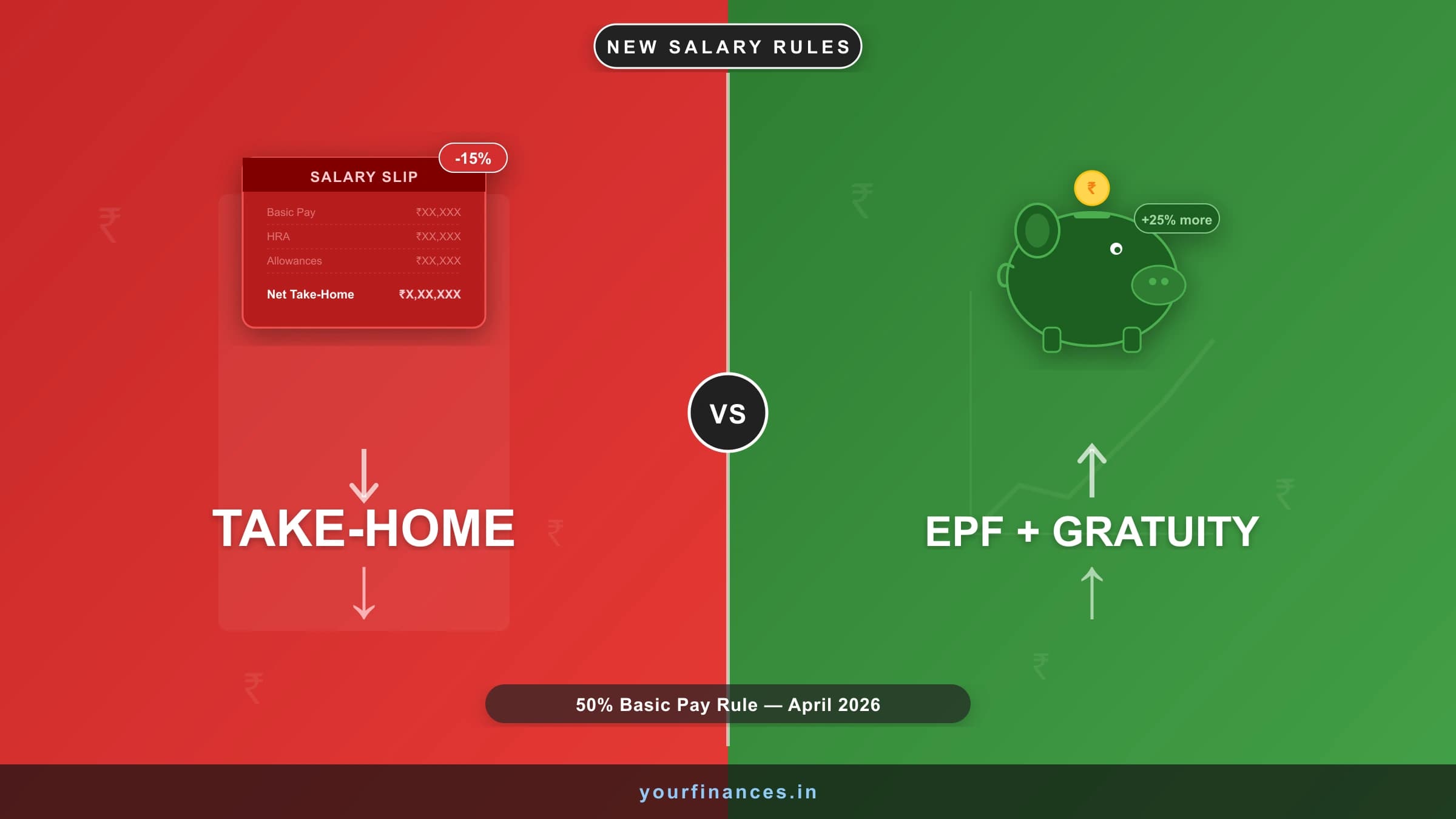
From April 2026, your basic pay must be at least 50% of your CTC. That means lower take-home pay but significantly higher EPF and gratuity. Here’s what changed and what it means for your wallet.
Silver Loans Are Now Legal in India — Here’s How to Get One
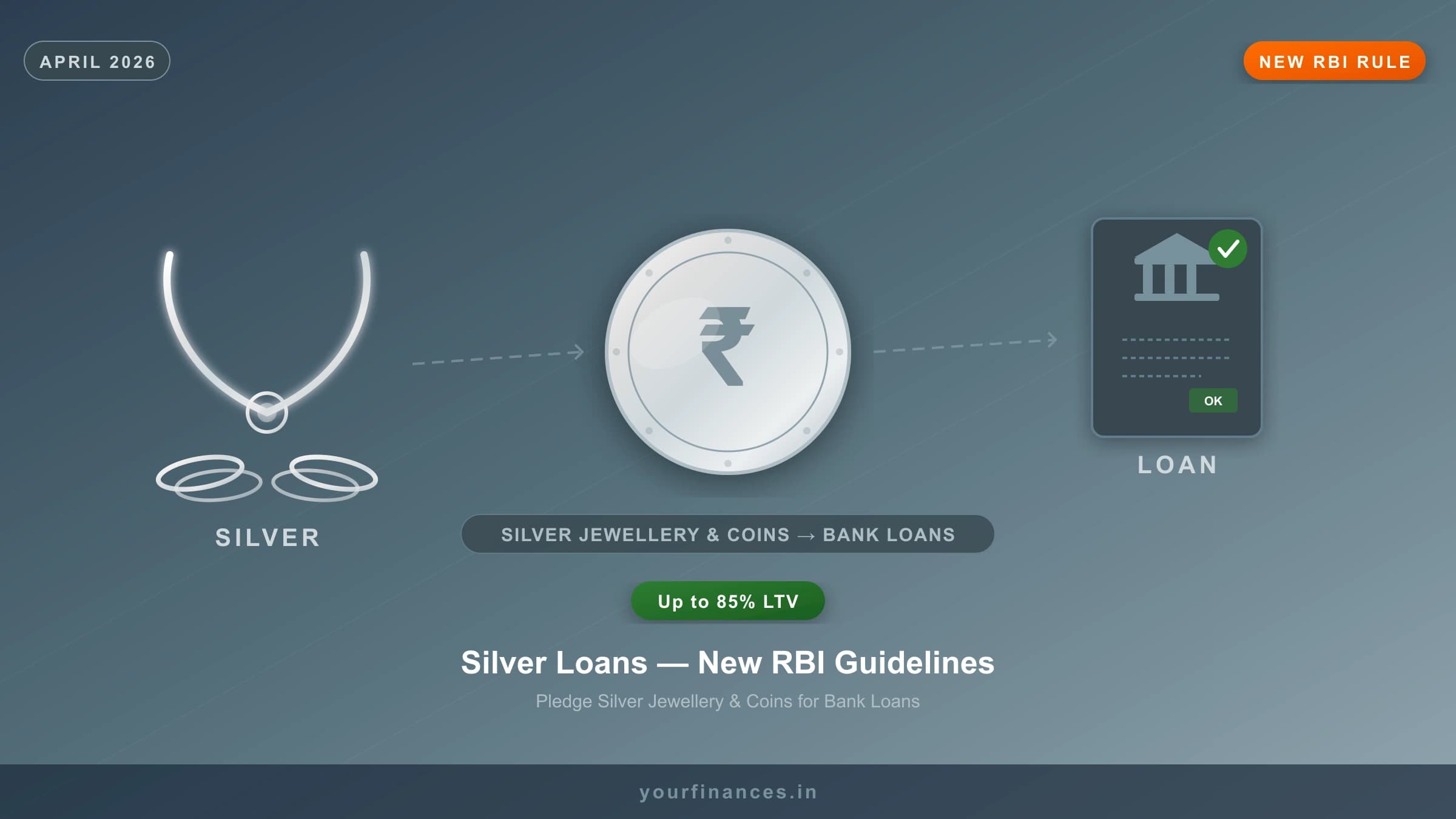
From April 1, the RBI allows banks and NBFCs to give loans against your silver jewelry and coins. Up to 85% LTV, 10kg silver limit, and strict borrower protections. Here’s everything you need to know.