Fed Holds Rates at 3.5-3.75% — Dot Plot Shows Only 1 Cut in 2026
Jaspal Singh
Author
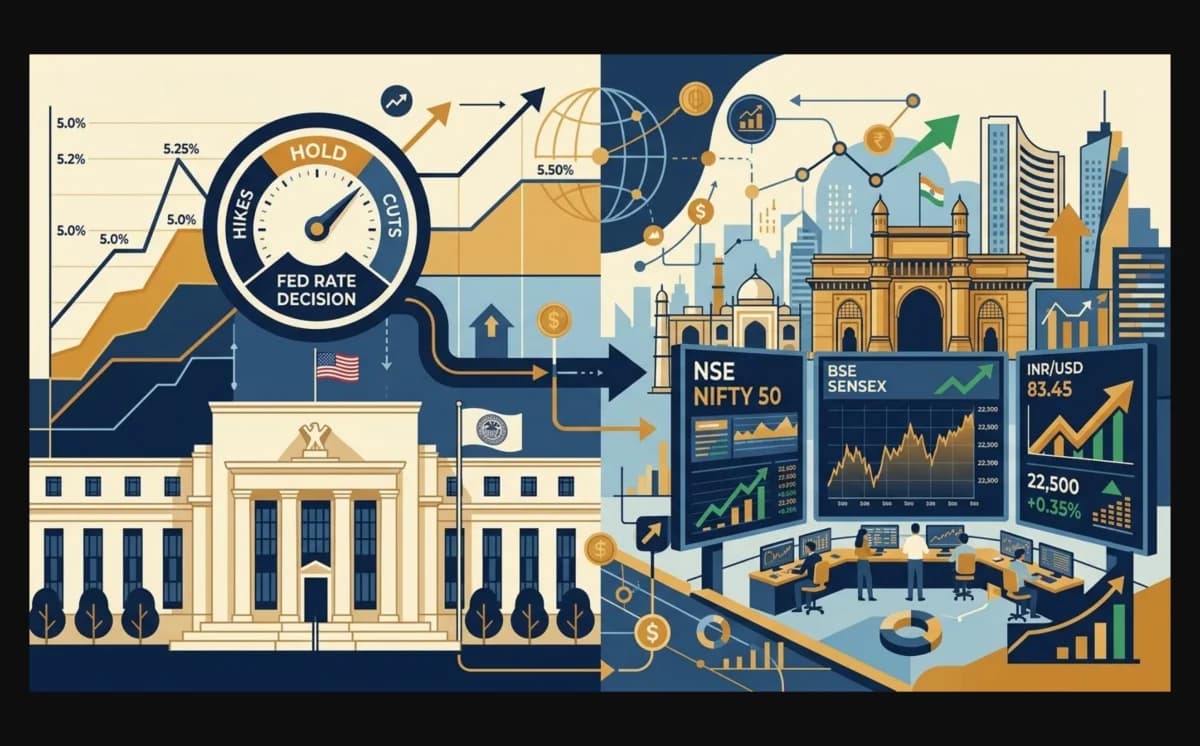
The Fed Has Spoken — And Markets Did Not Like It
The US Federal Reserve concluded its March 2026 meeting with a decision that sent shockwaves through global markets. The Federal Open Market Committee (FOMC) voted 11-1 to keep the federal funds rate unchanged at 3.5-3.75%, and the updated "dot plot" — the chart showing where Fed officials expect rates to go — painted a far more hawkish picture than investors had hoped.
For Indian investors, this decision has far-reaching consequences. Let us break down what happened, what the Fed's projections mean, and how it affects your money.
What Did the Fed Actually Decide?
Rates Held Steady
The Fed kept interest rates at 3.5-3.75%, the same level since its last cut. This was widely expected. The real surprise was in the forward guidance.
The Dot Plot: Only 1 Cut Expected
The "dot plot" is a chart where each of the 19 FOMC members places a dot showing where they expect rates to be at year-end. Here is what the March 2026 dot plot revealed:
- 7 of 19 members expect NO rate cuts at all this year
- 8 members expect just 1 cut (in December)
- 4 members expect 2 cuts
- The median projection points to one 25-basis-point cut, likely in December 2026
This is a dramatic shift from December 2025, when the dot plot had pointed to 2-3 cuts in 2026.
Inflation Forecast Raised
| Metric | December 2025 Forecast | March 2026 Forecast |
|---|---|---|
| PCE Inflation | 2.5% | 2.7% |
| Core PCE | 2.4% | 2.6% |
| GDP Growth | 2.0% | 2.1% |
| Unemployment | 4.2% | 4.1% |
The Fed raised its inflation forecast to 2.7% (PCE), citing the impact of surging oil prices from the Iran conflict and persistent services inflation. This makes it much harder for the Fed to justify cutting rates.
Powell's Press Conference: Key Quotes
Fed Chair Jerome Powell struck a notably cautious tone during his press conference:
- "Rate cuts are conditional, not assured. We need to see sustained progress on inflation."
- "The oil price shock from geopolitical events adds uncertainty to the inflation outlook."
- "We are in a good position to wait and see how the economy evolves before taking further action."
Powell also confirmed he intends to serve out his term as Fed Chair despite the recently opened Pirro probe, calling any speculation about his departure "premature."
Why Does the Fed Decision Matter for India?
1. Rupee Under Pressure
Higher US interest rates for longer mean the US dollar stays strong. A strong dollar puts direct pressure on the Indian rupee, which has already weakened to around ₹92.48 — a record low. The RBI has been spending foreign exchange reserves to defend the rupee, but there are limits to how long it can do this.
2. FPI Outflows Accelerate
Foreign investors earn better risk-free returns in US Treasury bonds when Fed rates are high. Why take the risk of investing in Indian stocks for, say, 12% expected returns when US bonds offer 4.5-5% with zero risk? This calculus is driving the massive FPI exodus — ₹77,214 crore pulled out in March alone.
3. RBI's Hands Are Tied
The Reserve Bank of India would like to cut interest rates to support India's economy. But if the Fed is not cutting, the RBI has limited room to cut aggressively without causing further rupee weakness. This means your home loan EMIs are likely to stay elevated for longer.
Check the impact of different interest rates on your loan with our EMI Calculator.
4. Higher Import Costs
A weaker rupee combined with high oil prices means India's import bill rises sharply. Everything from crude oil to electronic components to edible oil becomes more expensive, feeding into consumer inflation.
What Are Markets Expecting Now?
After today's Fed decision, futures markets have dramatically repriced their expectations:
| Expectation | Before Fed Meeting | After Fed Meeting |
|---|---|---|
| Rate cuts in 2026 | 2 cuts (50 bps) | 1 cut (25 bps) |
| First cut timing | September 2026 | December 2026 |
| Year-end rate | 3.0-3.25% | 3.25-3.50% |
What Should Indian Investors Do?
For Equity Investors
- Expect continued volatility in the near term as the market digests the hawkish Fed stance
- IT stocks may face headwinds as higher US rates could slow corporate spending
- Banking stocks could see mixed impact — higher rates globally may support NIMs but FPI selling could weigh on prices
- Keep SIPs running. Volatility is when systematic investing delivers the best results
For Fixed Income Investors
- If the RBI delays rate cuts, FD rates may remain elevated for longer — which is actually good news for FD investors
- Lock in current FD rates before any potential cuts later in the year
- Consider debt mutual funds with medium-duration exposure to benefit from eventual rate cuts
Use our FD Calculator to compare returns at current interest rates across different tenures.
For Borrowers
- Home loan EMIs are unlikely to come down significantly in the next 6 months
- If you have a floating-rate loan, consider whether switching to fixed-rate makes sense at current levels
- For new loans, shop around — the difference between the best and worst home loan rates can be 0.5-1%
The Bottom Line
The Fed's hawkish hold changes the playbook for 2026. The era of easy rate cuts that markets were banking on is not materialising. For Indian investors, this means more volatility, a weaker rupee, and continued FPI outflows in the short term.
But here is the thing — India's domestic growth story has not changed. GDP is still growing above 6%, corporate earnings are expanding, and domestic consumption remains strong. The Fed's decision makes the journey bumpier, but it does not change the destination for long-term investors.
Use our SIP Calculator to see how staying invested through volatile periods compounds into meaningful wealth over 10-15 years.
Disclaimer: This article is for informational and educational purposes only. It does not constitute financial advice or investment recommendations. Interest rate decisions and market movements are unpredictable. Please consult a SEBI-registered financial advisor before making investment decisions.
Written by
Jaspal Singh
Founder & Editor
Personal finance writer helping Indians make smarter money decisions through clear, jargon-free guides on taxes, investments, and budgeting.
Continue Reading

Gold, Silver Import Duty Raised to 15%: What It Means for Prices, Rupee, and India's Trade Balance
India has raised import duty on gold and silver to 15% from 6%. Here is what the move means for bullion demand, trade deficit, forex reserves, and everyday buyers.
Your Take-Home Salary Just Got Cut — Here’s Why
From April 2026, your basic pay must be at least 50% of your CTC. That means lower take-home pay but significantly higher EPF and gratuity. Here’s what changed and what it means for your wallet.

Silver Loans Are Now Legal in India — Here’s How to Get One
From April 1, the RBI allows banks and NBFCs to give loans against your silver jewelry and coins. Up to 85% LTV, 10kg silver limit, and strict borrower protections. Here’s everything you need to know.