Cabinet Eases FDI Rules for China, Border Countries: What It Means
Jaspal Singh
Author
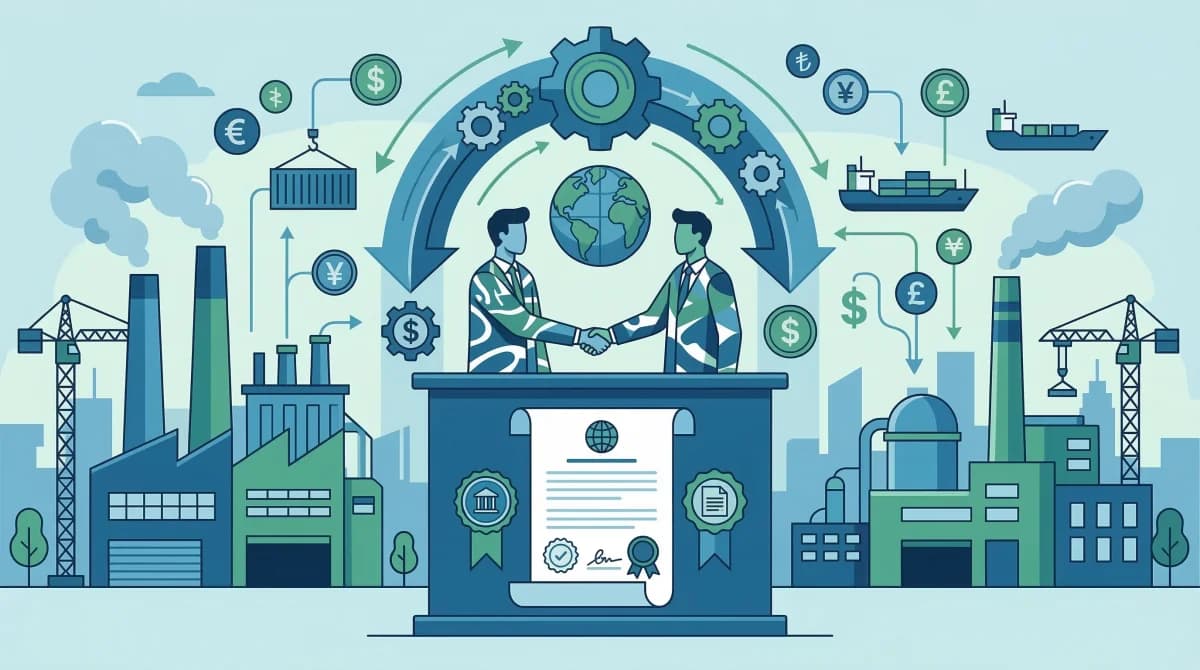
India Opens the Door (Slightly) for Chinese Investment
In a significant policy shift, the Indian cabinet has approved relaxations to Press Note 3 — the rule that required government approval for all foreign investments from countries that share a land border with India, primarily targeting China.
Introduced in April 2020 during the India-China border tensions, Press Note 3 effectively froze Chinese investment in Indian companies. Now, the government is selectively easing these restrictions.
What Is Press Note 3?
Press Note 3 (2020) mandated that any Foreign Direct Investment (FDI) from countries sharing a land border with India — China, Pakistan, Bangladesh, Nepal, Myanmar, Bhutan, and Afghanistan — required prior government approval, regardless of the sector or amount.
What Has Changed Now?
Sectors Opened for Automatic Route
- Electric Vehicles and EV Components: Up to 49% FDI through automatic route
- Electronics Manufacturing: Including semiconductors, up to 49%
- Renewable Energy Equipment: Solar panels, wind turbines, battery storage
- Food Processing: Up to 51% for packaged food and cold chain infrastructure
Sectors Still Under Government Approval
- Telecom and IT: Still require security clearance
- Defence and Aerospace: Strict restrictions remain
- Banking and Financial Services: Government approval mandatory
- Media and Broadcasting: Remain restricted
- Any investment exceeding 49%: Needs government approval regardless
Why Is India Doing This Now?
- Manufacturing push: India needs Chinese technology for electronics and EV manufacturing under PLI schemes
- Supply chain gaps: Many Indian manufacturers depend on Chinese components
- Global competition: Vietnam, Indonesia are attracting Chinese manufacturing investment
- Diplomatic thaw: Recent improvement in India-China bilateral relations
Which Indian Companies Could Benefit?
- EV Manufacturers: Tata Motors, M&M could see Chinese component suppliers set up locally
- Electronics: Dixon Technologies, Amber Enterprises could attract Chinese joint ventures
- Solar Energy: Tata Power Solar, Adani Green could access Chinese solar cell technology
- Auto Components: Motherson Sumi, Bharat Forge could partner with Chinese firms
What Safeguards Remain?
- 49% cap on automatic route: Chinese investors cannot take majority control without approval
- Security screening: Home Ministry retains the right to block any investment on national security grounds
- Beneficial ownership tracking: Investments through third countries still need approval
- Sensitive sectors excluded: Telecom, defence, media, banking remain restricted
Impact on Indian Stock Market
Markets reacted positively, with the BSE Auto index rising 2.3% and BSE Capital Goods up 1.8%. Analysts expect this to be a medium-term positive for Indian manufacturing stocks.
Use our SIP Calculator to plan investments in sectors that could benefit from increased FDI flows.
The Bottom Line
The Press Note 3 relaxation is a pragmatic move that balances India's security concerns with its economic need for manufacturing investment. For investors, sectors like EVs, electronics, and renewable energy could see a boost.
Disclaimer: This article is for educational purposes only and does not constitute financial advice. Please consult a qualified financial advisor before making investment decisions.
Written by
Jaspal Singh
Founder & Editor
Personal finance writer helping Indians make smarter money decisions through clear, jargon-free guides on taxes, investments, and budgeting.
Continue Reading

Gold, Silver Import Duty Raised to 15%: What It Means for Prices, Rupee, and India's Trade Balance
India has raised import duty on gold and silver to 15% from 6%. Here is what the move means for bullion demand, trade deficit, forex reserves, and everyday buyers.

Your Take-Home Salary Just Got Cut — Here’s Why
From April 2026, your basic pay must be at least 50% of your CTC. That means lower take-home pay but significantly higher EPF and gratuity. Here’s what changed and what it means for your wallet.
Silver Loans Are Now Legal in India — Here’s How to Get One
From April 1, the RBI allows banks and NBFCs to give loans against your silver jewelry and coins. Up to 85% LTV, 10kg silver limit, and strict borrower protections. Here’s everything you need to know.