Will Petrol and Diesel Prices Rise? India's 74-Day Fuel Reserve Explained
Jaspal Singh
Author
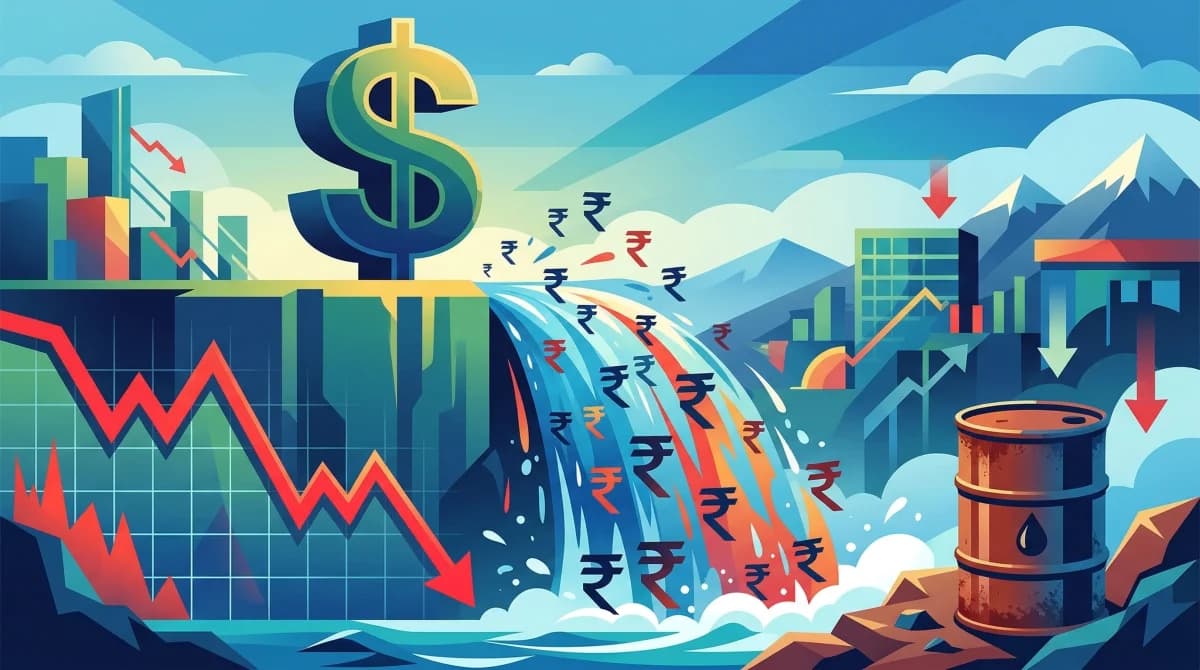
If you have been watching the news lately, you have probably heard that oil prices around the world have shot up dramatically. Brent crude oil surged past $119 per barrel on March 9, 2026 — its biggest single-day jump since 1988 — because of the escalating conflict between the US-Israel and Iran. The fighting has disrupted shipping through the Strait of Hormuz, where a huge chunk of the world's oil passes through.
So, the big question on every Indian's mind is: will petrol and diesel prices go up?
The short answer — not right away. But let us break down exactly what is happening, what the government is doing about it, and how this could affect your monthly budget.
India Has 74 Days of Fuel Reserves — What Does That Mean?
Think of fuel reserves like a big emergency savings account, but instead of money, it is filled with crude oil and petroleum products. India's Petroleum Minister Hardeep Singh Puri told Parliament that the country has enough fuel stocked up to last 74 days even if not a single new drop of oil arrived.
Here is how those 74 days break down:
Strategic Petroleum Reserves (SPR): India has underground storage facilities with a capacity of 5.33 million metric tonnes — enough for about 9.5 days of the country's crude oil needs.
Oil Marketing Company (OMC) stocks: Companies like Indian Oil (IOCL), Bharat Petroleum (BPCL), and Hindustan Petroleum (HPCL) maintain their own storage that covers another 64.5 days.
For context, the International Energy Agency (IEA) recommends countries hold 90 days of reserves. India is not quite there yet, but 74 days provides a solid buffer against short-term supply shocks.
Why Petrol and Diesel Prices Are Unlikely to Rise Immediately
Finance Minister Nirmala Sitharaman addressed the nation on March 9, 2026, and made it clear: the impact of rising crude oil prices on inflation is not expected to be substantial at this point.
Here is why India is in a relatively comfortable position right now:
Prices have been frozen since April 2022: Retail petrol and diesel prices in India have not changed for nearly four years. Oil marketing companies have been absorbing the ups and downs of global crude prices rather than passing them on to consumers.
Inflation is low: India's headline inflation in January 2026 was 2.75%, which is near the lower end of the RBI's comfort zone of 2% to 6%. This gives the government some room to absorb higher oil costs.
OMCs act as a shield: IOCL, BPCL, and HPCL buy crude oil at international prices and sell petrol and diesel at controlled domestic rates. When crude prices fall, they make profits. When crude rises, they take losses. This system protects your wallet — at least in the short term.
Fuel reserves are growing: The government has been steadily building up reserves, giving India more time to wait out price spikes.
Current Petrol and Diesel Prices Across India (March 9, 2026)
Despite the global oil price chaos, prices at your local petrol pump have not budged. Here are the current rates in major cities:
| City | Petrol (per litre) | Diesel (per litre) |
|---|---|---|
| Delhi | ₹94.77 | ₹87.67 |
| Mumbai | ₹103.50 | ₹90.03 |
| Kolkata | ₹105.45 | ₹92.03 |
| Chennai | ₹92.39 | ₹88.04 |
| Bengaluru | ₹101.94 | ₹87.89 |
| Hyderabad | ₹107.50 | ₹95.62 |
| Chandigarh | ₹82.45 | ₹75.63 |
| Noida | ₹87.98 | ₹81.10 |
Why do prices vary so much between cities? Because each state charges different amounts of Value Added Tax (VAT) on fuel. For example, Maharashtra charges a higher VAT than Chandigarh, which is why Mumbai's petrol costs over ₹20 more per litre than Chandigarh's. In fact, about 54% of the petrol price you pay is made up of central and state taxes, not the actual cost of the fuel itself.
When Could Prices Actually Rise?
While the government has ruled out an immediate hike, experts say there are scenarios where a price increase becomes unavoidable:
If crude stays above $100 for months: OMCs can absorb losses for a while, but not forever. UBS has already downgraded HPCL, BPCL, and IOC stocks, predicting a 19% to 46% cut in their profits for FY27 if crude remains elevated.
If the Strait of Hormuz stays disrupted: Currently, tanker traffic through this critical waterway has dropped by 70% to 90%. If this continues, global supply shortages could force India's hand.
If the rupee weakens further: India buys oil in US dollars. A weaker rupee makes each barrel even more expensive.
If India's import bill balloons: At $115 per barrel, India's oil import bill could rise by $56 billion to $64 billion annually, putting serious pressure on the economy.
Worth noting: LPG prices have already been hiked. Domestic cooking gas cylinder prices went up by ₹60 on March 7, 2026 — the first increase in nearly a year. This could be a sign of things to come for petrol and diesel too.
How Rising Fuel Prices Could Affect Your Monthly Budget
Even though pump prices have not changed yet, the ripple effects of expensive oil are already being felt in other ways:
Transportation and Logistics
SBI Research estimates that every $10 per barrel rise in crude oil pushes up inflation by 35 to 40 basis points. This does not just mean expensive petrol — it means higher prices for vegetables, groceries, and everything that moves by truck.
Your EMI Could Be Affected
If inflation rises due to fuel prices, the Reserve Bank of India may have to raise interest rates to keep prices in check. Higher interest rates mean higher EMIs on your home loan, car loan, and personal loans. If you are planning a major purchase, it might be worth using our EMI Calculator to see how even a small rate increase could change your monthly payments.
Daily Commute Costs
If you drive 30 km daily for your commute and your car gives 15 km per litre, you are spending about ₹190 per day on petrol in Delhi (at current rates). If prices were to go up by even ₹5 per litre, that is an extra ₹300 per month — or ₹3,600 per year — just on commuting.
Flight and Travel Costs
Aviation fuel prices directly impact airfares. Expect domestic flight tickets to become more expensive if crude prices remain elevated.
7 Smart Tips to Save on Fuel Costs
Maintain correct tyre pressure: Under-inflated tyres can reduce your mileage by 3% to 5%. A quick check every fortnight can save you hundreds each month.
Drive at 45-60 km/h in the city: This is the sweet spot for most cars. Aggressive acceleration and hard braking can waste up to 30% more fuel.
Turn off the engine at long signals: If a traffic light lasts more than 60 seconds, switch off your engine. There is no point burning fuel while standing still.
Carpool to work: Sharing a ride with just one colleague cuts your per-person fuel cost in half. Apps like Quick Ride and sRide make this easy.
Consider CNG if available: CNG costs roughly ₹2 to ₹3 per km compared to ₹7 to ₹10 per km for petrol. If your city has CNG stations, the retrofit cost pays for itself within a year.
Use fuel credit cards: Several bank credit cards offer 2% to 5% cashback on fuel purchases. Over a year, this adds up to meaningful savings.
Plan an EV for your next purchase: Electric vehicles cost just ₹1 to ₹1.5 per km to run — that is 80% cheaper than petrol. With better charging infrastructure in 2026, an EV is now a practical choice for many Indian families.
The Bottom Line
India is in a reasonably strong position right now. The 74-day fuel reserve gives the country breathing room, the government is committed to keeping prices stable in the short term, and inflation is low enough that a moderate oil price spike will not immediately hurt.
But make no mistake — if crude oil stays above $100 per barrel for an extended period, the pressure on oil marketing companies will become unsustainable, and prices will eventually have to go up. The LPG price hike is already a warning signal.
The smart move? Start preparing now. Review your monthly budget, look for ways to reduce fuel consumption, and use our EMI Calculator to stress-test your loans against potential interest rate changes.
Disclaimer: This article is for informational purposes only and does not constitute financial advice. Fuel prices, government policies, and global oil markets can change rapidly. Always refer to official government sources for the latest fuel prices in your city. The views expressed are based on publicly available information as of March 9, 2026.
Written by
Jaspal Singh
Helping Indians make better financial decisions through simple, actionable advice.
Continue Reading
Fertiliser Crisis: How the Iran War Could Make Your Groceries Costlier
The Iran war has shut the Strait of Hormuz, choking India's fertiliser imports. With urea prices up 20% and kharif season approaching, here's how it could hit your grocery bill.

AI and Jobs: Which Careers Are Safe and Which Are at Risk?
Anthropic's study of 2 million AI conversations reveals which jobs are most exposed to automation. Here's what it means for Indian workers — and 5 practical steps to future-proof your career.
India's Cement Cartel: How 3 Companies Fixed Prices for 12 Years
A CCI investigation reveals how three cement companies allegedly fixed prices on ONGC tenders for 12 years. The 'lucky number 7' excuse, the cartel's inner workings, and what it means for homebuyers.