Tax Loss Harvesting Before March 31 — A Simple Guide for Indian Investors
Jaspal Singh
Author
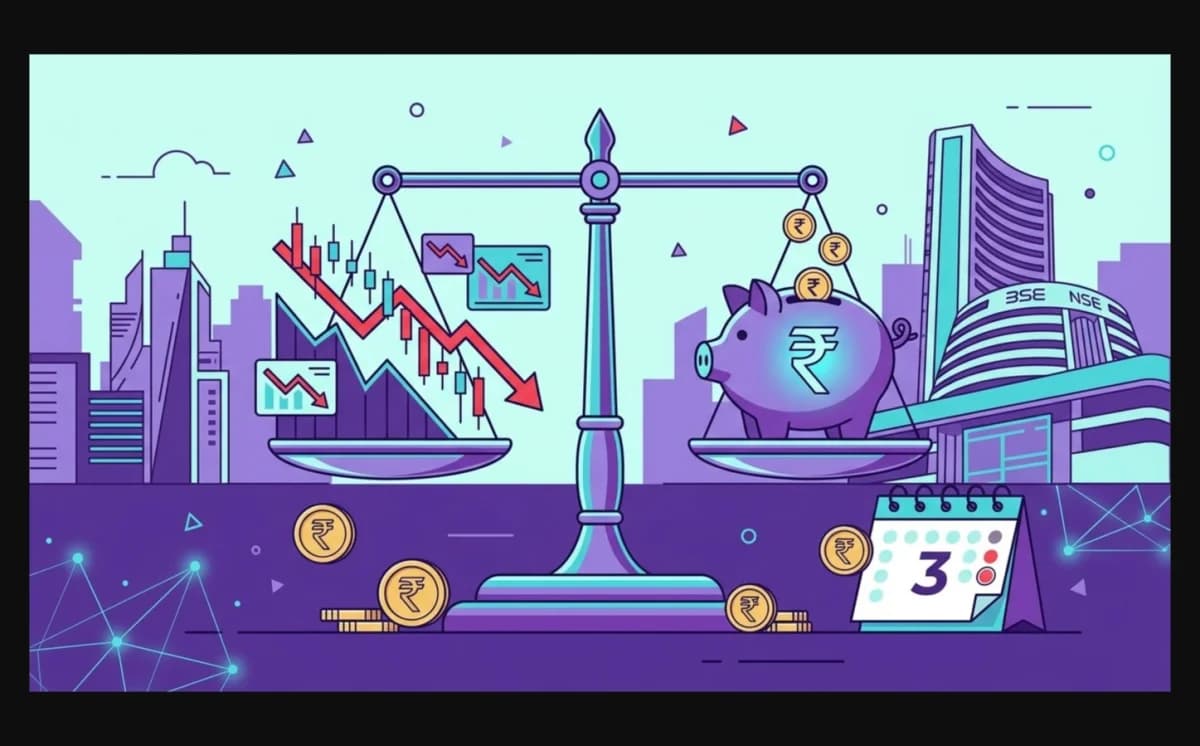
What Is Tax Loss Harvesting?
Imagine you bought a stock for ₹1 lakh and it's now worth ₹70,000. That's a paper loss of ₹30,000. If you sell it, that loss becomes "realised" — and you can use it to cancel out gains you've made on other investments.
That's tax loss harvesting in a nutshell. It's not about losing money — it's about being smart with losses you already have.
And the deadline is March 31, 2026. Any harvesting must happen within this financial year to count for FY 2025-26.
Why Does This Matter Right Now?
After the Union Budget 2024, capital gains tax rates changed significantly:
| Type | Holding Period | Tax Rate |
|---|---|---|
| Equity STCG | Less than 12 months | 20% |
| Equity LTCG | Over 12 months | 12.5% (above ₹1.25 lakh) |
| Debt fund gains | Any | Taxed at your slab rate |
With STCG at 20% and LTCG at 12.5%, every rupee of loss you can set off means real tax savings.
The Set-Off Rules — What Can Cancel What
This is the most important part to understand:
- Short-term loss (STCL) can be set off against both STCG and LTCG — it's flexible
- Long-term loss (LTCL) can only be set off against LTCG — it's limited
- Capital losses cannot be set off against salary, interest, rent, or any other income
Think of STCL as a "universal eraser" for capital gains, while LTCL only erases long-term gains.
A Real Example
Let's say your portfolio looks like this for FY 2025-26:
| Investment | Type | Gain/Loss |
|---|---|---|
| Stock A (sold after 8 months) | STCG | +₹2,00,000 |
| Mutual Fund B (sold after 2 years) | LTCG | +₹3,00,000 |
| Stock C (bought 6 months ago, in loss) | Potential STCL | -₹1,50,000 |
Without harvesting:
- STCG tax = 20% × ₹2,00,000 = ₹40,000
- LTCG tax = 12.5% × (₹3,00,000 − ₹1,25,000) = 12.5% × ₹1,75,000 = ₹21,875
- Total tax = ₹61,875
With harvesting (sell Stock C to realise ₹1,50,000 STCL):
- Set off STCL against STCG: ₹2,00,000 − ₹1,50,000 = ₹50,000 taxable STCG
- STCG tax = 20% × ₹50,000 = ₹10,000
- LTCG tax = 12.5% × ₹1,75,000 = ₹21,875 (unchanged)
- Total tax = ₹31,875
Tax saved: ₹30,000. That's a significant saving just by being strategic about when you book losses.
When Tax Loss Harvesting Does NOT Make Sense
It's not always worth doing. Skip it if:
- Your LTCG is below ₹1.25 lakh. Since the first ₹1.25 lakh of equity LTCG is tax-free, there's nothing to offset.
- You'd create a worse tax situation. If you sell a long-term holding to harvest a loss, and then buy it back, the new purchase resets the clock. If you sell within 12 months, you'll pay STCG at 20% instead of LTCG at 12.5%.
- Transaction costs exceed the tax saving. STT, brokerage, and exit loads (for mutual funds sold within 1 year) eat into your savings.
- You're selling a fundamentally good investment. Don't sell winners just for tax reasons if you believe in the long-term story.
The "Wash Sale" Question
In the US, there's a strict "wash sale" rule that prevents you from selling and buying back the same security within 30 days. India doesn't have a formal wash sale rule — but that doesn't mean you can game the system freely.
If the Income Tax department finds that you sold and immediately repurchased the exact same stock/fund just to book a loss, they may treat it as a "colourable device" (tax avoidance trick) and disallow the loss.
Safer approach: If you sell Fund A at a loss, reinvest in a similar (but different) fund. For example, sell one Nifty 50 index fund and buy another Nifty 50 index fund from a different AMC. Same market exposure, different security.
How to Do It — Step by Step
- Review your portfolio. Check your broker's capital gains report or mutual fund statements for unrealised losses.
- Separate STCL and LTCL. Remember the set-off rules above.
- Calculate potential tax savings. Is the saving worth the transaction costs?
- Sell before March 31. Since stock settlements follow T+1, complete your trades by March 28 to be safe.
- Reinvest thoughtfully. Switch to a similar fund or wait a few days before re-entering the same stock.
- File your ITR on time. This is critical — you can carry forward unused losses for up to 8 years, but only if you file before the due date.
Can You Carry Forward Losses?
Yes. If your losses exceed your gains this year, the excess can be carried forward for up to 8 assessment years. But there's one non-negotiable rule: you must file your Income Tax Return before the due date (usually July 31). Miss the deadline, and you lose the right to carry forward.
Use our tax calculator to estimate your tax liability and see if harvesting helps.
Disclaimer: This article is for educational purposes only and does not constitute financial advice. Tax laws can be complex — consult a chartered accountant before executing any tax loss harvesting strategy.
Deadline tomorrow: Complete These 7 Tasks Before March 31
Written by
Jaspal Singh
Founder & Editor
Personal finance writer helping Indians make smarter money decisions through clear, jargon-free guides on taxes, investments, and budgeting.
Continue Reading
Demat & Trading Account: A Beginner's Guide
To buy shares in India you need two accounts — a demat account that holds your shares and a trading account that places orders. This guide explains the difference, the charges (including the low-cost BSDA), the new SEBI nomination rules, and how to open them in minutes.

SIP vs Lumpsum: Which Is Better?
Got a lump sum to invest, or investing monthly? SIP vs lumpsum is not about which always wins — it is about your cash flow and your nerves. This guide compares both, explains what the data actually shows, and covers the STP middle path.

Large, Mid & Small-Cap Funds Explained
Large-cap, mid-cap or small-cap — which mutual fund is right for you? This guide explains how SEBI classifies funds by company size, the risk and return of each, and which type to pick as a beginner.