Renting vs Buying a House in India: The Honest Math
Jaspal Singh
Author
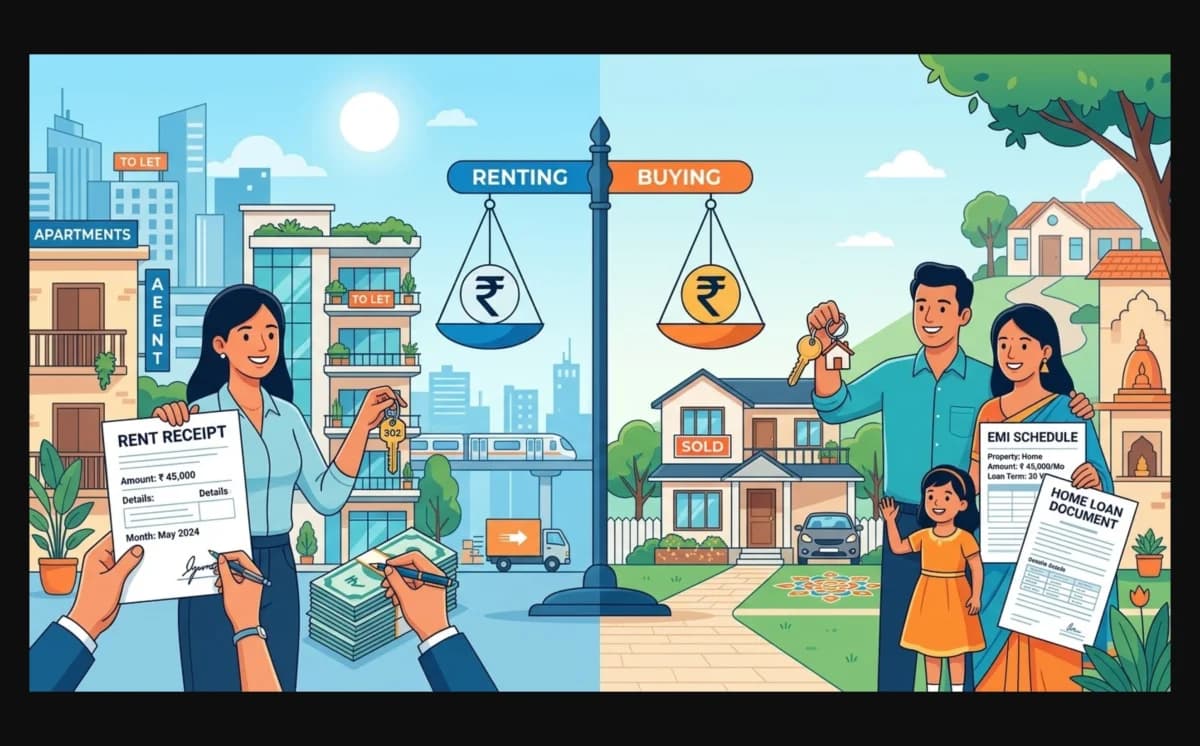
The Most Emotional Financial Decision You Will Make
In India, owning a house is more than a financial decision — it is an emotional milestone. Parents expect it. Society judges you by it. And banks are ready to lend you 80% of the cost. But the question remains: does it actually make financial sense to buy a house, or are you better off renting and investing the difference?
Let us skip the emotions and look at the cold, hard numbers.
The Real Cost Comparison: ₹80 Lakh Property
Let us take a realistic example — a 2BHK apartment in a metro city valued at ₹80 lakh.
If You Buy
| Cost Component | Amount |
|---|---|
| Property price | ₹80,00,000 |
| Down payment (20%) | ₹16,00,000 |
| Stamp duty + registration (7%) | ₹5,60,000 |
| Interior & furnishing | ₹5,00,000 |
| Total upfront cost | ₹26,60,000 |
| Home loan amount | ₹64,00,000 |
| EMI (8.75%, 20 years) | ₹56,800/month |
| Maintenance + property tax | ₹5,000/month |
| Total monthly outgo | ₹61,800/month |
| Total interest paid over 20 years | ₹72,32,000 |
| Total cost of ownership (20 years) | ₹1,75,00,000+ |
If You Rent
| Cost Component | Amount |
|---|---|
| Rent for same property | ₹22,000-25,000/month |
| Security deposit (refundable) | ₹1,50,000-2,00,000 |
| Annual rent increase | 5-8% |
| Maintenance (usually included) | ₹0-2,000/month |
| Monthly difference (EMI minus rent) | ₹36,800-39,800 |
Use our EMI Calculator to run your own numbers with different loan amounts and interest rates.
The Opportunity Cost Nobody Talks About
Here is where the math gets interesting. If you rent and invest the difference (the gap between EMI and rent) in equity SIPs, what happens?
- Monthly difference: ₹37,000 (approx.)
- Down payment saved: ₹26,60,000 (also invested)
- If SIP returns 12% annually over 20 years:
| Investment | Value After 20 Years |
|---|---|
| ₹37,000/month SIP for 20 years at 12% | ₹3,70,00,000 (approx.) |
| ₹26.6 lakh lumpsum at 12% for 20 years | ₹2,56,00,000 (approx.) |
| Total wealth from renting + investing | ₹6,26,00,000 (approx.) |
Meanwhile, your ₹80 lakh property at 6% annual appreciation (optimistic for most Indian cities) would be worth about ₹2,56,00,000 after 20 years.
Use our SIP Calculator to verify these numbers yourself.
Rental Yields in India Are Shockingly Low
The rental yield — annual rent divided by property price — tells you how much return a property generates as a rental asset. In most Indian metros, rental yields are terrible:
| City | Avg Rental Yield | Compare With |
|---|---|---|
| Mumbai | 2.0-2.5% | FD gives 6.5% |
| Delhi NCR | 2.5-3.0% | PPF gives 7.1% |
| Bangalore | 3.0-3.5% | SIP gives 12%+ long term |
| Chennai | 2.5-3.0% | Rental yield losing to inflation |
| Hyderabad | 3.0-3.5% | Better than Mumbai but still low |
| Pune | 2.5-3.0% | NPS gives 9-10% long term |
When your home loan interest rate is 8.5-9.5% and rental yield is just 2-3%, the math clearly favours renting — at least in expensive metro cities.
The Breakeven Point: When Does Buying Make Sense?
Buying a house typically breaks even after 7-10 years compared to renting + investing. This means:
- Staying less than 5 years? Renting is almost always cheaper
- Staying 5-7 years? It is a close call — depends on location and price appreciation
- Staying 7+ years? Buying starts making more financial sense
- Staying 15+ years? Buying usually wins, especially if you get good appreciation
When Renting Makes More Sense
- You might relocate for work within 3-5 years
- You live in an expensive metro where rental yield is below 3%
- You are disciplined enough to actually invest the difference (and not spend it)
- You want flexibility — to upgrade, downgrade, or move neighbourhoods
- You are early in your career and your income is still growing rapidly
- Property prices in your city are overheated and due for a correction
When Buying Makes More Sense
- You are settling in one city for 7+ years
- You want emotional security — a home that is truly yours
- You see buying as forced savings (EMI forces discipline; many people struggle to invest voluntarily)
- You can get a property significantly below market value (distress sale, new launch discounts)
- You want the tax benefits — Section 24 (₹2 lakh interest), Section 80C (₹1.5 lakh principal)
- Property prices in your area are genuinely undervalued with strong future growth potential
Tax Benefits of Buying
Owning a home does come with significant tax advantages:
| Section | Deduction | Limit |
|---|---|---|
| Section 24(b) | Home loan interest | ₹2,00,000/year |
| Section 80C | Principal repayment | ₹1,50,000/year |
| Section 80EEA | Additional interest (first-time buyers) | ₹1,50,000/year |
Use our Income Tax Calculator to see how much these deductions can save you annually.
Hidden Costs of Owning That Nobody Mentions
- Society maintenance: ₹3,000-10,000/month depending on amenities
- Property tax: ₹5,000-25,000/year
- Repairs and upkeep: Budget 1% of property value per year (₹80,000 for an ₹80L flat)
- Home insurance: ₹3,000-8,000/year
- Opportunity cost of down payment: ₹16-26 lakh locked in an illiquid asset
- Emotional stress of loan: 20 years is a long commitment
The Honest Answer
There is no universal right answer. Here is a simple framework:
- If your monthly rent is less than 40% of what your EMI would be — renting is a better deal mathematically
- If you are staying 7+ years and can afford the EMI comfortably — buying gives you stability and forced savings
- If you are in your 20s-early 30s and career is evolving — rent, invest aggressively in SIPs, and buy later when life is more settled
Run the numbers for your specific situation using our EMI Calculator, SIP Calculator, and FD Calculator.
Disclaimer: This article is for educational purposes only and does not constitute financial advice. Property markets, rental yields, and investment returns vary significantly by city and micro-market. Please consult a qualified financial advisor before making major financial decisions.
Written by
Jaspal Singh
Founder & Editor
Personal finance writer helping Indians make smarter money decisions through clear, jargon-free guides on taxes, investments, and budgeting.
Continue Reading

5 Credit Card Rules Changing From April 1 — Your Spending Will Be Watched
Spend over ₹10 lakh on credit cards? The Income Tax Department will know. From April 1, 2026, new rules change how credit cards are monitored, authenticated, and reported. Here are 5 changes every cardholder must know.

Legal Aspects of Real Estate in India: What Every Buyer Must Know
Understand the key legal checks before buying property in India — RERA, title deeds, encumbrance certificates, stamp duty, registration, and common legal traps to avoid.
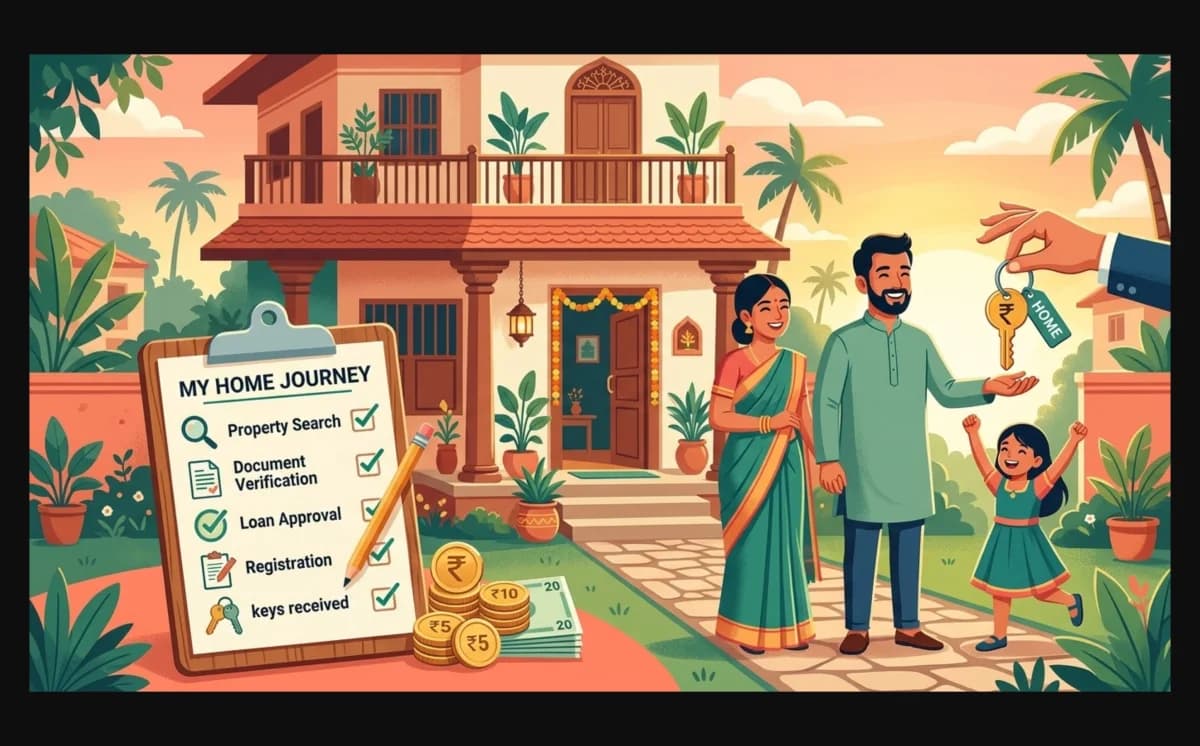
Buying a House in India: Step-by-Step Guide
A complete 10-step guide to buying your first home in India — from budgeting and RERA checks to home loans, registration, and possession.