Buying a House in India: Step-by-Step Guide
Jaspal Singh
Author
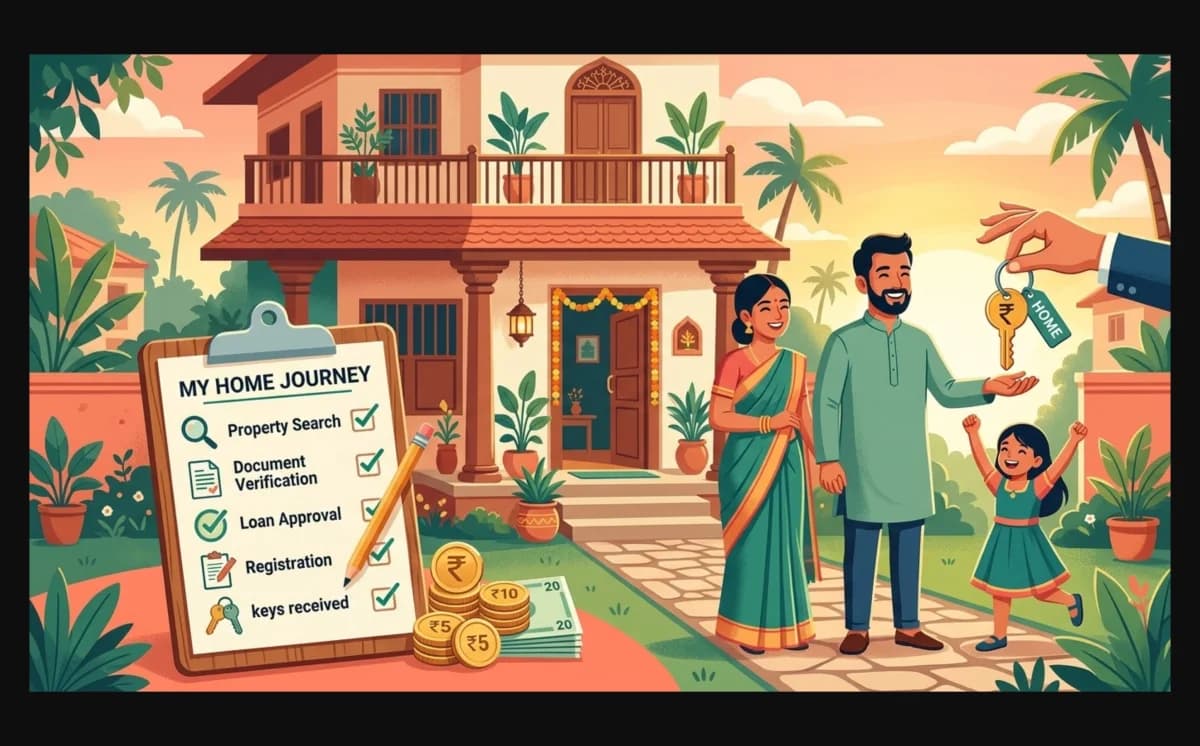
Buying Your First Home Is the Biggest Financial Decision of Your Life
For most Indians, buying a house is the single largest purchase they will ever make. It is exciting, emotional, and — if you are not careful — incredibly stressful. Between navigating home loans, checking RERA compliance, understanding stamp duty, and not getting cheated by a builder, the process can feel overwhelming.
But here is the thing: if you follow a systematic approach, buying a home does not have to be a nightmare. This guide walks you through 10 clear steps from the first budget calculation to getting the keys to your new home.
Step 1: Fix Your Budget (And Stick to It)
Before you start browsing property websites, sit down and figure out how much you can actually afford. The golden rule:
Your EMI should not exceed 30-35% of your monthly take-home income.
If your household take-home is ₹1,00,000 per month, your home loan EMI should ideally stay under ₹30,000–35,000. Use our EMI Calculator to figure out what loan amount that translates to at current interest rates.
Do Not Forget the Hidden Costs
| Cost Component | Typical Range | Example (₹80L Property) |
|---|---|---|
| Down payment | 10-25% of property value | ₹8-20 lakh |
| Stamp duty | 4-7% (varies by state) | ₹3.2-5.6 lakh |
| Registration charges | 1-2% | ₹80,000-1.6 lakh |
| GST (under-construction only) | 1-5% | ₹80,000-4 lakh |
| Interior & furnishing | ₹5-15 lakh | ₹5-15 lakh |
| Legal fees | ₹10,000-50,000 | ₹25,000 |
| Brokerage | 1-2% | ₹80,000-1.6 lakh |
A ₹80 lakh property can easily cost you ₹90-100 lakh when you add all these up. Budget for at least 15-20% extra beyond the listed price.
Step 2: Check and Fix Your Credit Score
Banks look at your CIBIL score before approving a home loan. Here is what different scores mean:
- 750+: Excellent — you will get the best interest rates and quick approval
- 700-749: Good — most banks will approve, but you may not get the lowest rate
- 650-699: Average — limited options, higher interest rates
- Below 650: Poor — very difficult to get a home loan
If your score is below 750, spend 3-6 months improving it before applying. Pay off credit card dues, close unused loans, and avoid new credit applications.
Step 3: Research the Location Thoroughly
Location determines 80% of a property's future value. Check these factors:
- Connectivity: Distance to workplace, metro/bus routes, highways
- Infrastructure: Schools, hospitals, markets, parks within 2-3 km
- Future development: Upcoming metro lines, ring roads, IT parks
- Water and electricity: Regular supply or frequent cuts?
- Safety: Crime rates, street lighting, police station proximity
- Resale potential: Are property prices in this area going up or stagnating?
Talk to people who already live in the area. Visit at different times — morning, evening, and weekends.
Step 4: Verify RERA Registration
The Real Estate (Regulation and Development) Act, 2016 (RERA) is your biggest protection as a buyer. Every residential project with more than 8 units must be registered under RERA.
How to verify: Go to your state's RERA website and search for the project by name or registration number. Every state has its own portal — for example, MahaRERA for Maharashtra, RERA Karnataka for Bangalore, and HRERA for Haryana.
If a project is not RERA-registered, walk away immediately. It means the builder is either non-compliant or the approvals are not in place.
Step 5: Conduct Legal Due Diligence
This is where most buyers make mistakes. Hire a property lawyer (₹10,000-50,000) to verify:
- Title deed: Does the seller actually own the property? Is the title clear and marketable?
- Encumbrance certificate (EC): This proves the property has no pending loans, mortgages, or legal claims. Get an EC for at least the last 15-30 years
- Approved building plan: Is the construction plan approved by the local municipal authority?
- Occupancy Certificate (OC): For ready-to-move-in properties, this confirms the building complies with approved plans and is safe to inhabit
- Completion Certificate (CC): Confirms the building was constructed as per approved plans
- Land use: Is the land zoned for residential use? Agricultural land cannot legally be used for residential construction without conversion
Step 6: Check the Builder's Reputation
Before putting down any money:
- Check RERA portal for the builder's past projects and any complaints
- Search for consumer court cases against the builder
- Visit the builder's completed projects to check quality
- Talk to existing buyers — check apartment owner forums and social media groups
- Look at the builder's delivery track record — do they deliver on time?
Step 7: Do a Thorough Site Visit
Never buy a property without visiting it in person. If it is under construction:
- Check the construction progress vs the timeline on RERA portal
- Look at the quality of materials being used
- Talk to the site engineer about specifications
- Check the sample flat but understand it may differ from actual delivery
For resale properties, check the structural condition, plumbing, electrical wiring, waterproofing, and common areas.
Step 8: Get a Home Loan Pre-Approval
Before finalizing a property, get a pre-approved home loan from a bank. This gives you:
- A clear idea of how much the bank will actually lend you
- Stronger negotiating position with the builder
- Faster processing once you finalize the property
Compare Home Loan Rates
| Bank | Interest Rate (Approx.) | Processing Fee |
|---|---|---|
| SBI | 8.50-9.15% | 0.35% of loan |
| HDFC Bank | 8.75-9.45% | 0.50% of loan |
| ICICI Bank | 8.75-9.40% | 0.50% of loan |
| Bank of Baroda | 8.40-9.30% | ₹8,500 flat |
| LIC Housing Finance | 8.50-9.35% | ₹10,000-15,000 |
Even a 0.25% difference in interest rate saves lakhs over a 20-year loan. Use our EMI Calculator to compare monthly payments across different banks and tenures.
PMAY: First-Time Buyer Subsidy
The Pradhan Mantri Awas Yojana (PMAY) offers interest subsidies of up to ₹2.67 lakh for first-time home buyers based on income category. Check your eligibility — it can significantly reduce your effective interest rate.
Step 9: Sign the Agreement for Sale
Under RERA, a builder cannot collect more than 10% of the property cost as booking amount or advance before signing the Agreement for Sale. This protects you from builders taking money and delaying the project.
The agreement should clearly mention:
- Total price with breakup (base cost, floor rise, parking, maintenance deposit)
- Possession date — and penalty for delays
- Carpet area (as per RERA definition, not super built-up area)
- Payment schedule linked to construction milestones
- Specifications — fittings, finishes, amenities
- Common area charges and maintenance
Step 10: Registration and Possession
The final step involves:
- Pay stamp duty — varies by state (Mumbai 6%, Delhi 4-6%, Bangalore 5.6%, Chennai 7%)
- Register the property at the Sub-Registrar's office (compulsory under the Registration Act 1908)
- Get the registered sale deed — this is your proof of ownership
- Apply for mutation in municipal records (transfers the property to your name in revenue records)
- Take physical possession — do a thorough inspection before signing the possession letter
Stamp Duty by Major Cities
| City | Stamp Duty | Registration | Women Discount |
|---|---|---|---|
| Mumbai | 6% | 1% | 5% for women |
| Delhi | 4-6% | 1% | 4% for women |
| Bangalore | 5.6% | 1% | No special discount |
| Chennai | 7% | 1% | No special discount |
| Hyderabad | 6% | 0.5% | No special discount |
| Pune | 6% | 1% | 5% for women |
Many states offer lower stamp duty for women buyers. If possible, register the property in the woman's name to save a significant amount.
Tax Benefits on Home Loans
Owning a home comes with attractive tax benefits under the Income Tax Act:
- Section 80C: Deduction of up to ₹1.5 lakh per year on principal repayment
- Section 24(b): Deduction of up to ₹2 lakh per year on home loan interest (self-occupied property)
- Section 80EEA: Additional ₹1.5 lakh deduction on interest for first-time buyers (if stamp duty value ≤ ₹45 lakh)
Use our Income Tax Calculator to estimate how much you save on taxes with a home loan.
Quick Checklist Before You Sign
- ☑ Budget finalized (EMI ≤ 35% of income)
- ☑ CIBIL score 750+
- ☑ RERA registration verified
- ☑ Title deed checked by lawyer
- ☑ Encumbrance certificate obtained
- ☑ Builder reputation verified
- ☑ Site visited multiple times
- ☑ Home loan pre-approved
- ☑ Agreement for sale reviewed by lawyer
- ☑ Stamp duty and registration costs budgeted
The Bottom Line
Buying a home in India is a marathon, not a sprint. Take your time with each step, do not skip the legal checks, and never let a builder pressure you into rushing. A well-planned home purchase can be the foundation of your family's wealth. A rushed one can become a financial burden for decades.
Start by figuring out your budget with our EMI Calculator and SIP Calculator (to compare investing the difference if you are debating renting vs buying).
Disclaimer: This article is for educational purposes only and does not constitute financial or legal advice. Real estate regulations, stamp duty rates, and tax laws vary by state and change periodically. Please consult a qualified financial advisor and property lawyer before making any property purchase decisions.
Written by
Jaspal Singh
Founder & Editor
Personal finance writer helping Indians make smarter money decisions through clear, jargon-free guides on taxes, investments, and budgeting.
Continue Reading

5 Credit Card Rules Changing From April 1 — Your Spending Will Be Watched
Spend over ₹10 lakh on credit cards? The Income Tax Department will know. From April 1, 2026, new rules change how credit cards are monitored, authenticated, and reported. Here are 5 changes every cardholder must know.

Legal Aspects of Real Estate in India: What Every Buyer Must Know
Understand the key legal checks before buying property in India — RERA, title deeds, encumbrance certificates, stamp duty, registration, and common legal traps to avoid.
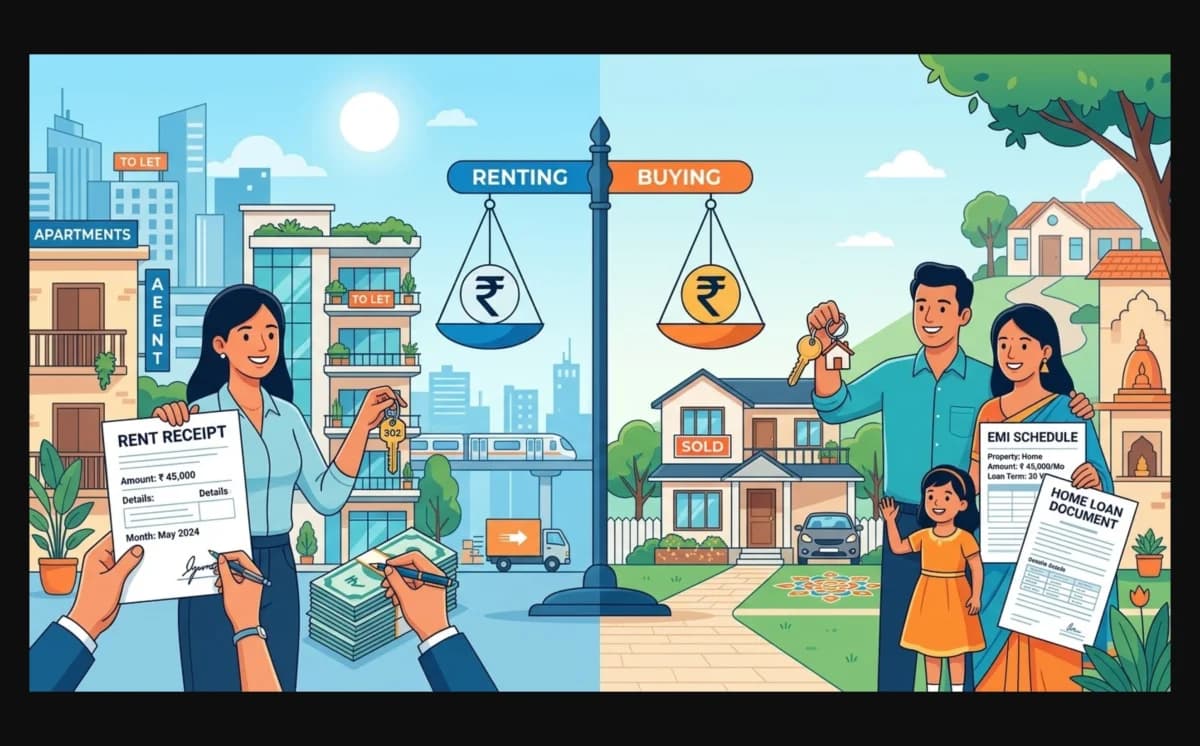
Renting vs Buying a House in India: The Honest Math
Should you rent or buy a house in India? We run the numbers on an ₹80 lakh property and compare EMIs, rent, opportunity cost, and tax benefits to find the real answer.