Insurance Claims in India: How to File, What to Expect, and Mistakes to Avoid
Jaspal Singh
Author
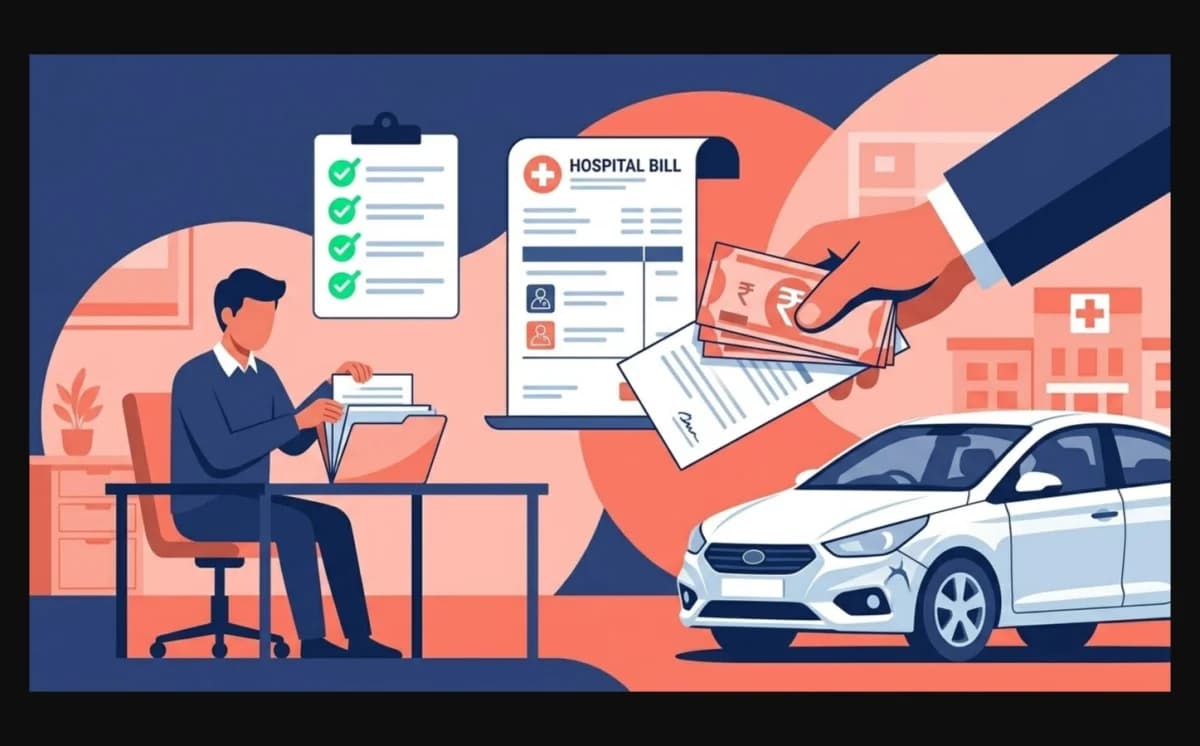
You Pay Premiums for Years — But Do You Know How to Claim?
Here's an uncomfortable truth: most policyholders never read their policy document end to end. They pay premiums faithfully, but when it's time to claim, they don't know the process, miss deadlines, or submit wrong documents — and the claim gets rejected.
Insurance claims don't have to be stressful. If you know the process and avoid common mistakes, most claims get settled smoothly. This guide covers health, motor, and life insurance claims in India.
Health Insurance Claims
Cashless Claims (The Easier Route)
If you go to a network hospital (one that has a tie-up with your insurer), you don't pay upfront. The insurer settles the bill directly with the hospital.
- Check if the hospital is in-network — use your insurer's app or website
- For planned hospitalisation: Submit a pre-authorisation form 48–72 hours before admission
- For emergencies: Inform the insurer/TPA within 24 hours of admission
- The hospital coordinates with TPA (Third-Party Administrator) for approval
- At discharge: You only pay the non-covered items (toiletries, special food, etc.)
Reimbursement Claims (When You Pay First)
If you go to a non-network hospital, you pay all bills upfront and claim reimbursement later.
- Inform the insurer within 24 hours of hospitalisation
- Collect all original documents: discharge summary, bills, prescriptions, diagnostic reports, payment receipts
- Submit claim form + documents within 15–30 days of discharge
- Insurer verifies and settles — IRDAI's 2024 master circular requires settlement within 15 days of receiving the last necessary document
Documents Needed for Health Claims
- Duly filled claim form
- Photo ID proof
- Policy copy
- Hospital discharge summary
- All medical bills and receipts (originals)
- Prescription and diagnostic reports
- Doctor's referral letter (if transferred)
- Bank details for reimbursement
Motor Insurance Claims (Car & Bike)
Cashless Claims at Network Garages
- Report the incident to your insurer immediately — call the helpline or use the app
- File an FIR if it involves theft, third-party injury, or a major accident
- DO NOT start repairs — this is critical. Wait for the surveyor
- Take your vehicle to a network garage
- Surveyor inspects the damage and approves the repair estimate
- Garage repairs the vehicle and bills the insurer directly
- You pay only the deductible (if any) and depreciation (unless you have zero-dep)
The #1 Claim Killer: Starting Repairs Without Approval
A large share of motor reimbursement claims are rejected because the owner starts repairs before getting insurer approval. The insurer needs to assess the damage through a surveyor first. No assessment = no claim. Always, always wait.
Documents for Motor Claims
- Claim form
- Policy copy
- Driving licence of the person who was driving
- RC (Registration Certificate)
- FIR/police complaint (for theft/accident)
- Repair estimate and bills
- Photos of the damage
- Survey report (insurer arranges this)
Life Insurance Claims
Life insurance claims are filed by the nominee (the person named in the policy) after the policyholder's death.
- Notify the insurer as soon as possible — call or visit the branch
- Submit the claim form along with the death certificate
- Provide supporting documents: policy document, nominee's ID proof, hospital records (if death was due to illness), FIR (if accidental death)
- Insurer investigates — under Section 45 of the Insurance Act, a life policy cannot be called into question at all after 3 years from the later of issuance, commencement of risk, revival or rider date
- Settlement: IRDAI requires a death claim to be settled within 15 days where no investigation is needed, and within 45 days of intimation where one is
Top Reasons Insurance Claims Get Rejected
| Reason | How to Avoid | |
|---|---|---|
| Non-disclosure of pre-existing conditions | Always declare ALL health conditions honestly | |
| Waiting period violations | Know your policy's waiting periods (usually 2–4 years for pre-existing conditions) | |
| Non-cooperation with insurer | Respond to every query from the insurer promptly | |
| Documentation errors | Submit complete, original documents with no mismatches | |
| Policy lapse | Never miss a premium payment — set up auto-debit | |
| Excluded conditions | Varies | Read your policy — know what's NOT covered |
10 Tips to Get Your Claim Approved
- Read your policy document. Seriously. Those 20 pages tell you exactly what's covered and what's not.
- Disclose everything. Pre-existing conditions, previous claims, smoking habits — hiding them is the fastest way to get rejected.
- Inform the insurer fast. Most policies require intimation within 24 hours for health and motor claims.
- Keep originals of everything. Bills, prescriptions, reports, FIRs — insurers need originals, not photocopies.
- Use network hospitals/garages. Cashless claims are faster and have fewer disputes.
- Don't repair first, claim later. For motor insurance, always get surveyor approval before repairs.
- Respond to queries within deadlines. Silence is treated as non-cooperation — 18% of claims fail because of this.
- Know your waiting periods. New health policies typically have a 30-day initial waiting period and 2–4 years for specific diseases.
- Track your claim online. Most insurers have apps with real-time claim tracking — use them.
- Escalate if needed. If your claim is unfairly rejected, escalate to the Insurance Ombudsman — it's free and usually faster than courts.
What If Your Claim Is Rejected?
Don't give up. You have options:
- Step 1: Ask the insurer for the rejection reason in writing
- Step 2: File a grievance with the insurer's Grievance Redressal Officer
- Step 3: If unresolved within 30 days, approach the Insurance Ombudsman (free of charge, handles claims up to ₹50 lakh)
- Step 4: If the Ombudsman route does not resolve it, approach the Consumer Commission. Note that IRDAI registers and monitors grievances through Bima Bharosa but does not adjudicate individual claims.
Insurance is a promise — but it only works if you hold up your end. Pay on time, be honest, keep documents, and claim correctly. See our guides to health insurance and term insurance to make sure the cover itself is right before you ever need to claim.
Disclaimer: This article is for educational purposes only and does not constitute insurance or legal advice. Claim processes vary between insurers — always refer to your specific policy document and contact your insurer for exact procedures.
IRDAI Claim Timelines: The Clock Your Insurer Is Legally On
Most policyholders wait passively after filing a claim, assuming the insurer decides when to pay. It does not. The IRDAI Master Circular on Protection of Policyholders' Interests, 2024 puts every major claim type on a defined turnaround time — sharply tighter than the older 2017 framework. Knowing the exact number turns a polite follow-up into a documented demand.
| Claim stage | Turnaround time under IRDAI's 2024 circular |
|---|---|
| Health — cashless pre-authorisation at admission | Decision immediately, and no later than 1 hour from the hospital's request |
| Health — final authorisation at discharge | 3 hours from the hospital's discharge request; delay costs beyond that are borne by the insurer, not you |
| Health — reimbursement claim | 15 days from submission of the claim |
| Life — death claim not requiring investigation | 15 days from intimation, once policy-specified documents are in |
| Life — death claim requiring investigation | 45 days from intimation, investigation and settlement included |
| Motor/general — surveyor appointment | 24 hours of the claim being reported |
| Motor/general — survey report | 15 days from the surveyor's appointment |
| Motor/general — insurer's decision | 7 days of receiving the survey report |
The enforcement clause matters as much as the deadlines. Where a claim misses the prescribed time, the claimant is entitled to interest at the bank rate plus 2%, from the date the intimation was received until the date of payment — payable by the insurer on its own, without you asking. A late settlement that arrives with no interest component is itself a grievance worth raising.
The Four Claim Journeys, Step by Step
Health cashless: work the one-hour and three-hour clocks
The hospital's insurance desk, not you, sends the pre-authorisation request to the insurer or TPA. Your job is to make it complete on the first attempt: policy or health card number, the doctor's diagnosis and line of treatment, a cost estimate, and your ID. Ask the desk for the request's timestamp and reference number — those two data points are what make the one-hour and three-hour deadlines enforceable when you escalate. Keep the approval letter too; it states the sanctioned amount and any deductions, and later disputes almost always come back to it. Our health insurance guide explains how network status and sum insured shape what gets approved.
Health reimbursement: build a file that cannot be questioned
Intimate the insurer at admission, not at discharge. Then assemble the file in the order the assessor reads it: claim form, prescription advising admission, discharge summary, final consolidated bill, its itemised break-up, pharmacy invoices with matching prescriptions, diagnostic reports with their invoices, payment receipts, and a cancelled cheque. The two most common gaps are pharmacy bills with no matching prescription, and investigations billed but not reported. Photocopy everything before submitting the originals.
Life and term death claims: what the nominee does first
Intimate the insurer in writing with the policy number, date, place and cause of death — this starts the clock before documents are ready. Then submit the claimant's statement, original policy document, municipal death certificate, the nominee's KYC and bank proof, plus hospital records, or the post-mortem report and FIR for accidental death. Claims flagged for investigation get 45 days rather than 15, so full disclosure of medical history the insurer will find anyway is what keeps a claim on the shorter track. Our term insurance guide and life insurance guide cover how nomination and disclosure should be set up long before a claim.
Motor: own damage and third-party are separate tracks
An own-damage claim goes to your insurer, gets a surveyor, and runs on the timelines above. A third-party claim — injury, death or property damage to someone else — is not settled on that clock at all; it is adjudicated by the Motor Accident Claims Tribunal, and compensation for injury or death has no upper limit under the Motor Vehicles Act. Never settle a third-party matter privately in cash and never admit liability in writing at the scene; both can void your cover. See the car insurance guide for how own-damage, third-party and add-ons interact.
Document Checklist by Claim Type
| Document | Health | Life / Term | Motor OD |
|---|---|---|---|
| Signed claim form | Yes | Yes (claimant's statement) | Yes |
| Policy document / health card | Yes | Original policy | Yes |
| Photo ID and KYC of claimant | Yes | Yes | Yes |
| Death certificate (municipal) | — | Yes | — |
| Discharge summary / hospital records | Yes | If death followed illness | Only for injury claims |
| Itemised bill + payment receipts | Yes (reimbursement) | — | Repair invoice and receipt |
| Prescriptions and diagnostic reports | Yes | — | — |
| FIR / police report | Accident cases | Accidental or unnatural death | Theft, injury, major accident |
| Driving licence and RC | — | — | Yes |
| Surveyor's report | — | — | Arranged by insurer |
| Cancelled cheque / bank proof | Yes | Yes | Yes |
Six Rejection Traps and How to Disarm Each
- Non-disclosure of a pre-existing condition. The proposal form, not the premium receipt, is the contract's foundation. Declare diagnoses, medication and past hospitalisation even if the agent says it will not matter — insurers routinely pull hospital and pharmacy records at claim stage.
- Waiting periods. Initial waiting periods, and separate longer ones for specified illnesses and declared pre-existing conditions, are printed in your policy schedule. Check the exact dates before a planned procedure; a surgery scheduled two weeks early is a fully avoidable rejection.
- Policy lapse. Cover ceases if a premium is missed beyond the grace period. Auto-debit the renewal — a lapsed-then-revived health policy can also restart waiting periods.
- Delayed intimation. Policies specify intimation windows. Intimate first with whatever facts you have; documents can follow.
- Exclusions. Cosmetic treatment, most dental work and non-medical consumables are typically excluded. Read the exclusions list when the policy is issued, not the night before discharge.
- Room-rent sub-limits and proportionate deduction. The trap that surprises people most. If your policy caps room rent and you take a costlier room, the insurer may scale down linked charges in the same proportion. Illustratively, on a ₹5 lakh policy with a 1% daily cap of ₹5,000, a ₹10,000 room can see associated charges cut towards half. Prefer a policy without room-rent sub-limits; if yours has one, book within the cap.
Section 45: The Three-Year Shield on Life Policies
Section 45 of the Insurance Act, 1938 is the single most useful provision a nominee can cite. A life policy may be called in question on the ground of fraud only within three years from the later of the date of issuance, commencement of risk, revival, or a rider. Once that period passes, the policy cannot be called in question. Even within the three years, the insurer must communicate its grounds and the material relied on in writing to the insured, nominee or legal representative — so a repudiation letter with no reasons is procedurally defective. Note that revival restarts the clock, which is why lapsing and reviving a term plan costs more than it looks.
The Escalation Ladder When a Claim Is Denied
- Rung 1 — the insurer's Grievance Redressal Officer. Every insurer must have one, with contact details on its website and in your policy document. Complain in writing, attach the repudiation letter, keep the acknowledgement.
- Rung 2 — IRDAI's Bima Bharosa portal. If the insurer does not resolve it, register on Bima Bharosa, or use complaints@irdai.gov.in or toll-free 155255 / 1800 4254 732. You get a token number and the insurer is expected to respond within about 15 days. Bima Bharosa routes and monitors your complaint — IRDAI does not itself adjudicate the merits of an individual claim.
- Rung 3 — the Insurance Ombudsman. The real adjudicating forum, and it is free. Under the Insurance Ombudsman Rules, 2017 (as amended in 2021), it can entertain complaints where the loss claimed does not exceed ₹50 lakh. You must first have made a written representation to the insurer and either been rejected or waited one month. Crucially, the Ombudsman's award binds the insurer, which must comply within 30 days and report compliance. Find your territorial Ombudsman via the Council for Insurance Ombudsmen.
- Rung 4 — consumer court. For claims above the ₹50 lakh ceiling, or where you want damages for deficiency of service, file before the appropriate consumer commission. Slower and costlier, so treat it as the last rung.
A denied hospitalisation claim lands hardest on a fixed income — our guide to healthcare planning in retirement covers how to size cover and keep it active.
Frequently Asked Questions
How long can an insurer take to settle a health insurance claim in India?
Under IRDAI's 2024 master circular, a cashless pre-authorisation must be decided within one hour of the hospital's request and final discharge authorisation within three hours, while a reimbursement claim should be settled within 15 days of submission. Delays beyond the three-hour discharge window are borne by the insurer.
Do I get interest if my insurance claim is settled late?
Yes. Where settlement misses the prescribed timeline, the claimant is entitled to interest at the bank rate plus 2%, calculated from the date the intimation was received until the date of payment, and the insurer must pay it on its own without you having to ask.
Can a life insurance claim be rejected after three years?
Generally no. Under Section 45 of the Insurance Act, 1938, a life policy can be called in question on the ground of fraud only within three years of issuance, commencement of risk, revival or a rider — whichever is later. After that period it cannot be called in question. Reviving a lapsed policy restarts the three-year clock.
What is the maximum claim the Insurance Ombudsman can decide?
The Insurance Ombudsman can entertain complaints where the loss under the policy does not exceed ₹50 lakh. The service is free, the award is binding on the insurer, and the insurer must comply within 30 days of receiving it. Larger disputes go to the consumer commission instead.
What should I do first if my claim is rejected?
Ask for the rejection in writing with the specific policy clause relied on. Insurers are required to communicate the grounds and the material behind a repudiation. That written letter is the document every later forum — the grievance officer, Bima Bharosa and the Ombudsman — will ask you for first.
Related Guides
Written by
Jaspal Singh
Founder & Editor
Personal finance writer helping Indians make smarter money decisions through clear, jargon-free guides on taxes, investments, and budgeting.
Continue Reading

Travel Insurance in India: Why You Shouldn't Leave Home Without It
A medical emergency abroad can cost ₹50 lakh+. Travel insurance starts at just ₹19/day. Learn what it covers, how to choose a plan, and when you absolutely need it.

Two-Wheeler Insurance in India: Everything Bike and Scooter Owners Must Know
Riding without insurance? You could face a ₹2,000 fine. Learn about two-wheeler insurance types, premiums starting at ₹457, and how to pick the right policy.

Car Insurance in India: A Complete Guide for Every Car Owner
From third-party to comprehensive coverage, learn everything about car insurance in India — types, premiums, add-ons, and how to save money on your policy.