Car Insurance in India: A Complete Guide for Every Car Owner
Jaspal Singh
Author
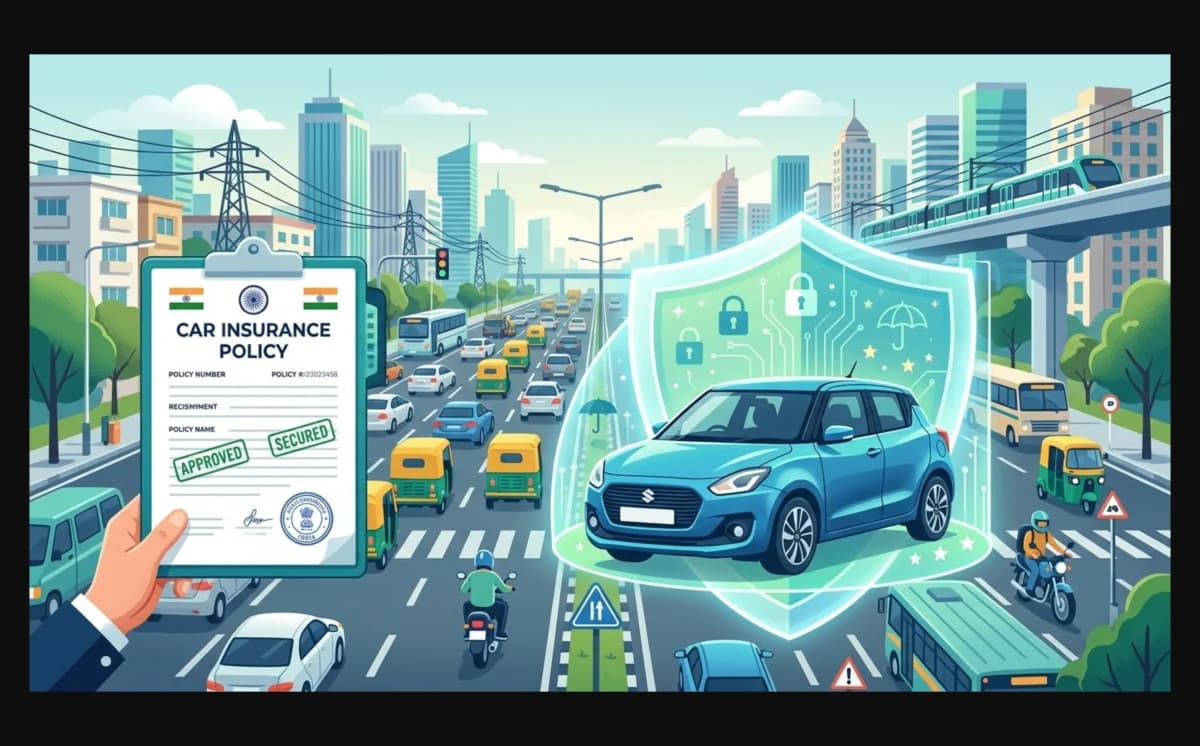
Why Car Insurance Matters More Than You Think
Here's a fact that surprises most people: third-party car insurance is mandatory in India under the Motor Vehicles Act, 1988. Driving without it can lead to a fine of ₹2,000 and even imprisonment for up to 3 months.
But beyond the legal requirement, car insurance is your financial safety net. A single accident can cost lakhs in repairs, medical bills, and legal fees. The right policy means you don't pay for any of that out of pocket.
Let's break down everything you need to know — in simple terms.
The 3 Types of Car Insurance in India
1. Third-Party Insurance (Mandatory)
This is the bare minimum required by law. It covers damages you cause to others — their vehicle, property, or injuries. But here's the catch: it does NOT cover your own car's damage.
- Covers: Injuries/death of third parties, damage to their property
- Does not cover: Your own car repairs, theft, fire, natural disasters
- Cost: Fixed by IRDAI — ₹2,094 (under 1,000cc), ₹3,416 (1,000–1,500cc), ₹7,899 (above 1,500cc)
- Best for: Very old cars where repair costs would exceed the car's value
2. Own Damage (OD) Insurance
This covers damage to your own car — accidents, theft, fire, natural disasters, vandalism. But it doesn't cover damage to others.
- Covers: Accidents, theft, fire, flood, earthquake, riots, vandalism
- Does not cover: Third-party liability
- Cost: Varies based on car value (IDV), age, and location
- Best for: People who already have a standalone third-party policy
3. Comprehensive Insurance (Recommended)
This is the gold standard. It combines both third-party and own damage coverage in one policy. Think of it as complete protection.
- Covers: Everything — your car's damage + third-party liability
- Cost: ₹10,000–₹25,000/year for most sedans
- Best for: New cars, expensive cars, and anyone who wants peace of mind
What Decides Your Premium?
Five key factors affect how much you pay:
| Factor | How It Affects Premium |
|---|---|
| IDV (Insured Declared Value) | Higher car value = higher premium |
| Car's age | Older car = lower IDV = lower premium |
| Engine capacity (cc) | Higher cc = higher third-party premium |
| Location | Metro cities = higher premium (more accidents) |
| Fuel type | Diesel/CNG may have different rates than petrol |
No Claim Bonus (NCB) — Your Biggest Discount
If you don't make a claim in a year, you earn a No Claim Bonus — a discount on next year's premium. It accumulates:
- After 1 claim-free year: 20% discount
- After 2 years: 25%
- After 3 years: 35%
- After 4 years: 45%
- After 5+ years: 50% discount
That's half off your premium just for driving safely. NCB is transferable if you switch insurers, so never let it lapse.
Must-Have Add-Ons
These cost a little extra but can save you lakhs:
Zero Depreciation Cover
Without this, the insurer deducts depreciation on parts during a claim. For example, if your bumper costs ₹15,000 to replace, they might only pay ₹10,000 (deducting 30% depreciation on plastic parts). With zero-dep, you get the full amount. Essential for cars under 5 years old.
Engine Protection
Standard insurance doesn't cover engine damage from waterlogging. If you live in a flood-prone city (Mumbai, Chennai, Kolkata), this add-on is a must.
Roadside Assistance
Flat tyre on the highway? Battery dead at midnight? This covers towing, on-spot repairs, and fuel delivery. Peace of mind for ₹500–1,000 extra per year.
Return to Invoice (RTI)
If your car is stolen or totalled, standard insurance pays the depreciated value (IDV). RTI pays you the original invoice price. Huge difference for new cars.
How to Choose the Right Policy
- New car (0–3 years)? → Comprehensive + Zero Depreciation + Engine Protection
- Mid-age car (3–7 years)? → Comprehensive with NCB protection
- Old car (7+ years)? → Third-party is sufficient if repair costs exceed the car's value
- Compare quotes online — use aggregators like PolicyBazaar, Coverfox, or go directly to ICICI Lombard, HDFC ERGO, Tata AIG
- Never let your policy lapse — you lose NCB and may face penalties
How to Make a Claim
- Inform your insurer immediately — most have a 24/7 helpline or app
- File an FIR if it's theft or a major accident
- Don't start repairs without insurer approval — this is the #1 reason claims get rejected
- Use a network garage for cashless claims — you pay nothing upfront
- Submit documents: claim form, driving licence, RC copy, FIR (if applicable), repair bills
Use our EMI calculator if you're financing a car — and make sure your loan agreement includes comprehensive insurance as a requirement.
Disclaimer: This article is for educational purposes only and does not constitute financial or insurance advice. Policy terms vary between insurers — always read the policy document carefully before purchasing.
Related Guides
Written by
Jaspal Singh
Founder & Editor
Personal finance writer helping Indians make smarter money decisions through clear, jargon-free guides on taxes, investments, and budgeting.
Continue Reading
Insurance Claims in India: How to File, What to Expect, and Mistakes to Avoid
40% of motor claims get rejected because people start repairs without approval. Learn the step-by-step claim process for health, car, and life insurance in India.

Travel Insurance in India: Why You Shouldn't Leave Home Without It
A medical emergency abroad can cost ₹50 lakh+. Travel insurance starts at just ₹19/day. Learn what it covers, how to choose a plan, and when you absolutely need it.
Two-Wheeler Insurance in India: Everything Bike and Scooter Owners Must Know
Riding without insurance? You could face a ₹2,000 fine. Learn about two-wheeler insurance types, premiums starting at ₹457, and how to pick the right policy.