Gold Price Crash Explained: Why Gold Falls Even From Record Highs
Jaspal Singh
Author
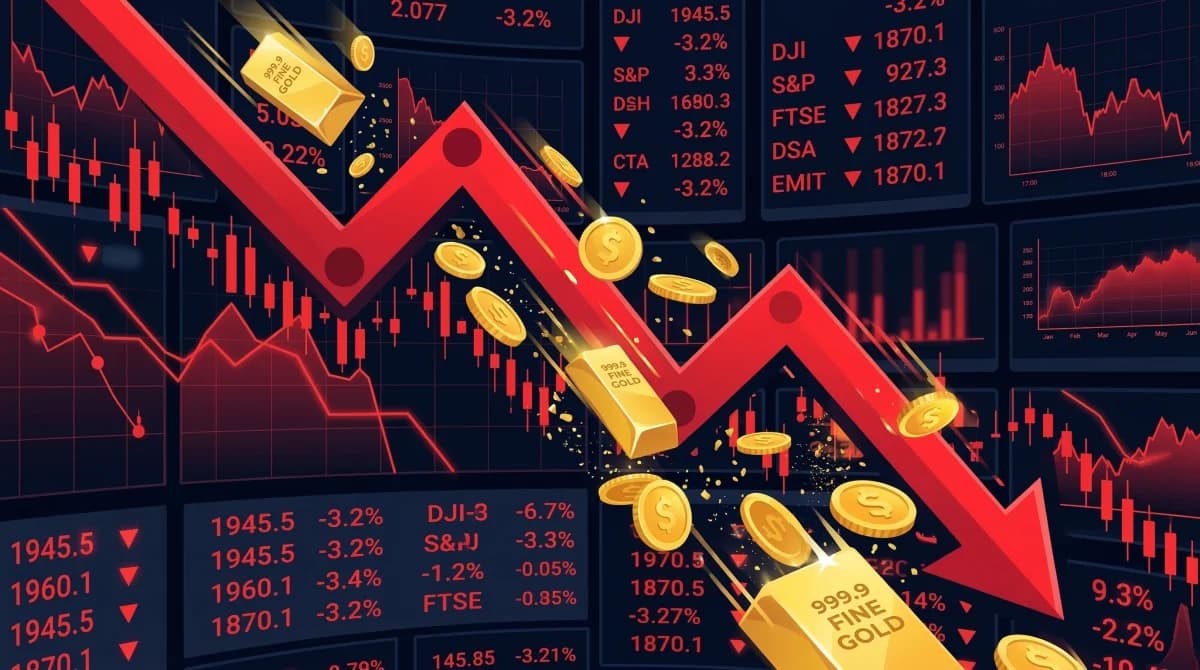
Gold is supposed to keep climbing during inflation, wars, and uncertainty. So why does it sometimes crash from record highs, even while a war or crisis is still playing out? This article explains the four forces that drive a gold price crash and how to read these signals before you buy or sell.
We'll use the 2026 gold price crash — when gold fell ₹35,000 from a ₹1.73 lakh peak in just weeks — as a case study, because it captured every classic crash trigger in one episode.
Last updated: 28 July 2026
Gold Drops Over ₹1.2 Lakh in Just 5 Trading Sessions
If you've been watching gold prices in India this week, you've likely seen some alarming numbers. Between March 2 and March 6, 2026, 24-karat gold has crashed by over ₹1,19,600 per 100 grams — that's roughly ₹12,000 per 10 grams wiped out in just five trading days.
By March 13, 22K gold had fallen to around ₹14,780 per gram, But since then, gold has partially recovered to ₹1,55,000-₹1,60,000 per 10 grams as of March 17. So what's driving this sudden fall, and should you be worried?
Why Are Gold Prices Falling?
1. Massive Profit Booking After Record Highs
Gold had touched record levels close to ₹1.73 lakh per 10 grams in recent weeks. After such a sharp rally, large investors and traders locked in profits, triggering a cascade of sell orders.
2. Crude Oil Spike and Strong Dollar
The US-Iran conflict has pushed crude oil above $100 per barrel. While this sounds like it should help gold (as a safe haven), it's actually doing the opposite. Higher oil prices raise inflation expectations, which pushes up US Treasury yields and strengthens the dollar. A strong dollar makes gold more expensive for non-US buyers, reducing demand.
3. Reduced Safe-Haven Buying
Interestingly, despite the geopolitical chaos, gold's safe-haven demand has faded. Markets have begun "pricing in" the Iran conflict, meaning the initial shock has worn off. Investors are now looking at the economic fundamentals — and higher interest rates globally are not friendly to gold.
4. Silver Is Falling Too
Silver has dropped even more dramatically — down 32% from its peak, with prices falling to around ₹2,79,900 per kg. Silver is more industrial than gold, so it gets hit harder when global manufacturing outlook weakens.
How Much Has Gold Fallen From Its Peak?
Period | 24K Gold (per 10g) | Change |
|---|---|---|
Recent Peak (Feb 2026) | ~₹1,73,000 | — |
March 4 | ~₹1,60,000 | -₹13,000 |
March 6 | ~₹1,53,000 | -₹20,000 |
March 13 | ~₹1,47,800 | -₹25,000+ |
March 17 (Recovery) | ~₹1,55,000 | -₹18,000 |
March 23 | ~₹1,37,377 | -₹35,600 |
March 24 (Today) | ~₹1,35,000 | -₹38,000 |
What Should Indian Gold Investors Do?
Don't Panic Sell
If you hold gold for the long term — whether physical gold, gold ETFs, or Sovereign Gold Bonds — a 10-15% correction is normal. Gold has delivered over 15% CAGR over the past 5 years in India. Short-term dips don't change the long-term story.
Consider Buying on Dips
Market experts suggest a "buy on dips" strategy for gold. If you've been wanting to add gold to your portfolio, this correction could be a good entry point. Consider staggered buying rather than putting all your money in at once.
Don't Over-Allocate to Gold
Financial planners typically recommend keeping 10-15% of your portfolio in gold. Don't increase this just because prices have fallen — maintain your asset allocation discipline.
SGBs Are Still the Best Way to Own Gold
If you're buying gold as an investment (not jewellery), Sovereign Gold Bonds remain the best option. You get price appreciation plus 2.5% annual interest, with tax-free gains if held till maturity.
Case Study Update: The March 23, 2026 Second Leg Down
Just when investors thought the worst was over, gold has crashed again on March 23 — and this time it's far worse. Here's what triggered today's brutal sell-off:
- Strait of Hormuz escalation: The US-Iran conflict has expanded to the Strait of Hormuz, through which 20% of the world's oil flows. This has pushed Brent crude to $113/barrel — a 60% surge in just 30 days.
- Inflation panic: With oil at $113, markets now expect central banks worldwide to raise or hold interest rates for longer. Higher rates are toxic for gold, which pays no yield.
- Dollar strength: The US Dollar Index has surged as traders flee to cash, making gold more expensive for Indian and other non-US buyers.
- Margin calls and forced selling: The speed of the fall has triggered margin calls in the derivatives market, forcing leveraged traders to dump gold positions.
Gold and silver together have erased over $2 trillion in market cap in just 3 hours of trading today. The BSE Sensex plunged 1,842 points (2.3%) and the Nifty dropped 585 points to around 22,530.
What's the Outlook for Gold?
The long-term outlook for gold remains positive. Central banks globally are still buying gold as a reserve asset. India's own gold demand typically rises during the wedding season (October-February). And if the Iran conflict escalates further, gold could bounce back sharply.
However, the near-term picture has turned significantly more bearish. With Brent crude at $113/barrel, the US dollar at multi-month highs, and the Strait of Hormuz crisis showing no signs of de-escalation, gold could test the ₹1,30,000-₹1,35,000 range if selling continues. The earlier ₹1,45,000-₹1,50,000 support level has been decisively broken.
For investors who bought during the earlier dip around ₹1,47,000-₹1,50,000, today's crash is painful — but gold's long-term track record suggests these deep corrections create the best entry points. If you're considering buying now, spread your purchases over 2-3 weeks rather than going all-in at one price point. The bottom may not be in yet.
Use our SIP Calculator to plan a systematic gold investment, or check the Lumpsum Calculator to see what a one-time gold investment could grow to over 5-10 years.
Related Reading
Frequently Asked Questions
Why does gold crash even during a war or crisis?
Four forces can pull gold down even during a crisis: (1) profit-booking after the price has already rallied to record highs; (2) a stronger US dollar, which makes gold expensive for non-dollar buyers; (3) higher oil and inflation pushing the US Fed toward higher rates, which hurts non-yielding assets like gold; (4) margin calls during equity selloffs that force traders to sell their gold positions to raise cash.
Is gold still a safe-haven asset after a crash?
Yes — gold remains one of the best long-term hedges against currency depreciation, inflation, and geopolitical risk. But "safe haven" doesn't mean "always rises." Gold can correct sharply over weeks or months — sometimes 15-25% from a peak — even while the underlying crisis continues.
Should I buy gold during a price crash?
Buying during a crash works if (a) you have a long-term horizon (3+ years), (b) gold is below your target allocation (typically 5-15% of your portfolio), and (c) you stagger purchases instead of going all-in at one price. Sovereign Gold Bonds and Gold ETFs are better than physical gold for crash buying, since you avoid making charges.
What is the safest way to invest in gold in India?
Sovereign Gold Bonds (SGBs) are the safest — backed by the Government of India, they pay 2.5% annual interest and capital gains are tax-free at maturity. Next best are Gold ETFs for liquidity. Avoid jewellery as an investment because making charges (15-25%) erode your returns.
How much gold should I have in my portfolio?
Most financial advisors recommend 5-15% of your total portfolio in gold, depending on age and risk profile. Younger investors with longer horizons can stay at 5-10%; older investors closer to retirement can go up to 15%. Don't exceed 20% — gold doesn't generate yield, so over-allocation drags long-term returns.
Disclaimer: This article is for educational purposes only and does not constitute financial advice. Gold prices are volatile and past performance does not guarantee future returns. Please consult a qualified financial advisor before making investment decisions.
Written by
Jaspal Singh
Founder & Editor
Personal finance writer helping Indians make smarter money decisions through clear, jargon-free guides on taxes, investments, and budgeting.
Continue Reading
Demat & Trading Account: A Beginner's Guide
To buy shares in India you need two accounts — a demat account that holds your shares and a trading account that places orders. This guide explains the difference, the charges (including the low-cost BSDA), the new SEBI nomination rules, and how to open them in minutes.
SIP vs Lumpsum: Which Is Better?
Got a lump sum to invest, or investing monthly? SIP vs lumpsum is not about which always wins — it is about your cash flow and your nerves. This guide compares both, explains what the data actually shows, and covers the STP middle path.

Large, Mid & Small-Cap Funds Explained
Large-cap, mid-cap or small-cap — which mutual fund is right for you? This guide explains how SEBI classifies funds by company size, the risk and return of each, and which type to pick as a beginner.