Digital Banking in India: A Complete Guide
Jaspal Singh
Author
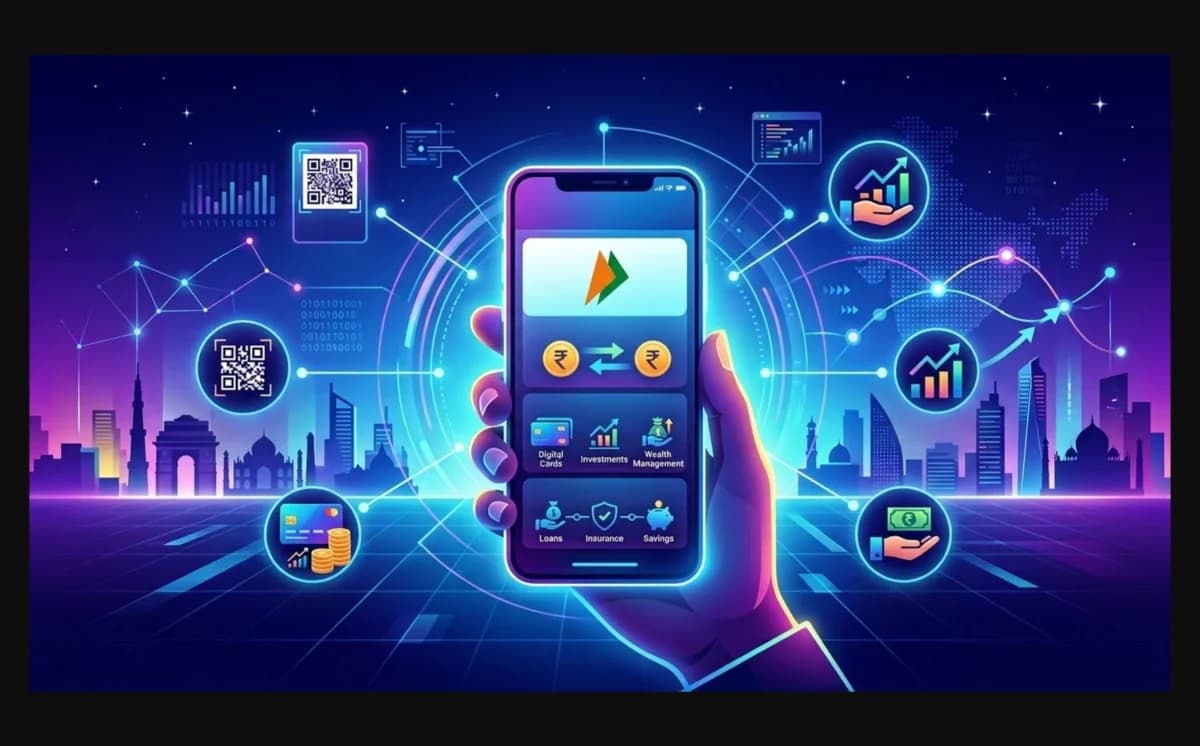
India's Digital Banking Revolution
India has undergone a digital banking revolution unlike anything the world has seen. UPI processed a staggering ₹199 lakh crore in FY2025-26, making India the undisputed leader in real-time digital payments. The country's fintech ecosystem is now valued at ₹6.2 trillion, powered by over 9,000 startups building everything from payment apps to digital lending platforms.
Whether you are still walking to a bank branch to check your balance or you have already gone fully digital, this guide will help you understand how digital banking works in India and how to make the most of it.
How UPI Actually Works
UPI (Unified Payments Interface) is the backbone of India's digital payments. But most people use it daily without understanding what happens behind the scenes.
The Key Players
- VPA (Virtual Payment Address): Your UPI ID (like yourname@upi) that replaces the need to share bank account numbers
- PSP (Payment Service Provider): The app you use — PhonePe, Google Pay, Paytm, etc.
- NPCI (National Payments Corporation of India): The organization that runs UPI infrastructure
- Your Bank: Where your money actually sits — UPI connects directly to your bank account
What Happens When You Pay
- You initiate a payment on your UPI app (PSP)
- The app sends the request to NPCI
- NPCI routes it to your bank for authentication (UPI PIN)
- Your bank debits the amount and confirms to NPCI
- NPCI routes the money to the recipient's bank
- The entire process takes under 2 seconds
IMPS vs NEFT vs RTGS vs UPI: Which to Use When
| Feature | UPI | IMPS | NEFT | RTGS |
|---|---|---|---|---|
| Speed | Instant | Instant | 30 min batches | Instant (min ₹2L) |
| Availability | 24/7/365 | 24/7/365 | 24/7/365 | 7 AM - 6 PM |
| Max Limit | ₹1 lakh* | ₹5 lakh | ₹10 lakh (online) | No upper limit |
| Charges | Free | ₹2.50 - ₹25 | Free (online) | ₹25 - ₹50 |
| Best For | Daily payments | Urgent transfers | Salary, large bills | Property, large business payments |
*UPI limit is ₹1 lakh per transaction for most categories. Higher limits of ₹2-5 lakh apply for tax payments, insurance premiums, hospitals, and educational institutions.
Neobanks vs Traditional Banks
Neobanks are digital-only banks that operate entirely through mobile apps — no branches, no long queues, no paperwork. India's neobank market is projected to reach 60 million users by 2027.
Top Neobanks in India
| Neobank | Banking Partner | Key Feature | Best For |
|---|---|---|---|
| Fi Money | Federal Bank | AI spending insights, auto-save "Jars" | Young professionals |
| Jupiter | Federal Bank | 1% rewards on debit card, edge UPI | Everyday spenders |
| Niyo | Equitas SFB / DCB Bank | Zero forex markup travel card | Frequent travellers |
| Open | IIFL, ICICI | Business banking, automated accounting | Startups, freelancers |
Neobank vs Traditional Bank: Comparison
| Feature | Neobank | Traditional Bank |
|---|---|---|
| Account Opening | 5-10 minutes, video KYC | 1-3 days, branch visit |
| Minimum Balance | Usually ₹0 | ₹1,000 - ₹10,000 |
| Spending Insights | AI-powered, real-time | Basic statements |
| Auto-Save Features | Round-up savings, goals | Rarely available |
| Debit Card Rewards | 1-2% cashback | Minimal or none |
| Customer Support | Chat-first, limited hours | Branch + call centre + chat |
| Loan Products | Limited | Full range (home, car, personal) |
| DICGC Insurance | Yes (up to ₹5 lakh via partner bank) | Yes (up to ₹5 lakh) |
Key Features That Make Digital Banking Powerful
Instant Account Opening with Aadhaar eKYC
Thanks to Aadhaar-based eKYC, you can open a bank account in under 10 minutes without visiting a branch. The process uses your Aadhaar number and biometric or OTP verification to confirm your identity electronically.
Spending Insights and Categorization
Modern banking apps automatically categorize your expenses — food, travel, shopping, bills — and show you where your money is going. Some apps like Fi Money even use AI to predict your monthly expenses and alert you if you are overspending.
Auto-Save and Round-Up Rules
Set rules like "round up every transaction to the nearest ₹100 and save the difference" or "save ₹500 every time salary is credited." These small automations add up to significant savings over time.
Split Bills and Group Payments
Going out with friends? Most UPI apps now let you split bills instantly and send payment requests to everyone in the group.
Safety Tips for Digital Banking
Digital banking is convenient, but it comes with risks. Here is how to stay safe:
- Never share your UPI PIN, OTP, or passwords — no bank employee will ever ask for these
- Use app lock and biometric authentication on your banking apps
- Enable transaction alerts via SMS and email for every debit
- Set daily transaction limits on UPI and net banking to limit potential damage
- Do not use public WiFi for banking or payment transactions
- Regularly review linked accounts — remove UPI links from apps you no longer use
- Keep your phone's OS updated — security patches fix vulnerabilities
- Download banking apps only from official app stores — never from links in SMS or email
The Future of Digital Banking in India
UPI Lite
UPI Lite enables small-value offline payments without an internet connection. You pre-load up to ₹2,000 in a wallet on your phone and tap to pay — perfect for rural areas with patchy connectivity.
UPI for International Payments
NPCI has signed agreements with multiple countries to enable UPI payments abroad. You can already use UPI in Singapore, UAE, France, Sri Lanka, and Mauritius, with more countries coming.
CBDC — The Digital Rupee
The RBI's Central Bank Digital Currency (CBDC), also called the e-rupee, is a digital version of the Indian rupee issued directly by the RBI. Unlike UPI (which moves money between bank accounts), the digital rupee is actual currency stored in a digital wallet.
Making the Most of Digital Banking
The shift to digital banking is not just about convenience — it is about taking better control of your finances. When you can see exactly where every rupee goes, you make smarter decisions about saving and investing.
Use insights from your banking app to identify money you can redirect into investments. Even small amounts matter — a SIP of ₹2,000 per month can grow into a substantial corpus over 15-20 years. Check our SIP Calculator to see the numbers for yourself.
If you are parking surplus cash in a savings account earning 2.5-3%, consider moving some of it to a fixed deposit or a recurring deposit where your money works harder.
Disclaimer: This article is for educational purposes only and does not constitute financial advice. The features and terms mentioned for specific neobanks and apps are based on publicly available information as of March 2026 and may change. Please verify current terms directly with the service provider.
Written by
Jaspal Singh
Founder & Editor
Personal finance writer helping Indians make smarter money decisions through clear, jargon-free guides on taxes, investments, and budgeting.
Continue Reading
5 Credit Card Rules Changing From April 1 — Your Spending Will Be Watched
Spend over ₹10 lakh on credit cards? The Income Tax Department will know. From April 1, 2026, new rules change how credit cards are monitored, authenticated, and reported. Here are 5 changes every cardholder must know.

Legal Aspects of Real Estate in India: What Every Buyer Must Know
Understand the key legal checks before buying property in India — RERA, title deeds, encumbrance certificates, stamp duty, registration, and common legal traps to avoid.
Renting vs Buying a House in India: The Honest Math
Should you rent or buy a house in India? We run the numbers on an ₹80 lakh property and compare EMIs, rent, opportunity cost, and tax benefits to find the real answer.