DA Hike January 2026: When Will It Be Announced and How Much Will You Get?
Jaspal Singh
Author
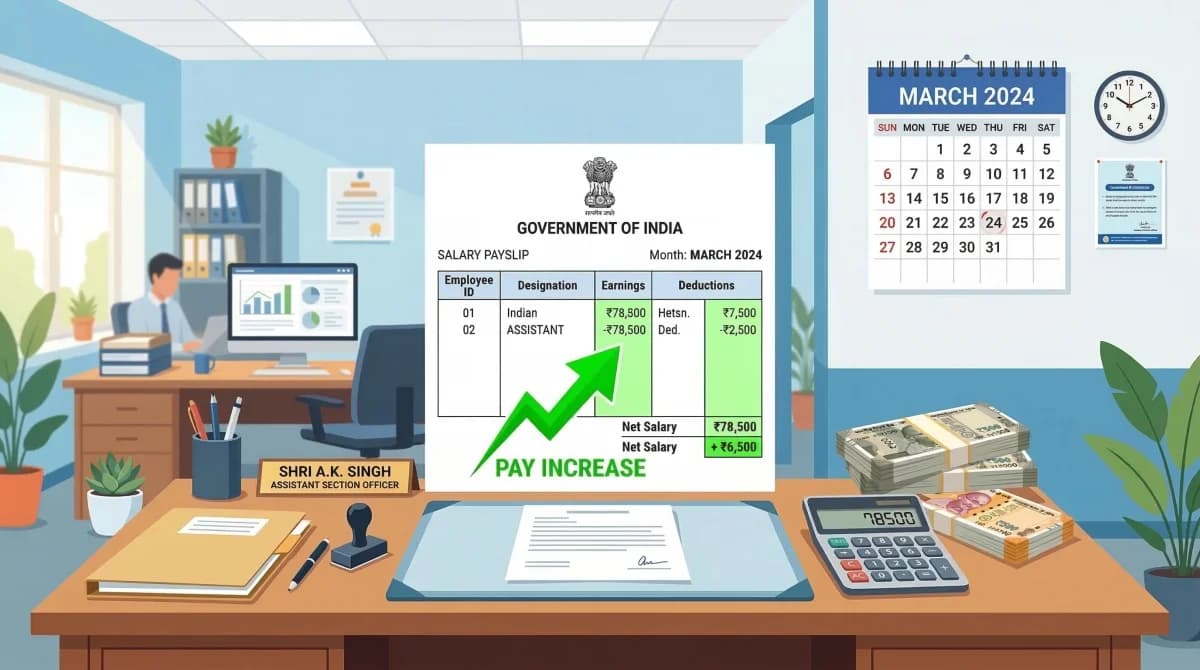
The DA Hike Everyone Is Waiting For
If you are a central government employee or pensioner, you have been refreshing the news every day waiting for one announcement: the Dearness Allowance (DA) hike for January 2026.
Here is everything we know so far — the expected percentage, when the Cabinet will approve it, how much extra money you will actually get, and the bigger picture with the 8th Pay Commission.
How Much Will DA Increase?
Based on the latest AICPI-IW (All India Consumer Price Index for Industrial Workers) data, the DA is expected to increase by 2 percentage points — from 58% to 60%.
Here is how the calculation works:
The AICPI-IW for December 2025 stood at 148.2
The AICPI-IW for January 2026 rose to 148.6
DA is calculated using the formula: DA% = [(Average AICPI for last 12 months – 115.76) / 115.76] × 100
Based on the 12-month average through December 2025, the calculation clearly works out to 60% DA
This means a 2% increase over the current 58% — a smaller hike compared to some previous revisions, but still a welcome boost given rising inflation.
When Will It Be Announced?
The DA hike requires Cabinet approval before it becomes official. Based on past patterns:
The January 2025 DA hike was announced on March 28, 2025 (after Holi)
The January 2024 DA hike was announced in late March 2024
The pattern is consistent: expect the announcement in the last week of March 2026
Holi falls on March 14 this year, so the announcement is most likely between March 20-31, 2026. Once approved, the hike will be effective retroactively from January 1, 2026, meaning you will receive arrears for January, February, and March.
How Much Extra Will You Get in Your Salary?
The actual rupee increase depends on your basic pay. Here is a quick reference table for the 2% DA hike:
Basic Pay | Current DA (58%) | New DA (60%) | Monthly Increase |
|---|---|---|---|
₹18,000 (minimum) | ₹10,440 | ₹10,800 | ₹360 |
₹25,000 | ₹14,500 | ₹15,000 | ₹500 |
₹35,000 | ₹20,300 | ₹21,000 | ₹700 |
₹50,000 | ₹29,000 | ₹30,000 | ₹1,000 |
₹75,000 | ₹43,500 | ₹45,000 | ₹1,500 |
₹1,00,000 | ₹58,000 | ₹60,000 | ₹2,000 |
Plus arrears: Since the hike is effective from January 1, you will receive 3 months of arrears (January + February + March) in your April 2026 salary. For someone with ₹50,000 basic pay, that means an extra ₹3,000 in arrears.
What About Pensioners?
Pensioners receive Dearness Relief (DR), which is revised at the same rate as DA. So if you are receiving a basic pension, your DR will also increase from 58% to 60%. The same percentage increase and timeline applies.
For a pensioner with a basic pension of ₹25,000, the monthly increase would be ₹500, plus ₹1,500 in arrears.
The Bigger Picture: 8th Pay Commission
While the 2% DA hike is a short-term boost, the real game-changer is the 8th Pay Commission, which was officially formed on November 3, 2025. Here is what you need to know:
Scope: Will impact approximately 50 lakh central government employees and 68 lakh pensioners — over 1.1 crore people total.
Report deadline: 18 months from formation (expected by mid-2027).
Expected fitment factor: Between 2.28 and 2.86, which could raise the minimum basic pay from ₹18,000 to ₹41,000 – ₹51,480.
Expected salary hike: 20-35% across the board, based on past Pay Commission trends.
Pension revision: Minimum pension could rise from ₹9,000 to ₹20,500 – ₹25,740.
The Commission is currently in its consultation phase, collecting feedback from employee unions and stakeholders.
What Should You Do With the Extra Money?
1. Increase your SIP by the DA increment
If your salary goes up by ₹1,000 per month from the DA hike, route that entire amount into a new or existing SIP. Even ₹1,000/month at 12% returns grows to ₹2.3 lakh in 10 years. Use our SIP Calculator to check.
2. Top up your NPS contribution
Government employees already contribute to NPS. You can make voluntary additional contributions for extra tax benefits under Section 80CCD(1B) — up to ₹50,000 per year. Try our NPS Calculator to see your retirement corpus.
3. Build your emergency fund
With crude oil at $120, LPG up ₹60, and inflation rising, your expenses are going up too. Use the DA increment to build a 6-month emergency cushion in a fixed deposit.
4. Get adequate term insurance
A DA hike means your income has gone up — which means your family's financial needs have too. Read our complete term insurance guide for how much cover you need.
Related Reading
Tax Calculator — check how the DA hike affects your income tax
Your Electricity Bill Is About to Surge This Summer — the DA hike might just cover it
Disclaimer: DA and Pay Commission figures mentioned are based on publicly available AICPI data and expert estimates as of March 2026. Final numbers will be confirmed by the Cabinet and the Pay Commission respectively. This article is for educational purposes only.
Written by
Jaspal Singh
Founder & Editor
Personal finance writer helping Indians make smarter money decisions through clear, jargon-free guides on taxes, investments, and budgeting.
Continue Reading

Creating a Financial Plan: Step-by-Step Guide for Indians
A practical 10-step guide to creating your first financial plan — from calculating net worth and killing high-interest debt to goal-based investing and tax optimization.

Financial Planning for Families in India: A Complete Guide
A practical 7-step guide to financial planning for Indian families — emergency fund, insurance, goal-based investing, tax saving, and teaching kids about money.

How to Save Money on Transportation in India
Transportation eats up 10-15% of most Indian budgets. Here are practical ways to cut your commute costs — from metro passes to electric scooters to simply combining your errands.