Choosing the Right Bank Account in India
Jaspal Singh
Author
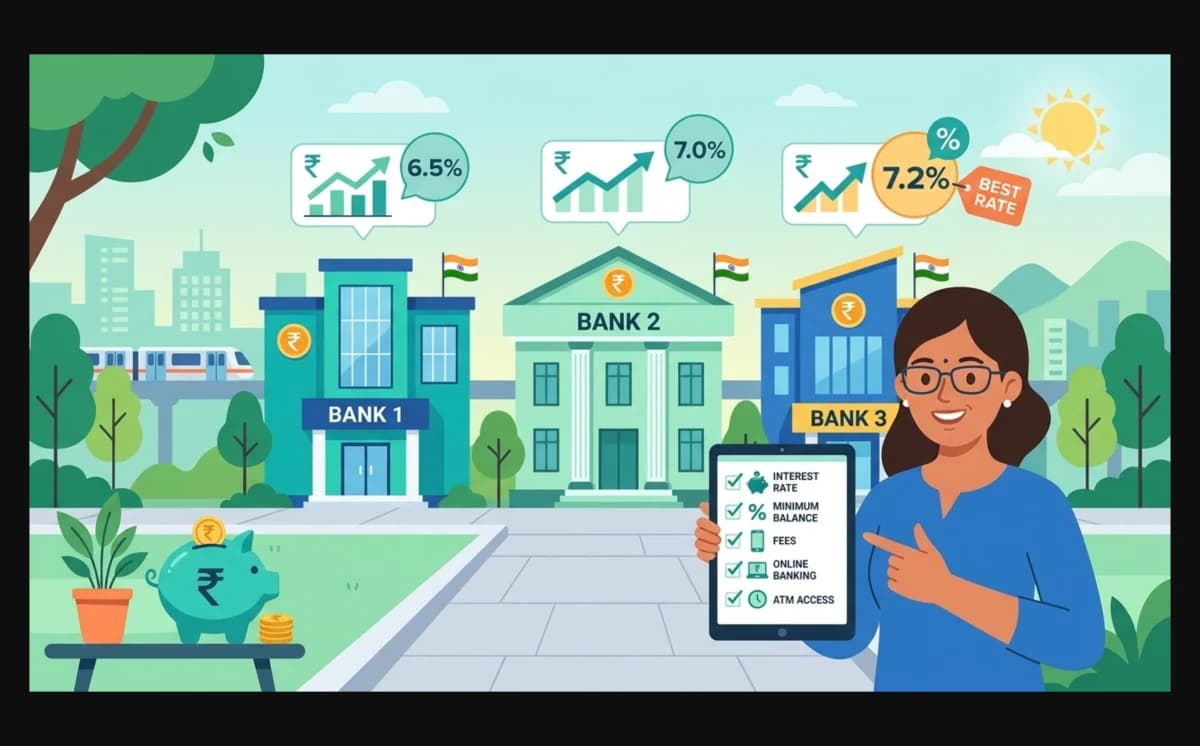
Your Bank Account Matters More Than You Think
Most people open a bank account once and never think about it again. Maybe you opened one when you got your first job because HR said so, or your parents opened one for you in college. But here is the thing — choosing the right bank account can genuinely save you thousands of rupees every year in fees, penalties, and lost interest.
India now has a dizzying number of options: public sector banks, private banks, small finance banks, neobanks, and even post office savings accounts. This guide will help you figure out which one is right for your situation.
Savings Account vs Current Account
Before anything else, let us get the basics right.
| Feature | Savings Account | Current Account |
|---|---|---|
| Purpose | Personal savings | Business transactions |
| Interest | 2.5% - 7%+ | Usually 0% |
| Transaction Limits | Limited free transactions | Unlimited transactions |
| Minimum Balance | ₹0 - ₹10,000 | ₹5,000 - ₹25,000 |
| Overdraft | Not available | Available |
| Best For | Individuals, salaried employees | Businesses, freelancers with high volume |
Rule of thumb: If you are an individual earning a salary or running a small side hustle, a savings account is almost always the right choice. Current accounts are for businesses that need to handle high volumes of daily transactions.
Zero-Balance Accounts: Banking Without the Minimum Balance Headache
One of the biggest pain points of Indian banking has always been minimum balance penalties. Forget to maintain ₹3,000 in your SBI account? That is a ₹50-100 penalty per quarter. Over a year, that adds up.
Thankfully, there are excellent zero-balance options now:
BSBD Account (Basic Savings Bank Deposit Account)
By RBI mandate, every bank in India must offer a BSBD account with zero minimum balance. This is a basic no-frills account with limited features:
- Zero minimum balance
- Free ATM card (RuPay)
- 4 free withdrawals per month
- No internet banking or chequebook in some banks
PMJDY Account (Pradhan Mantri Jan Dhan Yojana)
The government's flagship financial inclusion account with added benefits:
- Zero minimum balance
- Free RuPay debit card with ₹2 lakh accident insurance
- Overdraft facility up to ₹10,000 (after 6 months of active usage)
- Life cover of ₹30,000 for accounts opened during the initial campaign
Digital Zero-Balance Accounts
| Account | Bank | Interest Rate | Key Feature |
|---|---|---|---|
| Kotak 811 | Kotak Mahindra | 3.50% | Instant virtual debit card, full savings account features |
| IDFC FIRST | IDFC FIRST Bank | Up to 7.25% | Monthly interest credit, zero-balance on salary accounts |
| Fi Money | Federal Bank | Up to 6.50% | AI spending insights, auto-save features |
| Jupiter | Federal Bank | Up to 5.50% | 1% debit card rewards, smart statements |
Interest Rate Comparison: Where Your Idle Money Earns the Most
The difference between the worst and best savings account interest rates in India is massive.
| Bank Type | Typical Interest Rate | Examples |
|---|---|---|
| Large PSU Banks | 2.50% - 2.70% | SBI, PNB, Bank of Baroda |
| Large Private Banks | 3.00% - 3.50% | HDFC, ICICI, Axis |
| Mid-size Private Banks | 4.00% - 6.00% | RBL, IndusInd, YES Bank |
| Small Finance Banks | 6.00% - 7.25% | IDFC FIRST, Equitas, AU SFB |
| Neobanks | 5.00% - 6.50% | Fi Money, Jupiter |
Let us put this in perspective. If you keep ₹2 lakh in your savings account:
- SBI at 2.70%: You earn ₹5,400 per year
- IDFC FIRST at 7.25%: You earn ₹14,500 per year
That is a difference of ₹9,100 per year — just for choosing a different bank. Over 5 years, that is ₹45,000+ in extra interest.
Minimum Balance Requirements
If you opt for a regular savings account (not zero-balance), watch out for minimum balance rules:
| Bank | Metro/Urban | Semi-Urban | Rural | Penalty (per quarter) |
|---|---|---|---|---|
| SBI | ₹3,000 | ₹2,000 | ₹1,000 | ₹50 - ₹100 |
| HDFC Bank | ₹10,000 | ₹5,000 | ₹2,500 | ₹150 - ₹600 |
| ICICI Bank | ₹10,000 | ₹5,000 | ₹2,000 | ₹100 - ₹500 |
| Axis Bank | ₹10,000 | ₹5,000 | ₹2,500 | ₹150 - ₹500 |
| Kotak (811 Lite) | ₹0 | ₹0 | ₹0 | None |
What Else to Compare Before Choosing a Bank
- Debit card benefits: Some banks offer cashback, lounge access, or insurance on debit cards. IDFC FIRST Millennia and IndusInd cards stand out
- ATM network and limits: How many free ATM transactions per month? SBI offers 8 free at own ATMs; smaller banks may offer fewer
- Mobile banking experience: Try the bank's app before committing. Some bank apps are frustrating to use daily
- Customer support: Can you reach someone quickly when there is a problem? Private banks generally score better here
- Locker facility: If you need a safe deposit locker, check availability — there is a years-long waiting list at most branches
- Credit card offerings: Existing account holders often get better credit card deals
- Proximity: Despite digital banking, having a nearby branch can be useful for specific tasks
Best Bank Account by User Type
For Students
Go with a zero-balance account — Kotak 811 or PMJDY. You do not want minimum balance penalties eating into your limited funds. The mobile app experience matters more than branch access at your age.
For Salaried Employees
A salary account with your employer's partner bank gives you zero minimum balance, higher transaction limits, and often a free credit card. After your job changes, the account usually converts to a regular account — so check the post-salary terms before committing.
For Self-Employed and Freelancers
If your monthly transactions are modest, a high-interest savings account at IDFC FIRST or AU SFB works well. If you handle high volumes and need a current account, look at ICICI InstaBIZ or HDFC SmartUp.
For Senior Citizens
PSU banks and post offices offer higher FD rates for seniors (typically 0.25-0.75% extra). SBI, PNB, and the Post Office are reliable choices. Also consider a fixed deposit at a small finance bank for rates above 8%.
Do Not Keep All Your Money in Savings
Here is a common mistake: people park lakhs of rupees in a savings account earning 2.5-3%, when that money could be working much harder.
- Emergency fund (3-6 months expenses): Keep this in a savings account or liquid fund — it needs to be instantly accessible
- Short-term goals (1-3 years): Use a fixed deposit or recurring deposit for better returns
- Long-term wealth building (5+ years): Start a SIP in mutual funds — the potential returns far exceed any savings account
- Tax saving: A PPF account offers 7.1% tax-free returns — unbeatable for the conservative investor
Use our SIP Calculator to see how even ₹3,000 per month can grow into serious wealth over 15-20 years. Your savings account is important, but it should not be where you build your future.
Disclaimer: This article is for educational purposes only and does not constitute financial advice. Interest rates, fees, and account features mentioned are based on publicly available information as of March 2026 and are subject to change. Please verify current terms with the respective bank before opening an account.
Written by
Jaspal Singh
Founder & Editor
Personal finance writer helping Indians make smarter money decisions through clear, jargon-free guides on taxes, investments, and budgeting.
Continue Reading
5 Credit Card Rules Changing From April 1 — Your Spending Will Be Watched
Spend over ₹10 lakh on credit cards? The Income Tax Department will know. From April 1, 2026, new rules change how credit cards are monitored, authenticated, and reported. Here are 5 changes every cardholder must know.

Legal Aspects of Real Estate in India: What Every Buyer Must Know
Understand the key legal checks before buying property in India — RERA, title deeds, encumbrance certificates, stamp duty, registration, and common legal traps to avoid.
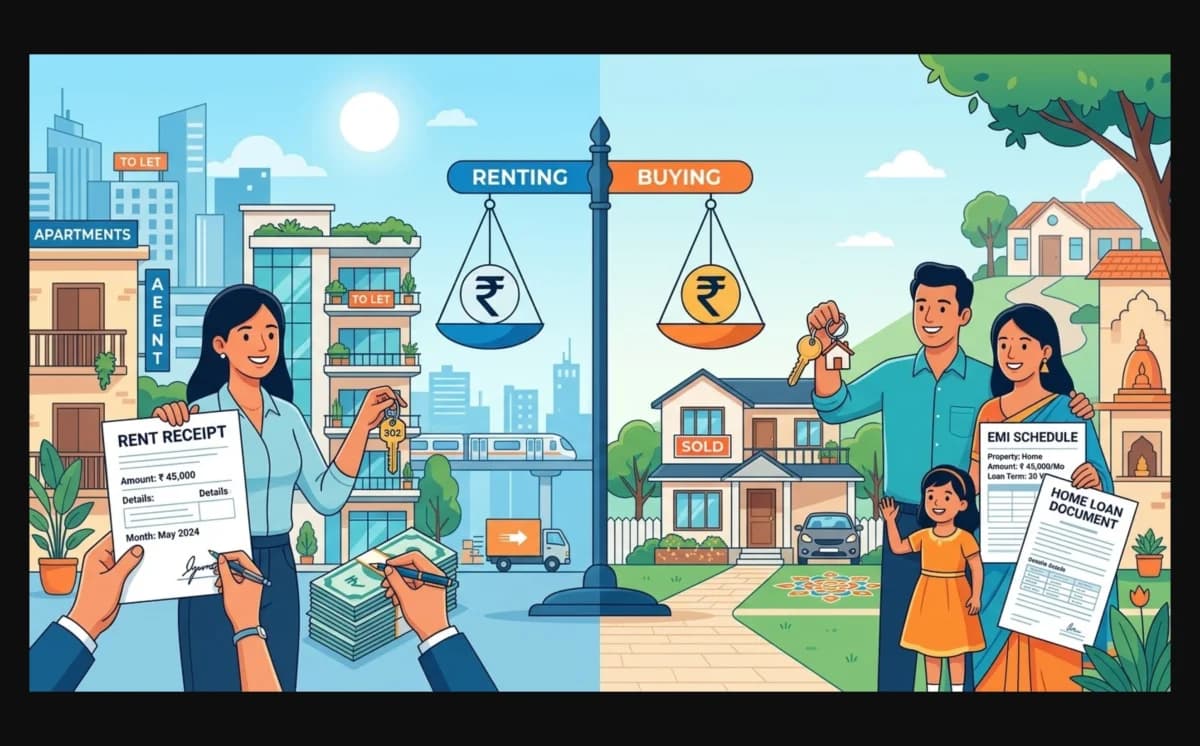
Renting vs Buying a House in India: The Honest Math
Should you rent or buy a house in India? We run the numbers on an ₹80 lakh property and compare EMIs, rent, opportunity cost, and tax benefits to find the real answer.