Saving Money on Groceries in India: A Practical Guide
Jaspal Singh
Author
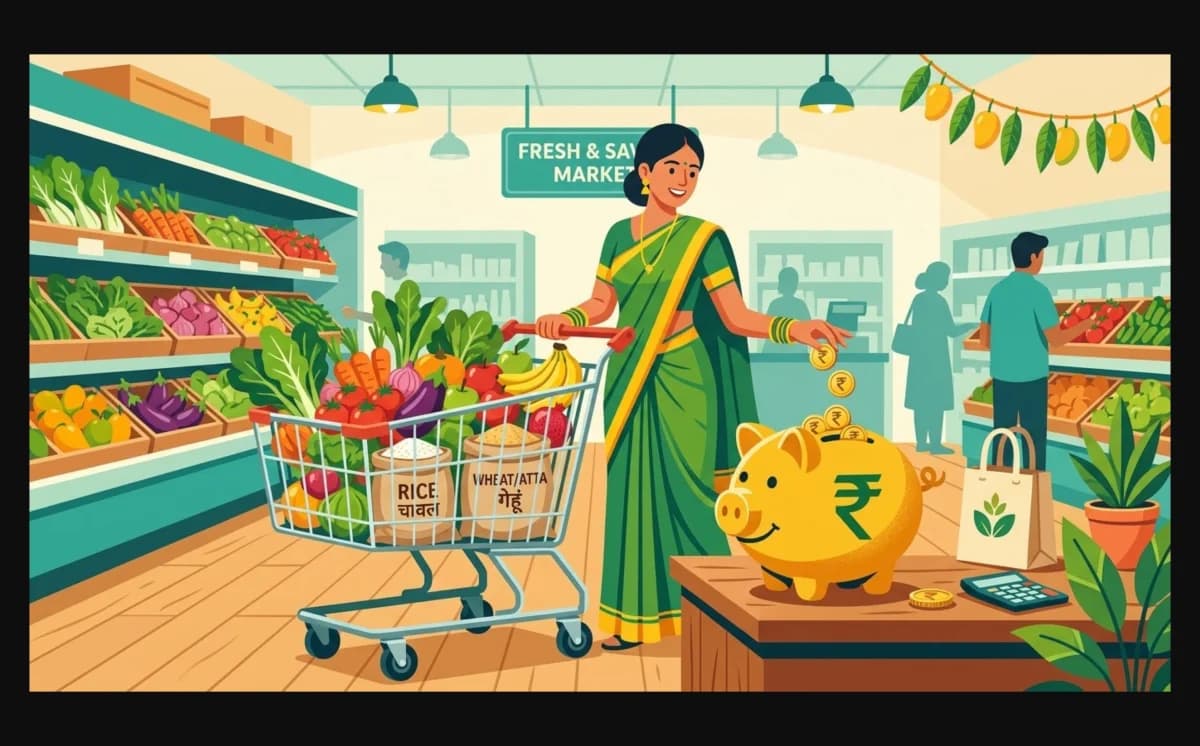
Your Grocery Bill Is Probably Higher Than It Needs to Be
Here's the thing — most Indian families spend 30-40% of their monthly income on food. That's a massive chunk of your take-home pay. And the frustrating part? A good portion of that spending is avoidable. Not by eating less, not by switching to lower-quality food, but simply by being a little smarter about how you shop and cook.
I'm going to walk you through strategies that can realistically cut your grocery bill by 20-30%. These aren't extreme frugality hacks. They're practical habits that lakhs of Indian families already use. Let's get into it.
1. Start With a Meal Plan (This One Habit Changes Everything)
Think of it this way — when you walk into a store without a plan, you're basically handing your wallet to the supermarket's marketing team. They've designed every aisle, every shelf placement, every "buy 2 get 1 free" offer to make you spend more.
A simple weekly meal plan is your best defence. Here's how to do it:
- Sit down on Sunday evening and plan meals for the week
- Check what's already in your kitchen — dal, rice, spices, frozen items
- Write a shopping list based on what you actually need
- Stick to the list when you shop (this is the hard part)
Families who meal plan typically save ₹2,000-4,000 per month just by avoiding impulse purchases and food waste. That's ₹24,000-48,000 per year — enough for a nice family vacation.
2. Buy Local and Seasonal Produce
This is old wisdom that still works. Seasonal fruits and vegetables are always cheaper because supply is high. Buying mangoes in June costs half of what it would in February. Tomatoes in winter are a fraction of the monsoon price.
Here's a quick seasonal guide:
| Season | Cheap Vegetables | Cheap Fruits |
|---|---|---|
| Summer (Mar-Jun) | Lauki, tinda, tori, karela | Mango, watermelon, muskmelon |
| Monsoon (Jul-Sep) | Bhindi, parwal, arbi | Jamun, litchi, plum |
| Winter (Oct-Feb) | Palak, methi, gajar, matar | Orange, guava, strawberry |
Also, buy from local sabzi mandis instead of fancy supermarkets. The same tomatoes that cost ₹60/kg in a supermarket are often ₹30-35/kg at the local mandi. Yes, the packaging won't be pretty, but the savings are real.
3. Buy Staples in Bulk
Items like rice, dal, atta, oil, sugar, and spices don't spoil quickly if stored properly. Buying these in bulk — monthly or even quarterly — saves you 15-25% compared to buying small packets every week.
- Rice: A 25kg bag costs significantly less per kg than 5kg packets
- Cooking oil: 5-litre cans are cheaper per litre than 1-litre pouches
- Dal: Buy 5kg packs of toor, moong, and chana dal during festival sales
- Spices: Whole spices bought in bulk from wholesale markets last 6+ months
Pro tip: Many wholesale stores like Metro Cash & Carry sell to individual buyers. If you have one nearby, the savings on staples can be 20-30% compared to retail.
4. Use UPI Cashback and Store Memberships
This is free money that many people leave on the table. Paytm, PhonePe, Amazon Pay, and Google Pay regularly offer cashback on grocery purchases — both online and offline.
- Paytm: Scratch cards and cashback on grocery store payments
- Amazon Pay: 1-5% cashback at partner stores
- PhonePe: Cashback offers on specific merchant categories
- Credit card rewards: Some cards give 2-5% cashback on grocery spends
Store memberships are also worth considering:
- DMart Ready: Order online for pickup — prices are already the lowest, plus no impulse buys
- Reliance Smart: Smart Points loyalty programme gives discounts on future purchases
- BigBasket BB Star: Free delivery + extra discounts for ₹299/year
5. Reduce Food Waste (You're Probably Throwing Away ₹1,000+ Per Month)
The average Indian household wastes 50-70 kg of food per year. That's not just money down the drain — it's also a moral issue when millions go hungry.
Simple fixes:
- Store vegetables properly: Leafy greens in damp cloth in the fridge, onions and potatoes in cool dry places
- First in, first out: Move older items to the front of your fridge
- Use leftovers creatively: Yesterday's roti becomes today's roti sabzi or frankies
- Freeze what you can't use: Herbs, grated ginger-garlic, ripe bananas, bread
- Smaller portions: Cook less, eat fresh. You can always cook more if needed
6. Cook at Home — The Savings Are Massive
Let's do a quick comparison that will make you think twice about ordering from Swiggy or Zomato:
| Meal | Cooking at Home | Restaurant / Delivery | Savings |
|---|---|---|---|
| Dal rice for 4 | ₹50-70 | ₹300-500 | ₹230-430 |
| Paneer butter masala + roti | ₹120-150 | ₹400-600 | ₹280-450 |
| Chicken curry + rice | ₹200-250 | ₹500-800 | ₹300-550 |
| Breakfast (poha/upma) for 4 | ₹30-50 | ₹200-350 | ₹170-300 |
If a family of four orders food just 3 times a week, they're spending an extra ₹3,000-5,000 per month compared to cooking at home. That's ₹36,000-60,000 per year.
Start a SIP with that saved money, and at 12% returns, you'd have ₹8-12 lakh in 10 years. Just from cooking more often. Think about that.
7. Compare Online vs Offline Prices
Don't assume online is always cheaper — or that offline is always cheaper. It depends on the item.
- Cheaper online: Branded packaged foods, health supplements, imported items, diapers, cleaning supplies
- Cheaper offline: Fresh vegetables, fruits, dairy, local brands, loose items (dal, spices)
Use price comparison apps or simply check BigBasket/JioMart/Blinkit prices before heading to the store. Many families use a hybrid approach — buying fresh produce from the mandi and ordering staples and branded items online during sale events.
8. Grow Herbs at Home
Fresh herbs from the market are expensive and spoil quickly. But coriander, mint, curry leaves, green chillies, and tulsi grow easily in small pots on your balcony or windowsill.
- Initial investment: ₹200-500 for pots and soil
- Monthly savings: ₹200-400 on herbs alone
- Bonus: Always-fresh herbs make your food taste significantly better
9. The Golden Rule: Never Shop Hungry
This sounds silly, but it's backed by research. Shopping on an empty stomach makes you buy 20-30% more food than you need. Your brain sees everything as appealing when you're hungry.
Have a snack before heading to the store. It's a small thing that makes a surprisingly big difference.
A Realistic Grocery Budget for Indian Families
Here's what a sensible grocery budget looks like:
| Family Size | Budget Range (Monthly) | Per Person Per Week |
|---|---|---|
| Individual | ₹3,500-5,000 | ₹800-1,200 |
| Couple | ₹6,000-9,000 | ₹750-1,100 |
| Family of 4 | ₹10,000-16,000 | ₹625-1,000 |
| Family of 4 (non-veg) | ₹12,000-20,000 | ₹750-1,250 |
These ranges assume a Tier 1 or Tier 2 city with a mix of home cooking and occasional eating out. Metro cities like Mumbai and Delhi will be at the higher end.
The Bottom Line: Small Changes, Big Impact
You don't need to become a coupon-clipping extremist to save on groceries. Just adopting 3-4 of these strategies — meal planning, buying seasonal, cooking more at home, and using cashback — can easily save ₹3,000-6,000 per month.
Put those savings into a monthly SIP or a fixed deposit, and you're building real wealth from money that was previously going to waste. That's the power of budgeting — it doesn't mean living a smaller life. It means being intentional about where your money goes.
Disclaimer: This article is for informational purposes only. Prices and offers mentioned are approximate and may vary by location and time. Always check current prices before making purchasing decisions.
Written by
Jaspal Singh
Founder & Editor
Personal finance writer helping Indians make smarter money decisions through clear, jargon-free guides on taxes, investments, and budgeting.
Continue Reading

Creating a Financial Plan: Step-by-Step Guide for Indians
A practical 10-step guide to creating your first financial plan — from calculating net worth and killing high-interest debt to goal-based investing and tax optimization.

Financial Planning for Families in India: A Complete Guide
A practical 7-step guide to financial planning for Indian families — emergency fund, insurance, goal-based investing, tax saving, and teaching kids about money.

How to Save Money on Transportation in India
Transportation eats up 10-15% of most Indian budgets. Here are practical ways to cut your commute costs — from metro passes to electric scooters to simply combining your errands.