Saving for a Down Payment on a House in India: Complete Guide
Jaspal Singh
Author
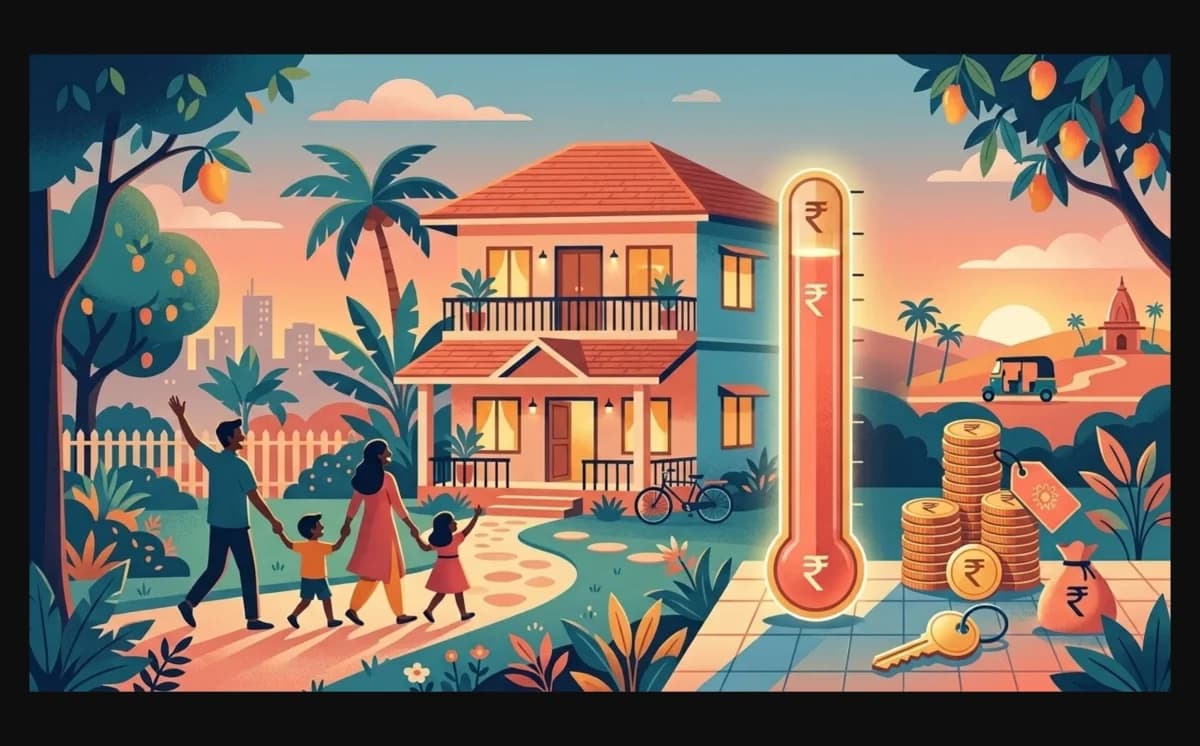
The Biggest Purchase of Your Life Starts With a Savings Plan
Buying a house is probably the single largest financial decision you'll ever make. And here's what most first-time homebuyers get wrong — they focus entirely on the EMI and forget about the upfront costs. The down payment, stamp duty, registration charges, and GST can add up to a staggering amount.
Let me break it all down so you know exactly how much you need to save, and more importantly, how to save it without putting your entire financial life on hold.
How Much Is the Down Payment, Really?
Banks in India don't finance 100% of a property's value. The Loan-to-Value (LTV) ratio set by the RBI determines how much you need to bring to the table:
| Property Value | Maximum Loan (LTV) | Minimum Down Payment |
|---|---|---|
| Up to ₹30 lakh | 90% | 10% (₹3 lakh) |
| ₹30 lakh - ₹75 lakh | 80% | 20% (₹6-15 lakh) |
| Above ₹75 lakh | 75% | 25% (₹18.75 lakh+) |
But wait — the down payment is just the beginning. There are hidden costs that catch almost everyone off guard.
Hidden Costs That Add 7-10% to Your Upfront Bill
When people say "I need ₹10 lakh for the down payment on a ₹50 lakh flat," they're forgetting about these:
| Cost | Typical Range | For a ₹50 Lakh Flat |
|---|---|---|
| Down payment (20%) | 10-25% | ₹10,00,000 |
| Stamp duty | 4-7% (varies by state) | ₹2,50,000 - ₹3,50,000 |
| Registration charges | 1% | ₹50,000 |
| GST (under construction) | 5% (affordable) / 12% | ₹2,50,000 |
| Legal fees + documentation | ₹10,000 - ₹30,000 | ₹20,000 |
| Brokerage (if applicable) | 1-2% | ₹50,000 - ₹1,00,000 |
| Interior and moving | ₹1-3 lakh | ₹2,00,000 |
Total upfront cost for a ₹50 lakh flat: ₹15-18 lakh. That's 30-36% of the property value, not just 20%. This is why so many homebuyers end up cash-strapped right after buying their dream home.
The EMI Rule: Keep It Under 35% of Your Take-Home
Before you even start saving for a down payment, you need to know how much home you can actually afford. The rule is simple:
Your monthly EMI should not exceed 35% of your take-home salary.
| Monthly Take-Home | Maximum EMI (35%) | Loan Amount (8.5%, 20 yrs) | Property You Can Afford |
|---|---|---|---|
| ₹50,000 | ₹17,500 | ~₹20 lakh | ₹25-28 lakh |
| ₹75,000 | ₹26,250 | ~₹30 lakh | ₹37-42 lakh |
| ₹1,00,000 | ₹35,000 | ~₹40 lakh | ₹50-55 lakh |
| ₹1,50,000 | ₹52,500 | ~₹60 lakh | ₹75-85 lakh |
Use our EMI Calculator to play with different loan amounts, interest rates, and tenures to find your sweet spot.
PMAY: The Interest Subsidy Most People Miss
If you're a first-time homebuyer and your household income is under a certain limit, the Pradhan Mantri Awas Yojana (PMAY) gives you an interest subsidy on your home loan:
| Income Category | Annual Income | Subsidy on Interest | Max Loan Eligible |
|---|---|---|---|
| EWS | Up to ₹3 lakh | 6.50% | ₹6 lakh |
| LIG | ₹3-6 lakh | 6.50% | ₹6 lakh |
| MIG-I | ₹6-12 lakh | 4.00% | ₹9 lakh |
| MIG-II | ₹12-18 lakh | 3.00% | ₹12 lakh |
The subsidy is credited upfront to your loan account, effectively reducing your principal. For MIG-I, this can save you ₹2-3 lakh over the loan tenure. Check your eligibility — many people who qualify don't even apply.
Using Your PF for Down Payment
Here's something many salaried employees don't know — you can withdraw up to 90% of your EPF balance for purchasing or constructing a house, provided you've been a member for at least 5 years.
- For land purchase: Up to 24 months of basic + DA (after 5 years of membership)
- For home construction/purchase: Up to 90% of your balance (after 5 years)
- For home loan repayment: Up to 90% of your balance (after 3 years of loan)
If your PF balance is ₹8-10 lakh (common for someone with 8-10 years of service), this alone can cover a significant portion of your down payment. Don't forget this option.
Saving Strategies: How to Build Your Down Payment Fund
Strategy 1: SIP in Balanced Advantage or Large Cap Funds
If your home purchase is 3-5 years away, equity-oriented funds can help your money grow faster than FDs. A balanced advantage fund gives you equity returns with lower volatility.
Example: ₹15,000/month SIP at 10% for 4 years = approximately ₹8.7 lakh. Use our SIP Calculator to plan your own target.
Strategy 2: Recurring Deposit for the Certain Portion
For the portion you absolutely cannot afford to lose (like stamp duty and registration money), park it in a recurring deposit. Returns are modest (6.5-7%) but guaranteed. Calculate your RD returns with our RD Calculator.
Strategy 3: Fixed Deposit Ladder
If you have a lump sum (bonus, inheritance, savings), split it across FDs maturing at different times leading up to your purchase date. This gives you flexibility and slightly better rates on longer tenures. Check rates with our FD Calculator.
Strategy 4: Automate Everything
Set up automatic transfers on salary day — SIP deductions, RD installments, everything. What you don't see, you don't spend. This is the most effective behavioural hack for building a large corpus.
A Practical 5-Year Savings Plan
Let's say you want to buy a ₹50 lakh flat in 5 years. You need ₹15-18 lakh upfront:
| Source | Amount | How |
|---|---|---|
| SIP (₹15,000/month for 5 yrs at 12%) | ~₹12.3 lakh | Balanced/large cap fund |
| EPF withdrawal | ₹3-5 lakh | After 5 years membership |
| FD/RD for stamp duty | ₹3-4 lakh | ₹5,000/month RD |
| Annual bonus parking | ₹1-2 lakh | Short-term FD each year |
Total: ₹19-23 lakh — more than enough for your ₹50 lakh flat, with a buffer.
Common Mistakes to Avoid
- Don't drain your emergency fund: Keep at least 6 months of expenses untouched. Medical emergencies don't wait for your home loan to settle
- Don't borrow for the down payment: A personal loan for the down payment means you're essentially financing 100% of the property at different interest rates — a recipe for stress
- Don't rush because of FOMO: "Property prices will keep going up" is what builders want you to believe. A well-planned purchase beats a panicked one every time
- Don't forget post-purchase costs: Maintenance charges, property tax, home insurance, and furnishing can add ₹1-3 lakh in the first year
- Don't max out your budget: Buy a home that leaves room in your monthly budget for SIPs, insurance, and living comfortably
Tax Benefits on Home Loans
Once you take the home loan, remember to claim these deductions:
- Section 80C: Up to ₹1.5 lakh/year on principal repayment
- Section 24(b): Up to ₹2 lakh/year on interest paid (self-occupied property)
- Section 80EEA: Additional ₹1.5 lakh on interest (first-time buyer, stamp value up to ₹45 lakh)
Use our Tax Calculator to see how these deductions reduce your tax liability.
The Bottom Line
Saving for a home down payment in India is a 3-5 year project, not a 3-month sprint. Start early, use multiple savings vehicles (SIPs + FDs + PF), and don't forget about the hidden costs that add 7-10% on top of the down payment. Most importantly, don't sacrifice your financial health — an emergency fund, insurance, and retirement savings should come before a bigger house.
A home should make your life better, not become a financial burden. Plan it right, and it will be the best investment you ever make.
Disclaimer: This article is for informational purposes only and does not constitute financial advice. Property prices, interest rates, and government schemes may change. Please consult a qualified financial advisor and verify current rules before making property purchase decisions.
Written by
Jaspal Singh
Founder & Editor
Personal finance writer helping Indians make smarter money decisions through clear, jargon-free guides on taxes, investments, and budgeting.
Continue Reading

Creating a Financial Plan: Step-by-Step Guide for Indians
A practical 10-step guide to creating your first financial plan — from calculating net worth and killing high-interest debt to goal-based investing and tax optimization.
Financial Planning for Families in India: A Complete Guide
A practical 7-step guide to financial planning for Indian families — emergency fund, insurance, goal-based investing, tax saving, and teaching kids about money.
How to Save Money on Transportation in India
Transportation eats up 10-15% of most Indian budgets. Here are practical ways to cut your commute costs — from metro passes to electric scooters to simply combining your errands.