Healthcare Planning for Retirement in India: What You Must Know
Jaspal Singh
Author
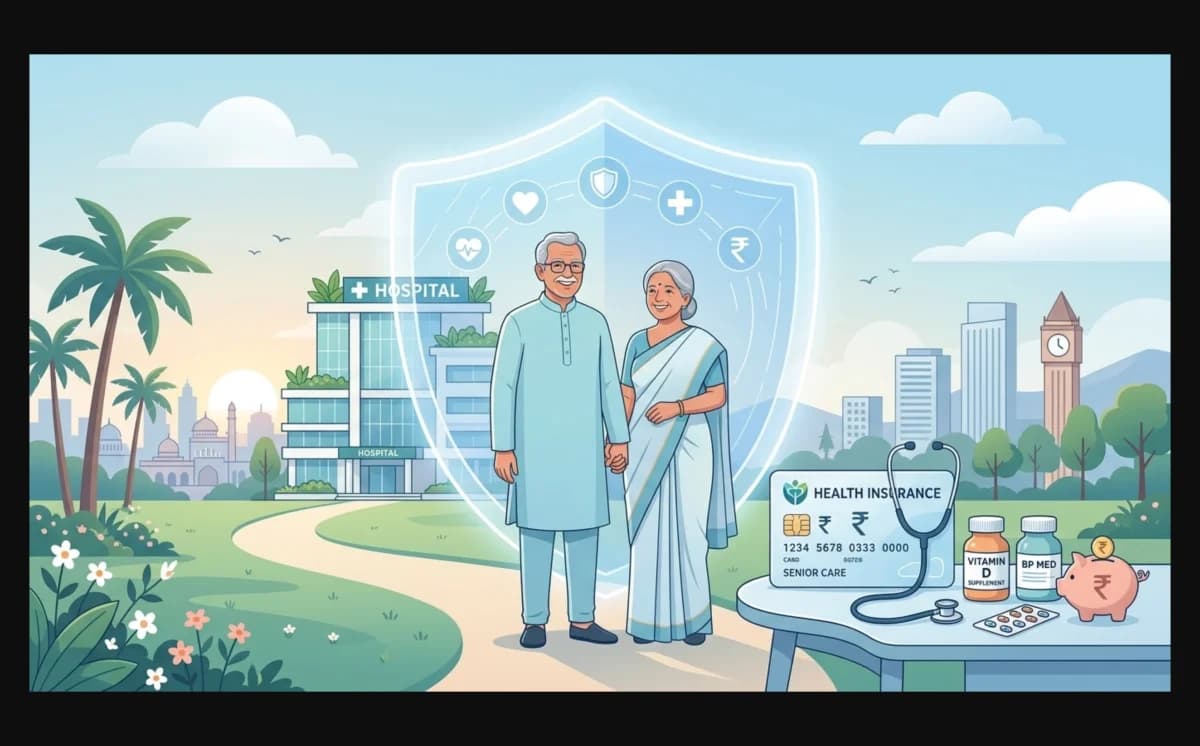
The Biggest Threat to Your Retirement Is Not the Stock Market — It Is Healthcare
You can plan the perfect retirement. You can build a ₹3 crore corpus. You can invest in the right mix of equity and debt. And then one major hospitalization can burn through 20-30% of your savings in a matter of weeks.
This is not an exaggeration. Healthcare costs in India are rising at 14% per year — that is double the general inflation rate. A knee replacement that cost ₹1.5 lakh ten years ago now costs ₹3-4 lakh. A heart bypass can run ₹5-10 lakh. And cancer treatment? Anywhere from ₹10-25 lakh depending on the type and duration.
If there is one area of retirement planning where you absolutely cannot afford to cut corners, it is healthcare. Let us build a complete healthcare plan for your retirement years.
Medical Inflation: The Numbers That Should Scare You
At 14% medical inflation, healthcare costs double every 5 years. Here is what common procedures will cost in the future:
| Procedure | Cost Today (2026) | Cost in 10 Years | Cost in 20 Years |
|---|---|---|---|
| Knee replacement (one) | ₹3 - ₹4 lakh | ₹8 - ₹11 lakh | ₹22 - ₹30 lakh |
| Heart bypass surgery | ₹3 - ₹6 lakh | ₹8 - ₹16 lakh | ₹22 - ₹44 lakh |
| Cancer treatment (average) | ₹10 - ₹25 lakh | ₹27 - ₹68 lakh | ₹74L - ₹1.87 crore |
| ICU stay (per day) | ₹15,000 - ₹40,000 | ₹41K - ₹1.1L | ₹1.1L - ₹2.9L |
| Major hospitalization (avg) | ₹3 - ₹5 lakh | ₹8 - ₹14 lakh | ₹22 - ₹37 lakh |
This is why a ₹5 lakh health insurance policy that feels "enough" today will be completely inadequate in 10-15 years.
Senior Citizen Health Insurance: Buy It Before You Turn 60
This is possibly the most important piece of advice in this article: buy your health insurance policy before you turn 60. Here is why:
- Buying early is cheaper and simpler — since April 2024 IRDAI has removed the 65-year entry-age cap, so insurers must offer cover at any age, but late entry means higher premiums and fresh waiting periods
- Pre-existing disease (PED) waiting periods run up to 36 months (the regulatory maximum, reduced from 48) — buy at 55 and your diabetes or BP is covered by 58, well before you are likely to need it
- Premiums are significantly lower when you start younger — locking in at 50 vs 60 can mean 30-40% lower premiums for the same cover
- IRDAI has capped premium increases for seniors (2025 onwards) — insurers cannot raise renewal premiums beyond a fixed percentage, protecting long-term policyholders
What to Look for in a Senior Citizen Health Policy
Not all health insurance is created equal. Here are the features that matter most for retirees:
Must-Have Features
- No room rent capping: Avoid policies that limit room rent to ₹5,000-8,000/day. Private rooms in good hospitals cost ₹8,000-15,000/day. If your policy caps room rent, all other charges (surgeon fees, medicines) are proportionally reduced too.
- No co-payment clause: Some senior citizen policies require you to pay 10-20% of every claim from your pocket. Avoid these if possible — on a ₹5 lakh bill, a 20% co-pay means ₹1 lakh from your savings.
- AYUSH coverage: Covers treatment under Ayurveda, Yoga, Unani, Siddha, and Homeopathy. Many seniors prefer these for chronic condition management.
- Unlimited restoration: If you exhaust your ₹10 lakh limit on one hospitalization, restoration refills it for future claims in the same year.
- Shorter PED waiting period: the regulatory maximum is 36 months, so look for policies that beat it with a 24-month or shorter wait.
- Domiciliary hospitalization: Covers treatment at home if the patient cannot be moved to a hospital.
Good to Have
- Day care procedures: Coverage for procedures that do not require 24-hour hospitalization (cataract surgery, dialysis, etc.)
- Annual health checkup: Free preventive health checkups every year
- Ambulance cover: ₹2,000-5,000 per emergency
- Second medical opinion: Coverage to consult another specialist
Super Top-Up Plans: High Coverage at Low Cost
If you cannot afford a ₹25-50 lakh base policy (premiums can be ₹40,000-80,000/year for seniors), here is the smartest strategy:
- Buy a base policy of ₹5-10 lakh (₹15,000-30,000/year premium)
- Add a super top-up of ₹25-50 lakh with a deductible equal to your base policy (₹4,000-8,000/year premium)
Total coverage: ₹30-60 lakh. Total premium: ₹20,000-38,000 per year. That is roughly ₹1,700-3,200 per month for robust coverage.
| Plan Type | Cover Amount | Annual Premium (60-65 age) | What It Covers |
|---|---|---|---|
| Base policy | ₹10 lakh | ₹25,000 - ₹35,000 | First ₹10L of any hospitalization |
| Super top-up | ₹40 lakh (₹10L deductible) | ₹5,000 - ₹8,000 | Anything above ₹10L per hospitalization |
| Total coverage | ₹50 lakh | ₹30,000 - ₹43,000 | Most major treatments covered |
This combination gives you coverage that can handle even expensive cancer treatments or heart surgeries, at a fraction of what a single ₹50 lakh policy would cost.
Build a Medical Emergency Fund
Insurance alone is not enough. You also need a dedicated medical emergency fund because:
- Waiting periods: new policies may not cover pre-existing conditions for up to 36 months
- Sub-limits and exclusions: Not everything is covered — dental, hearing aids, eyeglasses, etc.
- Cashless claim delays: Sometimes you need to pay upfront and claim reimbursement later
- Cosmetic and elective procedures: Insurance does not cover these
Keep a separate medical emergency fund of ₹5-10 lakh in a liquid mutual fund or a separate savings account. This is not your regular emergency fund — this is specifically for healthcare.
Ayushman Bharat and Government Schemes
If you or your family falls under the lower-income bracket, Ayushman Bharat (Pradhan Mantri Jan Arogya Yojana) provides health coverage of ₹5 lakh per family per year. Key points:
- Eligibility: the original PM-JAY cover is based on SECC 2011 deprivation criteria — but since October 2024, Ayushman Vay Vandana extends ₹5 lakh cover to every Indian aged 70 and above regardless of income, with pre-existing conditions covered from day one
- Coverage: ₹5 lakh per family per year for secondary and tertiary hospitalization
- Network: over 36,000 empanelled hospitals across India
- No premium: Completely free for eligible families
Even if you qualify for Ayushman Bharat, consider buying a private super top-up for higher coverage and access to better hospitals.
Preventive Healthcare: The Cheapest Investment
The most cost-effective healthcare strategy is not getting sick in the first place. Preventive care costs a fraction of treatment:
| Preventive Action | Annual Cost | What It Can Prevent |
|---|---|---|
| Full body health checkup | ₹2,000 - ₹5,000 | Catches diabetes, BP, cholesterol, cancer markers early |
| Dental checkup (2x/year) | ₹1,000 - ₹2,000 | Root canals, implants costing ₹15,000-50,000 |
| Eye examination | ₹500 - ₹1,000 | Glaucoma, cataract — caught early, treatment is simpler |
| Walking 30 min daily | Free | Heart disease, diabetes, joint problems |
| Annual flu/pneumonia vaccine | ₹1,500 - ₹3,000 | Hospitalization from preventable infections |
A ₹5,000 annual health checkup can catch a condition early that would cost ₹5 lakh to treat if found late. That is a 100x return on investment.
The Healthcare Budget Timeline for Retirement
Your healthcare costs are not the same throughout retirement. Here is a realistic timeline:
Age 60-70: The Active Years
- Monthly healthcare budget: ₹8,000 - ₹12,000
- Regular medicines for chronic conditions (BP, diabetes, cholesterol)
- Annual health checkups
- Occasional specialist visits
- Health insurance premium
Age 70-80: Rising Needs
- Monthly healthcare budget: ₹15,000 - ₹25,000
- More frequent doctor visits and specialist consultations
- Higher medicine costs as conditions progress
- Possible joint replacements, cataract surgery
- May need part-time caretaker support
Age 80+: High-Care Phase
- Monthly healthcare budget: ₹25,000 - ₹50,000+
- Full-time caretaker or nursing assistance
- More frequent hospitalizations
- Expensive medications for age-related conditions
- Possible need for assisted living or home modifications
Complete Healthcare Retirement Checklist
- Health insurance: Buy a ₹10-15 lakh base policy before 55, add a ₹25-50 lakh super top-up
- Medical emergency fund: ₹5-10 lakh in liquid fund, separate from regular emergency fund
- Critical illness cover: Consider a ₹25 lakh critical illness policy that pays a lump sum on diagnosis of cancer, heart attack, or stroke
- Annual health checkup: Make it a non-negotiable yearly routine from age 50
- Dental plan: Get major dental work done before retirement while you have employer insurance
- Advance directives: Document your healthcare preferences and share with family
- Nominate a healthcare decision-maker: In case you are unable to make decisions yourself
- Budget 15-20% of retirement expenses for healthcare in early years, 25-35% in later years
Calculate how much you need to save for retirement with our SIP Calculator and FD Calculator. Also check your tax savings on health insurance under Section 80D with our Tax Calculator.
The Bottom Line
Healthcare is the single biggest wildcard in retirement planning. The combination of 14% medical inflation, rising life expectancy, and increasing lifestyle diseases means Indians need to plan for healthcare costs much more aggressively than previous generations.
The formula is simple: good health insurance + medical emergency fund + preventive care. Start early, buy comprehensive coverage, keep a separate healthcare fund, and invest in staying healthy. Your future self will thank you.
Disclaimer: This article is for educational purposes only and does not constitute financial or medical advice. Insurance premiums and coverage terms vary by insurer and change over time. Please consult a qualified financial advisor and insurance professional before making healthcare planning decisions.
Ayushman Bharat Vay Vandana: ₹5 Lakh Free Cover for Every Indian Aged 70+
The biggest change to senior healthcare in India did not come from an insurer. Launched on 29 October 2024, the Ayushman Vay Vandana Card extends Ayushman Bharat PM-JAY to every Indian aged 70 and above, irrespective of income. No BPL test, no SECC list — if you are 70 and hold an Aadhaar, you qualify.
- ₹5 lakh per year, free: A dedicated annual cover for the 70+ members of a household, with no premium ever.
- Pre-existing conditions covered from day one: Diabetes, hypertension, cardiac history — all covered immediately, with no waiting period. No private insurer offers this at any price.
- Separate from your family's existing cover: If your household is already a PM-JAY beneficiary, the 70+ members get their own ₹5 lakh on top rather than eating into the family floater.
- Cashless network: The PM-JAY empanelled network has grown past 36,000 hospitals nationally, roughly a third of them private.
- Stacks with private insurance: Holding a Vay Vandana card does not disqualify you from a private policy, or vice versa.
To enrol, use the National Health Authority portal at beneficiary.nha.gov.in, verify via Aadhaar e-KYC and download the card; a Common Service Centre or a hospital's Ayushman Mitra desk can also do it. Scheme details are published at nha.gov.in/PM-JAY.
The honest caveat: ₹5 lakh at PM-JAY package rates does not buy a suite in a top-tier metro hospital, and not every private hospital is empanelled. Treat Vay Vandana as a useful first layer — not a replacement for the ₹30-50 lakh of private cover this guide argues for.
The Rule Changes That Reshaped Senior Health Insurance
Between 2024 and 2025 the regulator rewrote several rules that used to make buying cover after 60 nearly impossible. If your understanding of health insurance was formed a few years ago, some of it is now out of date.
| Rule | Used to Be | Now |
|---|---|---|
| Maximum entry age | Insurers commonly refused new buyers above 65 | The 65-year cap was removed from 1 April 2024 |
| Pre-existing disease waiting period | Up to 48 months | Capped at 36 months |
| Moratorium (claim safe from non-disclosure rejection) | 8 years | 5 years |
| Annual premium hikes for seniors | Effectively uncapped | Regulator must be consulted above 10% a year (circular dated 30 January 2025) |
| GST on individual health premiums | 18% | Nil from 22 September 2025; group policies still 18% |
Two takeaways. A 68-year-old who never bought cover is no longer locked out, though underwriting still applies and a three-year wait is a long time at that age. And the GST exemption cut premiums in cash terms, so compare quotes post-GST. Circulars are published on the IRDAI health department page.
None of this changes the core arithmetic: buying in your forties or early fifties is the highest-leverage decision in this entire guide. You clear waiting periods while healthy, get underwritten before a diagnosis exists to disclose, and cross the moratorium line decades before a large claim. Our health insurance guide covers what to compare.
Raising Cover at 60+: Super Top-Up or a Fresh High-Value Policy?
Say you are 62 with a ₹10 lakh policy bought at 48, and you now want ₹50 lakh. The mechanic that matters is the deductible: a super top-up pays once your cumulative bills in a policy year cross it, unlike an ordinary top-up which applies the deductible to each claim separately. For a retiree likely to have two or three admissions in a bad year, super top-up is almost always the right variant.
| Factor | Route A: Fresh ₹50L policy at 62 | Route B: ₹10L base + ₹40L super top-up |
|---|---|---|
| Illustrative annual premium | ₹70,000 – ₹1,10,000 | ₹30,000 – ₹45,000 combined |
| Waiting periods | Reset to zero — up to 3 years again on pre-existing conditions | Base periods already served; only the top-up restarts |
| Moratorium clock | Restarts at 5 years | Base policy may already be past it |
| Accumulated no-claim bonus | Lost | Retained on the base policy |
| Fresh underwriting | On the full ₹50 lakh — a new diagnosis can mean loading or rejection | Only on the top-up, which sits above a deductible |
Premiums above are illustrative ranges for comparison only. Real quotes vary sharply by insurer, city, medical history and features.
The premium saving is the headline, but the waiting-period reset is the bigger risk. Surrendering a 14-year-old policy for a shiny new one can leave you uncovered for exactly the conditions you are most likely to claim on. If your base policy is sound, layer on top of it.
Section 80D: Real Relief, But Only in the Old Regime
- ₹25,000 for self, spouse and dependent children where none is a senior citizen
- ₹50,000 where the insured is a senior citizen (60+)
- ₹50,000 separately for senior-citizen parents — so a 62-year-old paying for their own cover and an 85-year-old parent's can claim up to ₹1 lakh
- ₹5,000 for preventive health check-ups — this sits within the ₹25,000 / ₹50,000 ceiling, not on top of it
- Senior citizens with no policy can claim actual medical expenditure up to ₹50,000 instead
The caveat that changes the maths for most people: Section 80D is a Chapter VI-A deduction and is not available under the new tax regime (Section 115BAC). The new regime is now the default — if you do not actively opt for the old regime, you get no 80D benefit at all on your health premium. Verify your position on the Income Tax Department portal or with your tax advisor.
The conclusion is not "skip insurance because the deduction is gone". It is: stop treating 80D as a reason to buy. Buy the cover you need on its merits and treat tax relief as a bonus. If you are still in the old regime, check the interaction with our tax calculator before finalising your regime choice.
What Insurance Will Not Pay For — and the Corpus That Must
Even ₹50 lakh of cover leaves large, predictable gaps. These are the costs that quietly drain retirement corpora:
- Outpatient care (OPD): Consultations, diagnostics, physiotherapy and the monthly medicine bill for chronic conditions. Most indemnity policies pay only on hospitalisation — yet this is the largest recurring healthcare expense in retirement.
- Dental and vision: Implants, dentures, hearing aids and spectacles are standard exclusions unless treatment follows an accident.
- Long-term and custodial care: Attendants, home nursing, assisted living and dementia care are not hospitalisation, so they are not covered. At ₹18,000-₹40,000 a month for a metro attendant, this is the biggest uninsured risk after 80.
- Home modification: Ramps, grab bars, walk-in showers, stairlifts.
- Non-medical consumables: The deductions that make a "cashless" bill still cost 5-10% out of pocket.
A workable sizing rule for the dedicated medical corpus: take your expected annual out-of-pocket healthcare spend, multiply by five, and add one year of full-time attendant cost. For many households that lands between ₹10 lakh and ₹20 lakh. Park the near-term slice in liquid funds and the rest in predictable-income instruments — the Senior Citizen Savings Scheme suits recurring medical outgo, since quarterly payouts map neatly to quarterly pharmacy bills. Fold these numbers into your retirement planning guide corpus target and your retirement budget.
One last thing worth doing before you need it: read your policy's claim procedure while you are well. Knowing the pre-authorisation timeline, documents and escalation path saves days of stress at the worst moment — our insurance claims guide covers the process end to end.
Frequently Asked Questions
Can I get the Ayushman Vay Vandana card if I already have private health insurance?
Yes. The card for those aged 70 and above is available irrespective of income and irrespective of whether you hold a private policy. The two operate independently — you can use PM-JAY at an empanelled hospital for one admission and your private cover for another. Many families use Vay Vandana as the first layer and keep private cover for higher-cost hospitals.
Is Section 80D available under the new tax regime?
No. Section 80D is a Chapter VI-A deduction and is not allowed under the new regime (Section 115BAC), which is now the default. Only taxpayers who actively opt for the old regime can claim it. Most people buying health insurance today therefore get no income tax deduction for it, so the decision should rest on the cover you need rather than the tax break.
Can insurers still refuse to sell me a policy after 65?
The blanket 65-year entry age cap was removed with effect from 1 April 2024, so products must be available across age groups. Insurers can still decline or load an individual proposal on medical underwriting grounds, and pre-existing conditions carry a waiting period of up to 36 months. Buying after 65 is possible but expensive and slow to become useful — which is why buying in your forties or fifties matters so much.
Does a super top-up work without a base policy?
Only partly. A super top-up pays once your cumulative hospitalisation bills in a policy year exceed the deductible. With a ₹40 lakh super top-up carrying a ₹10 lakh deductible and no base policy, the first ₹10 lakh of bills that year comes out of your own pocket. The deductible is what makes the top-up cheap, so it must be matched by a base policy, a corpus, or both.
Do I still pay GST on my health insurance premium?
Individual and family floater health policies were exempted from GST with effect from 22 September 2025, taking the rate from 18% to nil on both new and renewal premiums. Group health policies, typically employer-provided, continue to attract 18%. If a renewal quote still shows GST on an individual policy, query it with the insurer.
Related Guides
- Retirement Planning in India — the complete corpus-planning guide.
- Building a Retirement Budget — where healthcare fits in monthly expenses.
- Health Insurance Explained — choosing cover before you need it.
- Senior Citizen Savings Scheme (SCSS) — steady income to fund medical costs.
Written by
Jaspal Singh
Founder & Editor
Personal finance writer helping Indians make smarter money decisions through clear, jargon-free guides on taxes, investments, and budgeting.
Continue Reading

Senior Citizen Savings Scheme (SCSS): Complete 2026 Guide
SCSS offers India's senior citizens 8.2% guaranteed returns with sovereign safety. Here's the complete guide — eligibility, ₹30 lakh limit, quarterly payouts, Section 80C tax benefits, comparison with FDs, and the smart strategies retirees use to maximize income.
How to Create a Retirement Budget in India: Complete Guide
Most people know they need to save for retirement but have no idea how much they will actually spend. Here is how to build a realistic retirement budget for India.
Retirement Planning for Self-Employed and Freelancers in India
No EPF, no employer contribution, no gratuity. If you are self-employed or freelancing in India, you need to build your own retirement safety net. Here is exactly how.