EMIs Are Eating 33% of India's Salary — Savings at 47-Year Low
Jaspal Singh
Author
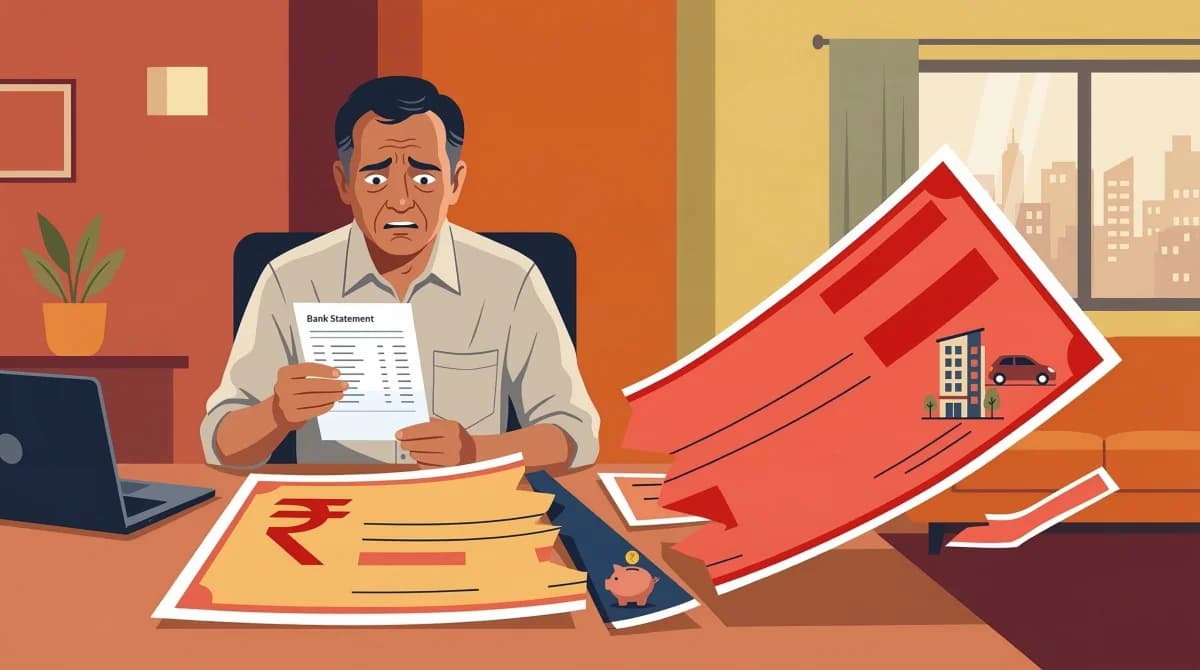
India's EMI Addiction Is Getting Worse
Here's a scary number: the average Indian salaried employee now spends 33% of their monthly salary on EMIs. For higher earners (₹50,000+ per month), this number jumps to a shocking 45%.
At the same time, India's household savings rate has dropped to just 5.3% of GDP — the lowest in 47 years. We're borrowing more and saving less than ever before.
Where Is All the EMI Money Going?
The biggest EMI categories eating into salaries:
- Home loans: The single largest EMI for most families (40-50% of total EMIs)
- Car loans: India's car loan market has exploded, with easy financing pushing people to buy beyond their means
- Personal loans: Quick digital loans from apps have made borrowing dangerously easy
- Credit card EMIs: "No-cost EMI" on e-commerce is a debt trap in disguise
- Education loans: Growing, especially for foreign education
The "No-Cost EMI" Trap
When Amazon or Flipkart shows "No Cost EMI ₹2,999/month for 6 months" on a phone, it feels free. But you're still committing ₹2,999 from your salary for 6 months. Multiply this across phones, laptops, appliances, and fitness equipment — and suddenly you have 5-6 active EMIs without even visiting a bank.
Why Are Savings at a 47-Year Low?
Several factors are driving this crisis:
- Easy credit access: Digital lending apps approve loans in minutes, encouraging impulse borrowing
- Lifestyle inflation: Social media drives spending on experiences, gadgets, and luxury that people can't afford
- Real estate prices: Home prices have outpaced salary growth, forcing larger home loans with longer tenures
- Inflation eating into disposable income: Food and fuel costs have risen, leaving less money after necessities
The 50-30-20 Rule — Does It Still Work?
Financial advisors recommend the 50-30-20 budget rule:
| Category | % of Salary | Example (₹1 Lakh Salary) |
|---|---|---|
| Needs (rent, food, EMIs) | 50% | ₹50,000 |
| Wants (dining, shopping, travel) | 30% | ₹30,000 |
| Savings & Investments | 20% | ₹20,000 |
But if EMIs alone are eating 33-45%, the rule breaks before you start. You'd need to keep total EMIs under 35-40% of your take-home salary at the absolute maximum — and ideally under 25%.
How to Reduce Your EMI Burden
1. List Every Active EMI
Open your bank statement and write down every single EMI — home loan, car loan, personal loan, credit card EMIs, buy-now-pay-later. Most people are shocked when they see the total.
2. Attack the Highest-Interest Debt First
Credit card debt (36-42% interest) and personal loans (14-18%) should be paid off first. Home loans (8-9%) can wait.
3. Stop "No-Cost EMI" Purchases
If you can't pay the full price upfront, you probably can't afford it. The exception: large appliances or education that genuinely improve your earning capacity.
4. Consider Loan Consolidation
If you have multiple high-interest loans, consolidating them into a single lower-interest loan can reduce your total monthly outflow. Use our EMI Calculator to compare scenarios.
5. Build an Emergency Fund BEFORE Investing
Keep 3-6 months of expenses in a Fixed Deposit or liquid fund before starting SIPs. Without this safety net, any emergency pushes you deeper into debt.
The 2026 Salary Growth Outlook
The good news: salary growth in 2026 is projected at 9.1%. If you channel even half of your raise into debt repayment or savings instead of lifestyle upgrades, you can turn the tide within 2-3 years.
The Bottom Line
India's EMI crisis isn't just about individual families — it's a national savings emergency. When savings drop to a 47-year low, it means fewer investments, less capital formation, and slower economic growth.
Start today: Calculate your EMI-to-salary ratio. If it's above 30%, make a plan to bring it down. Your future self will thank you.
Disclaimer: This article is for educational purposes only and does not constitute financial advice. Please consult a qualified financial advisor before making investment decisions.
Written by
Jaspal Singh
Founder & Editor
Personal finance writer helping Indians make smarter money decisions through clear, jargon-free guides on taxes, investments, and budgeting.
Continue Reading

Creating a Financial Plan: Step-by-Step Guide for Indians
A practical 10-step guide to creating your first financial plan — from calculating net worth and killing high-interest debt to goal-based investing and tax optimization.
Financial Planning for Families in India: A Complete Guide
A practical 7-step guide to financial planning for Indian families — emergency fund, insurance, goal-based investing, tax saving, and teaching kids about money.
How to Save Money on Transportation in India
Transportation eats up 10-15% of most Indian budgets. Here are practical ways to cut your commute costs — from metro passes to electric scooters to simply combining your errands.