Digital Arrest Scams in India: How They Work and How to Protect Your Money
Jaspal Singh
Author
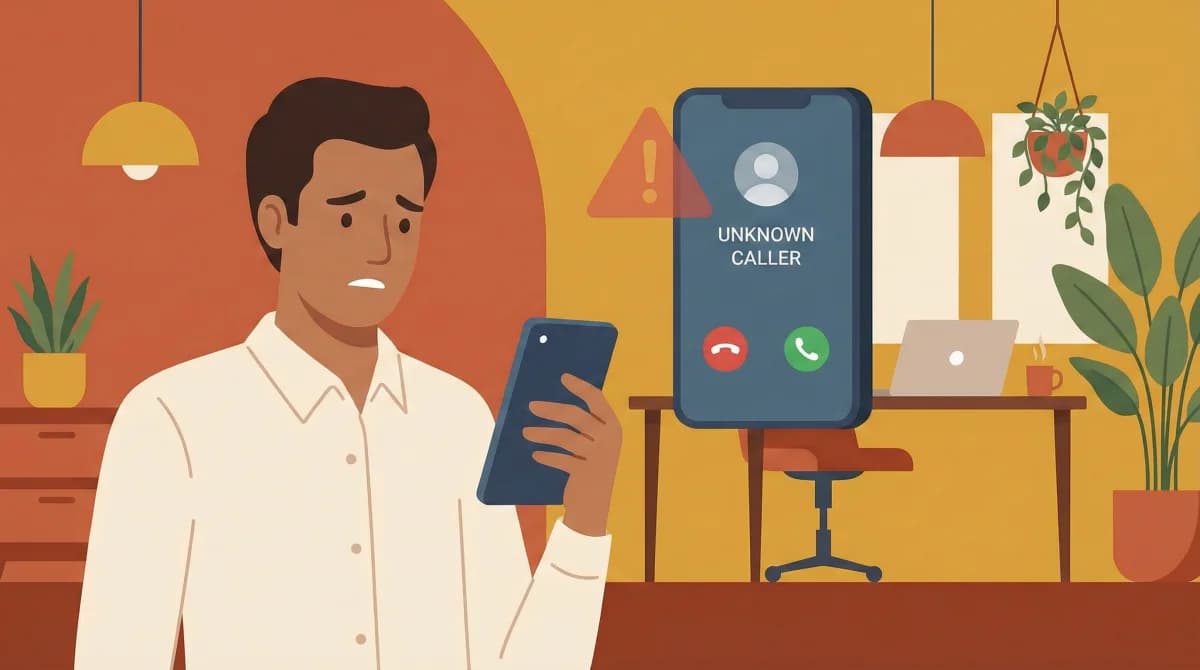
In September 2024, a 39-year-old digital marketing executive from Gurugram lost ₹5.85 crore — her entire life savings — in just 72 hours. She liquidated her mutual funds, withdrew her fixed deposits, and transferred everything to accounts controlled by scammers. The weapon? Not a gun or a knife, but a phone call about a courier parcel — supposedly intercepted by Customs and found to contain contraband.
This is what is now known as a digital arrest scam — one of the fastest-growing cyber frauds in India. And it could happen to anyone.
What is a Digital Arrest Scam?
A digital arrest scam is a type of cyber fraud where criminals impersonate law enforcement officers, tax officials, or judges over phone or video calls. They claim the victim is involved in illegal activities — money laundering, tax evasion, or drug trafficking — and must remain on the call (under "digital arrest") while the matter is "resolved."
The entire setup is designed to create panic and isolate the victim from family and friends who might talk sense into them.
How the Scam Works: Step by Step
Here is the typical anatomy of a digital arrest scam:
Step 1: The Initial Call
You receive a call — often from a number that appears official. The caller claims to be from the Income Tax Department, CBI, Narcotics Bureau, or even the RBI. They say suspicious transactions have been detected in your bank account or Aadhaar has been linked to criminal activity.
Step 2: The Escalation
The call is "transferred" to a senior officer. Sometimes, they initiate a video call where someone in a police or judge uniform appears in what looks like a government office. They show fake arrest warrants and FIR copies.
Step 3: The Digital Arrest
You are told you cannot disconnect the call, leave your home, or contact anyone. They say this is required by law and any deviation will result in immediate physical arrest. This is the "digital arrest" — complete psychological control.
Step 4: The Money Transfer
Under pressure, you are asked to transfer money to "government accounts" for verification or as a "refundable security deposit." The money goes to mule accounts controlled by the scam network. Some victims are asked to liquidate FDs, mutual funds, and even take loans.
Why Educated, Wealthy People Fall for It
Digital arrest scams specifically target financially well-off individuals. The psychology is calculated:
Fear of authority: Most Indians have deep-rooted respect (and fear) of government agencies like the IT department and CBI
Isolation: Victims are told not to speak to anyone, cutting off their support system
Urgency: The scammers create artificial time pressure — "transfer within 2 hours or face arrest"
Sophistication: Professional setups with uniforms, fake documents, and scripted dialogues make it convincing
The Scale of the Problem
According to the Indian Cyber Crime Coordination Centre (I4C), digital arrest scams accounted for roughly ₹1,918 crore in losses during 2024. The National Cyber Crime Reporting Portal (cybercrime.gov.in) receives thousands of complaints monthly related to this fraud.
Prime Minister Narendra Modi himself addressed the issue in his Mann Ki Baat broadcast, warning citizens about digital arrest scams and emphasising that no government agency conducts arrests or investigations over phone or video calls.
How to Protect Yourself and Your Money
Immediate Red Flags
Any call claiming you are under "digital arrest" — this concept does not exist in Indian law
Requests to stay on a video call and not contact anyone
Demands to transfer money to "safe accounts" or "RBI accounts"
Threats of immediate arrest if you don't comply
Callers who refuse to let you verify their identity independently
Protective Steps for Your Finances
Set transaction limits: Keep daily transfer limits on your bank accounts low. This buys you time even if you momentarily panic
Enable cooling periods: Many banks offer a cooling period for new payees. Enable this feature — it creates a mandatory delay before large transfers go through
Don't keep all savings in one account: Spread your money across FDs, mutual funds, and different bank accounts. This makes it harder for scammers to drain everything quickly
Use our FD Calculator and SIP Calculator to plan how to distribute your savings across instruments with different lock-in periods
Set up multi-factor authentication: Ensure large transactions require both OTP and biometric or email confirmation
What to Do If You Get Such a Call
Hang up immediately. No government agency arrests people over phone calls
Call 1930 — the national cyber crime helpline — and report the number
File a complaint at cybercrime.gov.in
Contact your bank immediately if you have already transferred money — quick action can help freeze the recipient account
Tell someone. The scam works by isolating you. Break the isolation
"Digital Arrest" Does Not Exist in Indian Law
If you remember only one line from this page, make it this one: there is no such thing as a "digital arrest" under any Indian law. Every statute that permits arrest describes it as a physical act, carried out by an authorised officer, in person, with documentation. Not one contains a provision allowing an officer to detain you over a video call.
The Ministry of Home Affairs and the Indian Cyber Crime Coordination Centre (I4C) have said this repeatedly in public advisories, and the Press Information Bureau's Fact Check unit has debunked forged "I4C notices" circulated by these gangs. The rule has no exceptions:
- No agency — CBI, ED, Delhi Police, state police, Customs, the Narcotics Control Bureau, the Income Tax Department, TRAI or the RBI — arrests, interrogates or takes a statement over a video call.
- No agency ever asks you to transfer money for "verification", a "security deposit", "bail" or a "refundable custody amount". Fines and penalties are paid into government treasuries through formal challans, never by UPI or RTGS to an individual's account.
- The RBI does not hold accounts for members of the public. There is no "RBI safe account". Anyone using that phrase is a criminal.
- TRAI does not block SIM cards or investigate crimes. It is a regulator, not an enforcement body — the "your number will be disconnected in two hours" call is always fake.
Because the premise is fictional, you do not need to argue, verify documents or prove your innocence. You hang up. The government's own explainer is on the PIB cyber fraud advisory if you need official wording to show a sceptical relative.
The Golden Hour: Exactly How and Where to Report
If money has already left your account, speed matters more than anything else. Funds moved into a mule account are layered into a chain of further accounts and withdrawn within hours.
The reporting chain is run by I4C through the Citizen Financial Cyber Fraud Reporting and Management System (CFCFRMS). When you file a complaint, an automated ticket reaches your bank, the beneficiary bank and the relevant police unit simultaneously, and the receiving account can be frozen before the money is withdrawn. Officials call the first 60 minutes the "golden hour" — reporting inside it dramatically raises the odds of a freeze. Report within 24 hours at the outside.
Your First 60 Minutes: The Action List
- Disconnect and stop transferring. Do not send "one last payment to close the case". There is no case.
- Call 1930 — the toll-free national cyber crime helpline, running 24x7 under I4C. Keep the transaction reference numbers, the beneficiary account or UPI ID, the amount and the time of transfer ready.
- File the complaint at cybercrime.gov.in under "Report Financial Fraud" and note the acknowledgement number.
- Call your bank's fraud helpline (printed on your debit card) and ask for a written dispute registration plus a freeze on outward transfers. Email the same request so you have a timestamp.
- Change credentials. Reset net banking passwords, disable UPI, and remove any remote-access app the caller made you install (AnyDesk, TeamViewer and similar).
- Tell one family member. The scam only works while you are isolated.
- Convert the complaint into an FIR at your local cyber police station. Banks and courts will ask for it.
Will the Bank Refund You? What the RBI Rules Actually Say
This is where most victims are given false hope. The RBI circular Customer Protection – Limiting Liability of Customers in Unauthorised Electronic Banking Transactions (6 July 2017) protects you when someone else moves money out of your account without your involvement — a card skim, a hacked net banking session, a SIM swap.
| When you report an unauthorised transaction | Your liability |
|---|---|
| Bank's own fraud, negligence or system deficiency | Zero, whenever you report |
| Third-party breach, reported within 3 working days | Zero |
| Third-party breach, reported in 4–7 working days | Capped at ₹5,000 to ₹25,000 depending on account type, or the transaction value, whichever is lower |
| Reported after 7 working days | As per the bank's board-approved policy |
Where the bank is liable, it must credit the disputed amount within 10 working days of your notification, value-dated to the transaction date. The burden of proving customer negligence sits with the bank, not with you.
The catch with digital arrest fraud: you authorised the transfer yourself, with your own OTP. That makes it an authorised push payment, so the ladder above does not automatically apply. Your realistic route to recovery is the 1930/CFCFRMS freeze chain and the criminal case — which is exactly why the golden hour matters. Read the circular in full on the RBI website, and see our wider guide on protecting your money from online fraud in India for the unauthorised-transaction side.
Report the Number, Not Just the Loss
Most digital arrest calls are spoofed international VoIP traffic dressed up to look like an Indian +91 number. The Department of Telecommunications runs Sanchar Saathi to act on exactly this, free of charge:
- Chakshu — report the fraudulent call, SMS or WhatsApp message with a screenshot. Reported numbers feed into disconnection and blacklisting action.
- Spoofed international calls — a dedicated module for calls showing Indian numbers from abroad, the single most common tell in these scams.
- TAFCOP — check how many mobile connections are registered against your Aadhaar.
- CEIR — block a lost or stolen handset across all operators so it cannot receive your OTPs.
Who Is Targeted, and How to Protect Your Parents
These gangs profile for people with liquid savings and a low tolerance for reputational risk: pensioners, doctors, professors, senior corporate staff and small business owners. Senior citizens living alone are the highest-risk group, because isolation — the mechanism the scam depends on — is already in place. Practical steps for an elderly parent, in order of usefulness:
- Agree a family rule: any call involving police, courts, customs or money gets ended, and you phone back. No exceptions, no embarrassment.
- Lower daily transfer limits to around ₹25,000 and switch off RTGS on the app. A large transfer then needs a branch visit, which almost always breaks the spell.
- Add a joint holder on the main account — compare options in our guide to savings accounts in India before moving anything.
- Keep the emergency fund separate from the everyday account, and long-term money in instruments that cannot be liquidated in an afternoon. A 50-30-20 budgeting split creates that separation naturally.
- Turn on transaction alerts and card controls — most credit cards let you disable international and online use entirely until needed.
- Rehearse the hang-up. Saying "I will call the police station myself" out loud once, in advance, makes it far easier under pressure.
What the Latest Government Data Shows
There is genuine good news. After the 2024 spike, I4C data shows digital arrest cases fell sharply in 2025 — roughly 86% fewer cases and about 66% less money lost year on year — after mass SIM disconnections, mule-account crackdowns and the awareness campaign. The share of defrauded money blocked has risen from around 6% in 2021 to roughly 19%, almost entirely because victims report faster.
Frequently Asked Questions
Is digital arrest legal in India?
No. There is no provision for a "digital arrest" in any Indian law. Arrests are physical, in-person acts by authorised officers. Any call or notice claiming to place you under digital arrest is criminal impersonation — disconnect and report it on 1930.
What number do I call if I have already transferred money?
Call 1930, the national cyber crime helpline run by I4C, immediately, and file a complaint at cybercrime.gov.in. Reporting within the first 60 minutes gives the best chance of freezing the funds before they are withdrawn.
Will my bank refund money lost to a digital arrest scam?
Not automatically. RBI's limited-liability framework covers unauthorised transactions, and in these scams you authorise the transfer yourself. Report to the bank in writing anyway — a fast freeze plus the 1930 complaint is what actually recovers money. Where a bank ignored its own red-flag or KYC obligations, victims have pursued the RBI Ombudsman and the courts.
Can the CBI, ED or Income Tax Department question me on a video call?
No. Investigating agencies issue written summons and require you to appear in person at a named office. They do not interrogate people on WhatsApp or Skype, do not display arrest warrants on screen, and never tell anyone to keep the matter secret from family.
How do I report the phone number that called me?
Use the Chakshu module on the Department of Telecommunications' Sanchar Saathi portal to report a fraudulent call, SMS or WhatsApp message. If the call showed an Indian number but sounded like an international line, use the spoofed-call reporting option on the same portal.
This article is for general awareness and is not legal advice. Helpline numbers, portals and RBI rules cited here were verified against official government sources at the time of writing; always confirm current procedure on cybercrime.gov.in.
The Bottom Line
Digital arrest scams exploit fear, not technology. No matter how convincing the caller sounds, remember: Indian law enforcement will never ask you to transfer money over a phone call. They will never conduct court proceedings on video. And the concept of "digital arrest" simply does not exist.
Your best defence is awareness and a well-structured financial plan that doesn't put all your eggs in one basket. Use tools like our FD Calculator and SIP Calculator to build a diversified savings strategy that is resilient — not just to market volatility, but to fraud.
Stay alert. Stay informed. Protect your money.
Written by
Jaspal Singh
Founder & Editor
Personal finance writer helping Indians make smarter money decisions through clear, jargon-free guides on taxes, investments, and budgeting.
Continue Reading

Creating a Financial Plan: Step-by-Step Guide for Indians
A practical 10-step guide to creating your first financial plan — from calculating net worth and killing high-interest debt to goal-based investing and tax optimization.

Financial Planning for Families in India: A Complete Guide
A practical 7-step guide to financial planning for Indian families — emergency fund, insurance, goal-based investing, tax saving, and teaching kids about money.

How to Save Money on Transportation in India
Transportation eats up 10-15% of most Indian budgets. Here are practical ways to cut your commute costs — from metro passes to electric scooters to simply combining your errands.