Banks Collected ₹19,083 Crore in Minimum Balance Penalties — How to Avoid Them
Jaspal Singh
Author
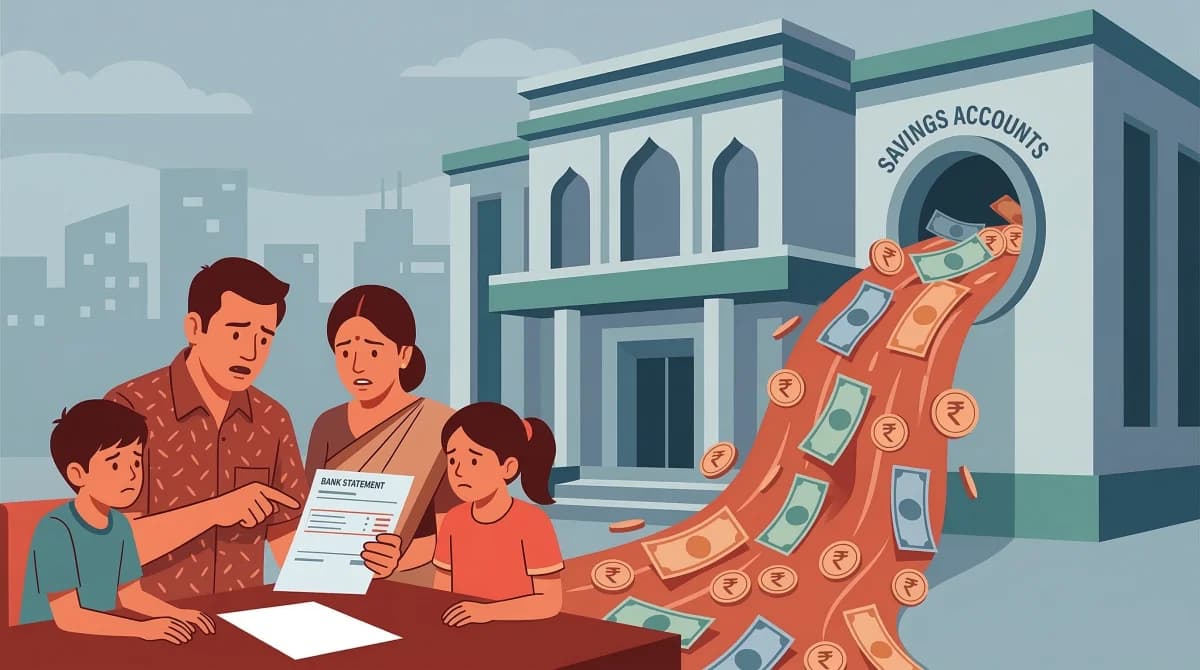
Here is a number that should make you angry: Indian banks collected a staggering ₹19,083 crore in penalties from savings account holders over just three financial years (FY23-FY25) — primarily for not maintaining the minimum average balance. That is nearly ₹20,000 crore taken from ordinary depositors, many of whom are among India's poorest account holders.
The data, revealed in a Finance Ministry reply to the Lok Sabha on March 9, 2026, shows that this is not a one-time issue — it is a systematic revenue stream for banks. Private banks collected nearly double what public sector banks did. Let us break down the numbers, which banks charge the most, and how you can avoid these penalties entirely.
The Numbers Are Shocking
| Category | FY 2022-23 | FY 2023-24 | FY 2024-25 | 3-Year Total |
|---|---|---|---|---|
| Public Sector Banks | — | — | — | ₹8,093 crore |
| Private Sector Banks | — | — | — | ₹10,991 crore |
| Total | — | — | — | ₹19,083 crore |
Private banks collected ₹10,991 crore — nearly double the ₹8,093 crore collected by all public sector banks combined. And the trend is worsening: private banks' penalty collection surged 32% from FY23 to FY25, while PSB collections rose 13%. An additional 18% GST is charged on top of these penalties.
Which Banks Charge the Most?
Private sector banks are the biggest offenders. While the RTI data does not name individual banks in the consolidated figure, here is what we know about minimum balance requirements:
| Bank | Min Balance (Metro) | Penalty for Non-Maintenance |
|---|---|---|
| SBI | Waived (since March 2020) | ₹0 (no penalty) |
| HDFC Bank | ₹10,000 | ₹150-600/quarter + GST |
| ICICI Bank | ₹10,000 | ₹100-500/quarter + GST |
| Axis Bank | ₹10,000-25,000 | ₹100-750/quarter + GST |
| Kotak Mahindra | ₹10,000 | ₹100-600/quarter + GST |
| Yes Bank | ₹10,000 | ₹100-500/quarter + GST |
Key insight: SBI waived minimum balance penalties entirely in March 2020, and 9 more PSBs followed suit in 2025. But private banks with ₹10,000+ requirements continue charging aggressively — falling below the minimum even once in a quarter can cost ₹150-750 plus 18% GST. That is a meaningful amount for a salaried individual or a student.
Why This Is Problematic
1. It Hits the Poorest Hardest
People who struggle to maintain minimum balances are, by definition, those with the least money. Charging them penalties creates a regressive system where the poor pay more for basic banking services. A daily wage worker whose account dips below ₹3,000 at month-end should not be penalised for being poor.
2. Jan Dhan Accounts Are Exempt — But Many Do Not Know
Pradhan Mantri Jan Dhan Yojana (PMJDY) accounts have zero minimum balance requirements. Over 52 crore Jan Dhan accounts have been opened. Yet many people who opened regular savings accounts (not Jan Dhan) are paying penalties they could avoid by simply converting their account.
3. Banks Often Deduct Without Warning
While RBI guidelines require banks to send SMS alerts before deducting penalties, many customers report being charged without prior warning. The penalty appears as a mysterious debit in your statement — labelled as "non-maintenance charges" or "AMB charges" — and by then, it is already deducted.
How to Avoid Minimum Balance Penalties
1. Switch to a Zero-Balance Account
Several banks offer zero-balance savings accounts with no minimum balance requirement:
- PMJDY accounts — zero balance, RuPay debit card, ₹2 lakh accident insurance, ₹30,000 life cover
- Salary accounts — if your employer has a corporate tie-up, your salary account typically has no minimum balance requirement
- Digital-only banks — Fi, Jupiter, Niyo, and similar fintech-backed accounts often have zero balance requirements
- SBI Basic Savings Account — zero balance, limited transactions (4 per month)
2. Set Up a Standing Instruction
If you receive your salary on the 1st but your balance dips below minimum by the 25th, set up a standing instruction to auto-transfer a small amount from another account before month-end. This ensures your average monthly balance stays above the threshold.
3. Understand "Average" vs "Minimum"
Most banks calculate the Average Monthly Balance (AMB), not the minimum balance on any given day. AMB is the average of your closing balance every day of the month. So if your balance is ₹20,000 for 20 days and ₹2,000 for 10 days, your AMB is approximately ₹14,000 — still above most thresholds.
This means a temporary dip in balance is fine as long as your average stays above the limit. But if your balance stays low for most of the month, the penalty kicks in.
4. Convert to Jan Dhan
If you rarely maintain ₹10,000 in your account and do not need premium banking features, ask your branch to convert your regular savings account to a PMJDY account. You keep the same account number, same UPI, and get zero balance with free insurance.
5. Consolidate Your Accounts
Many Indians have 3-5 savings accounts (one per job change). Maintaining minimum balance in all of them is expensive. Consolidate into 1-2 accounts — your primary salary account and one backup. Close the rest.
What Is RBI Doing About It?
The RBI has taken some steps but they have not been enough:
- 2017: RBI asked banks to offer basic savings accounts with zero minimum balance — most banks complied but did not actively promote these accounts
- 2019: RBI directed banks to send SMS alerts before levying penalties — compliance is patchy
- 2023: RBI capped the penalty-to-shortfall ratio — penalty cannot exceed the shortfall amount (if you are ₹100 short, the penalty cannot be more than ₹100)
- 2026: Consumer groups are demanding a complete ban on minimum balance penalties, citing the ₹19,083 crore data
The fundamental issue is that minimum balance penalties are a significant revenue source for banks — ₹4,000+ crore per year is real money. Banks have little incentive to reduce them voluntarily.
Check Your Own Account
Here is how to check if you have been charged penalties:
- Download your bank statement for the last 12 months
- Search for entries labelled: "Non-maintenance charges," "AMB charges," "Minimum balance penalty," or "Service charges"
- Add up the total — you may be surprised at how much you have paid
- If the charges seem excessive, visit your branch and ask for a review — banks sometimes reverse charges as a goodwill gesture
The Smart Money Move
If you are paying ₹600-3,000 per year in minimum balance penalties, that money would be far better invested. Even ₹500/month in a SIP grows to over ₹1 lakh in 10 years at 12% returns. Every penalty charge is money that could have been compounding for your future.
Switch to a zero-balance account, consolidate your bank accounts, and redirect those penalty savings into an investment. Your future self will thank you.
The Bottom Line
Indian banks have collected ₹19,083 crore in minimum balance penalties over just 3 years (FY23-FY25) — a number that grows every year. Private banks with ₹10,000+ minimum requirements are the biggest collectors. You can avoid these charges entirely by switching to zero-balance accounts (PMJDY, salary, or digital banks), consolidating multiple accounts, and understanding how average monthly balance is calculated.
Do not let banks quietly drain your savings. Check your statements, switch if needed, and invest the savings instead.
Disclaimer: This article is for informational purposes only. Minimum balance requirements and penalty structures vary by bank and account type. Please check with your specific bank for exact charges. Data is based on Finance Ministry replies to Parliament and publicly available bank fee schedules as of March 2026.
Written by
Jaspal Singh
Founder & Editor
Personal finance writer helping Indians make smarter money decisions through clear, jargon-free guides on taxes, investments, and budgeting.
Continue Reading

Creating a Financial Plan: Step-by-Step Guide for Indians
A practical 10-step guide to creating your first financial plan — from calculating net worth and killing high-interest debt to goal-based investing and tax optimization.

Financial Planning for Families in India: A Complete Guide
A practical 7-step guide to financial planning for Indian families — emergency fund, insurance, goal-based investing, tax saving, and teaching kids about money.

How to Save Money on Transportation in India
Transportation eats up 10-15% of most Indian budgets. Here are practical ways to cut your commute costs — from metro passes to electric scooters to simply combining your errands.